
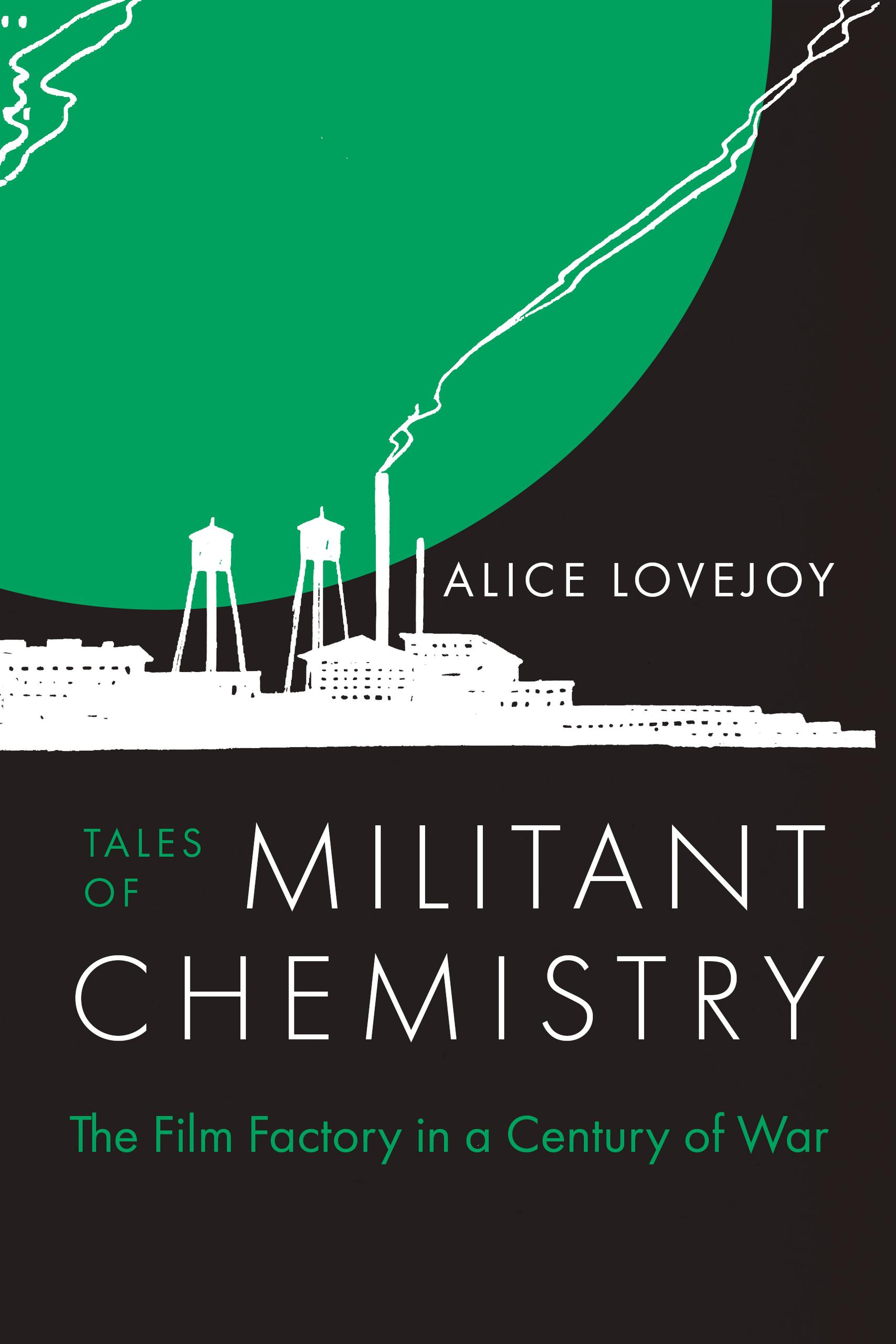
The untold story of film as a chemical cousin to poison gas and nuclear weapons, shaped by centuries of violent extraction.
The history of film calls to mind unforgettable photographs, famous directors, and the glitz and hustle of the media business. But there is another tale to tell that connects film as a material to the twentieth century’s history of war, destruction, and cruelty.
This story comes into focus during World War II at the factories of Tennessee Eastman, where photographic giant Kodak produced the rudiments of movie magic. Not far away, at Oak Ridge, Kodak was also enriching uranium for the Manhattan Project—uranium mined in the Belgian Congo and destined for the bomb that fell on Hiroshima. While the world’s largest film manufacturer transformed into a formidable military contractor, across the ocean its competitor Agfa grew entangled with Nazi Germany’s machinery of war. After 1945, Kodak’s film factories stood at the front lines of a new, colder war, as their photosensitive products became harbingers of the dangers of nuclear fallout.
Following scientists, soldiers, prisoners, and spies through Kodak’s and Agfa’s global empires, Alice Lovejoy links the golden age of cinema and photography to colonialism, the military-industrial complex, radioactive dust, and toxic waste. Revelatory and chilling,Tales of Militant Chemistry shows how film became a weapon whose chemistry irrevocably shaped the world we live in today.
The history of film calls to mind unforgettable photographs, famous directors, and the glitz and hustle of the media business. But there is another tale to tell that connects film as a material to the twentieth century’s history of war, destruction, and cruelty.
This story comes into focus during World War II at the factories of Tennessee Eastman, where photographic giant Kodak produced the rudiments of movie magic. Not far away, at Oak Ridge, Kodak was also enriching uranium for the Manhattan Project—uranium mined in the Belgian Congo and destined for the bomb that fell on Hiroshima. While the world’s largest film manufacturer transformed into a formidable military contractor, across the ocean its competitor Agfa grew entangled with Nazi Germany’s machinery of war. After 1945, Kodak’s film factories stood at the front lines of a new, colder war, as their photosensitive products became harbingers of the dangers of nuclear fallout.
Following scientists, soldiers, prisoners, and spies through Kodak’s and Agfa’s global empires, Alice Lovejoy links the golden age of cinema and photography to colonialism, the military-industrial complex, radioactive dust, and toxic waste. Revelatory and chilling,Tales of Militant Chemistry shows how film became a weapon whose chemistry irrevocably shaped the world we live in today.
Betal nemt med kort, Klarna, Apple Pay eller Google Pay. Ikke tilfreds? Du har altid 14 dages fortrydelsesret. Læs mere i vores vilkår. Har du spørgsmål, så send os en mail på hello@memmo.org.
Memmo gør det nemmere at studere – uanset hvor du er i verden. Hos os samler du dine kursusbøger og smarte studieværktøjer ét sted: resuméer, quizzer, podcasts og flashcards. Og så er der Ted, din studieven, der svarer på alt, du undrer dig over. Over 50 000 studerende studerer allerede her – bygget til at hjælpe dig med at lære hurtigere og stresse mindre.
Du kan måske også lide
Køb bogen0