
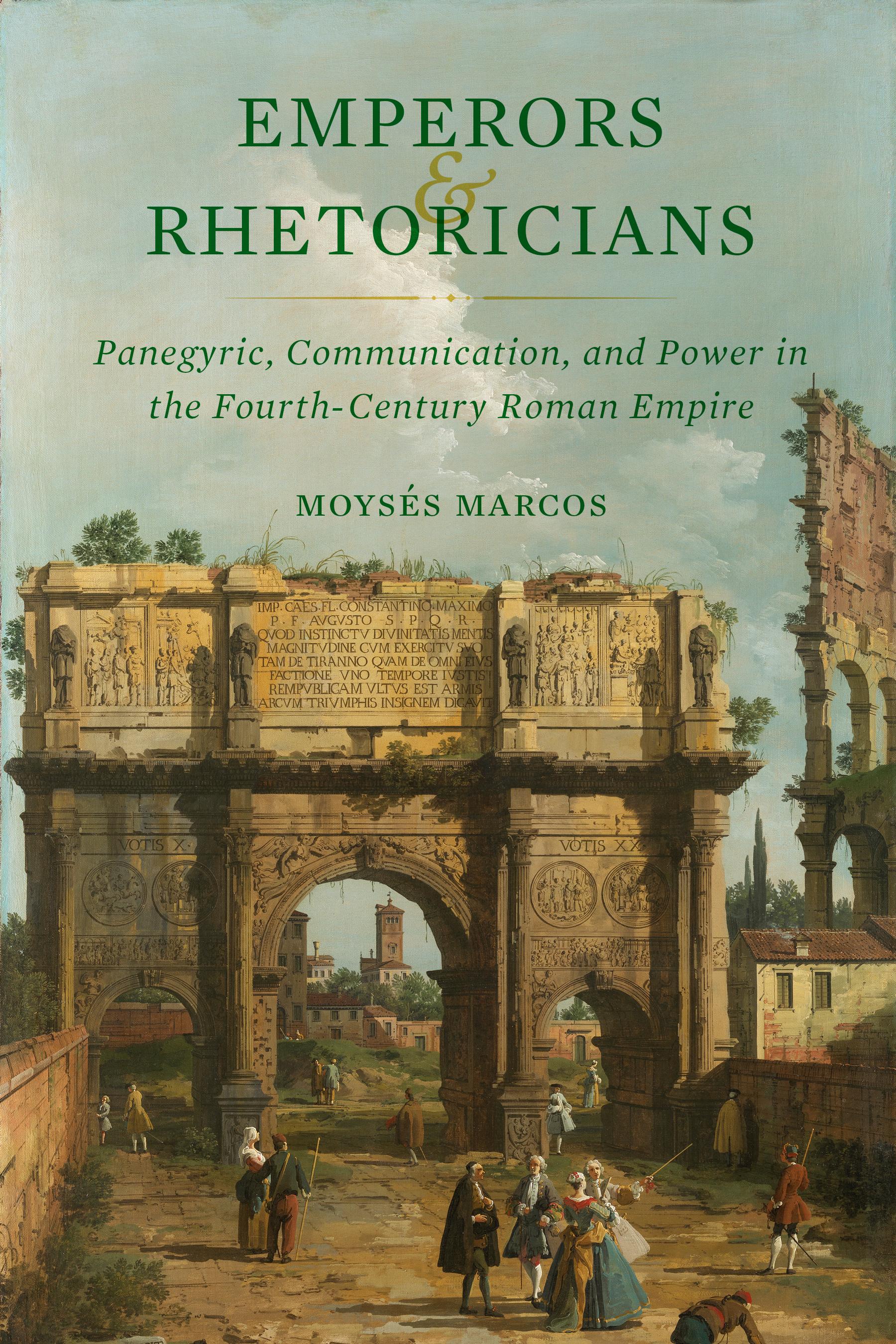
Panegyric, the art of publicly praising prominent political figures, occupied an important place in the Roman Empire throughout late antiquity. Orators were skilled political actors who manipulated the conventions of praise giving, taking great license with what they chose to present (or omit). Their ancient speeches are rare windows into the world of panegyrists, emperors, and their audiences. In Emperors and Rhetoricians, Moysés Marcos offers an original, comprehensive look at all panegyrics to and by Julian, who in 355/56 CE promoted himself as a learned caesar by producing his own panegyric on his cousin and Augustan benefactor, Constantius II. During key stages in his public career and throughout the time he held imperial power, Julian experimented with and utilized panegyric as both political communication and political opportunity. Marcos expertly mines this vast body of work to uncover a startlingly new picture of Julian the Apostate, explore anew the arc of his career in imperial office, and model new ways to interpret and understand imperial speeches of praise.
Betal nemt med kort, Klarna, Apple Pay eller Google Pay. Ikke tilfreds? Du har altid 14 dages fortrydelsesret. Læs mere i vores vilkår. Har du spørgsmål, så send os en mail på hello@memmo.org.
Memmo gør det nemmere at studere – uanset hvor du er i verden. Hos os samler du dine kursusbøger og smarte studieværktøjer ét sted: resuméer, quizzer, podcasts og flashcards. Og så er der Ted, din studieven, der svarer på alt, du undrer dig over. Over 50 000 studerende studerer allerede her – bygget til at hjælpe dig med at lære hurtigere og stresse mindre.
Du kan måske også lide
Køb bogen0