
A free open access book is available upon publication. Learn more at www.luminosoa.org.
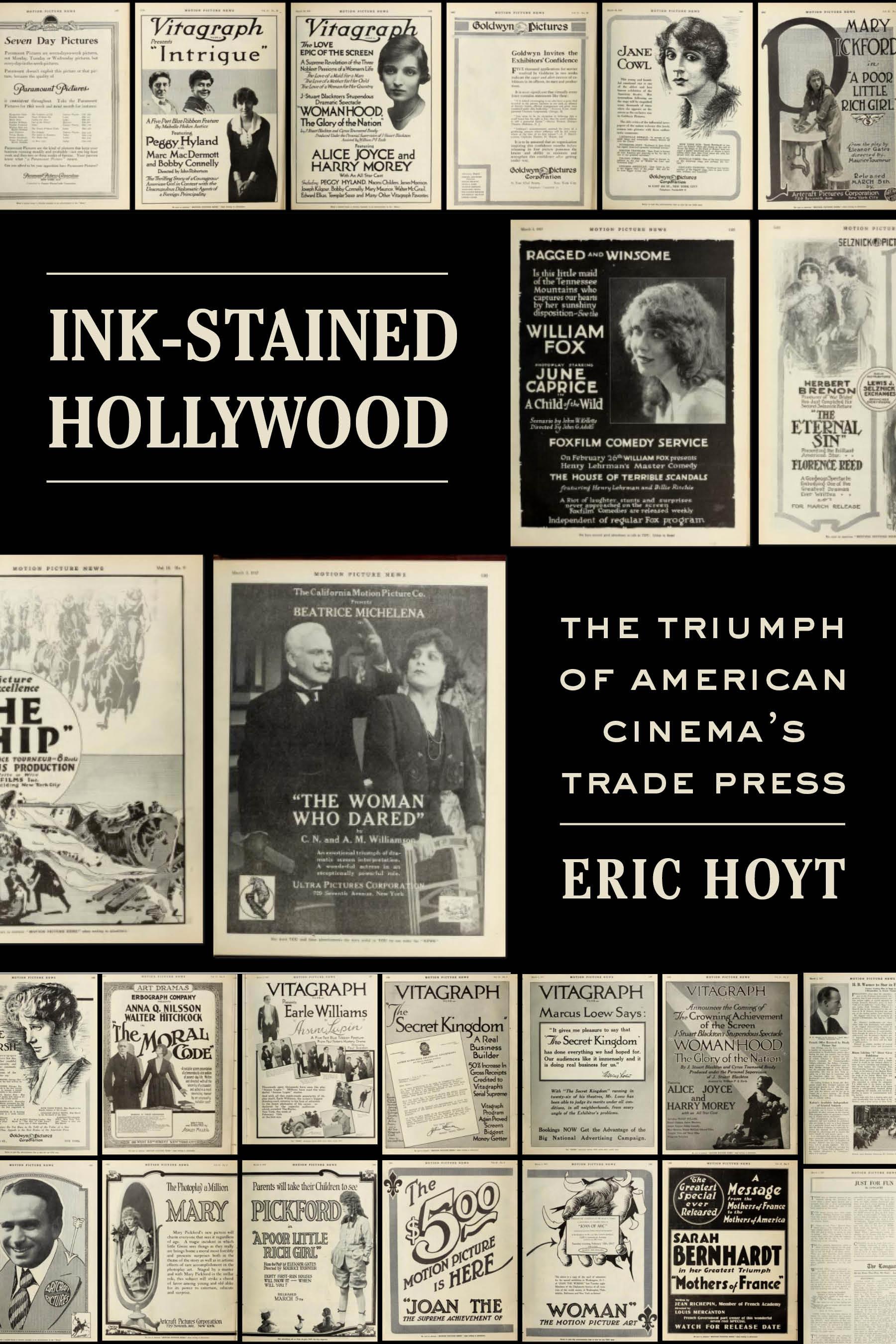
For the first half of the twentieth century, no American industry boasted a more motley and prolific trade press than the movie business—a cutthroat landscape that set the stage for battle by ink. In 1930, Martin Quigley, publisher of Exhibitors Herald, conspired with Hollywood studios to eliminate all competing trade papers, yet this attempt and each one thereafter collapsed. Exploring the communities of exhibitors and creative workers that constituted key subscribers, Ink-Stained Hollywood tells the story of how a heterogeneous trade press triumphed by appealing to the foundational aspects of industry culture—taste, vanity, partisanship, and exclusivity. In captivating detail, Eric Hoyt chronicles the histories of well-known trade papers (Variety, Motion Picture Herald) alongside important yet forgotten publications (Film Spectator, Film Mercury, and Camera!), and challenges the canon of film periodicals, offering new interpretative frameworks for understanding print journalism’s relationship with the motion picture industry and its continued impact on creative industries today.
For the first half of the twentieth century, no American industry boasted a more motley and prolific trade press than the movie business—a cutthroat landscape that set the stage for battle by ink. In 1930, Martin Quigley, publisher of Exhibitors Herald, conspired with Hollywood studios to eliminate all competing trade papers, yet this attempt and each one thereafter collapsed. Exploring the communities of exhibitors and creative workers that constituted key subscribers, Ink-Stained Hollywood tells the story of how a heterogeneous trade press triumphed by appealing to the foundational aspects of industry culture—taste, vanity, partisanship, and exclusivity. In captivating detail, Eric Hoyt chronicles the histories of well-known trade papers (Variety, Motion Picture Herald) alongside important yet forgotten publications (Film Spectator, Film Mercury, and Camera!), and challenges the canon of film periodicals, offering new interpretative frameworks for understanding print journalism’s relationship with the motion picture industry and its continued impact on creative industries today.
Betal nemt med kort, Klarna, Apple Pay eller Google Pay. Ikke tilfreds? Du har altid 14 dages fortrydelsesret. Læs mere i vores vilkår. Har du spørgsmål, så send os en mail på hello@memmo.org.
Memmo gør det nemmere at studere – uanset hvor du er i verden. Hos os samler du dine kursusbøger og smarte studieværktøjer ét sted: resuméer, quizzer, podcasts og flashcards. Og så er der Ted, din studieven, der svarer på alt, du undrer dig over. Over 50 000 studerende studerer allerede her – bygget til at hjælpe dig med at lære hurtigere og stresse mindre.
Du kan måske også lide
Køb bogen0