
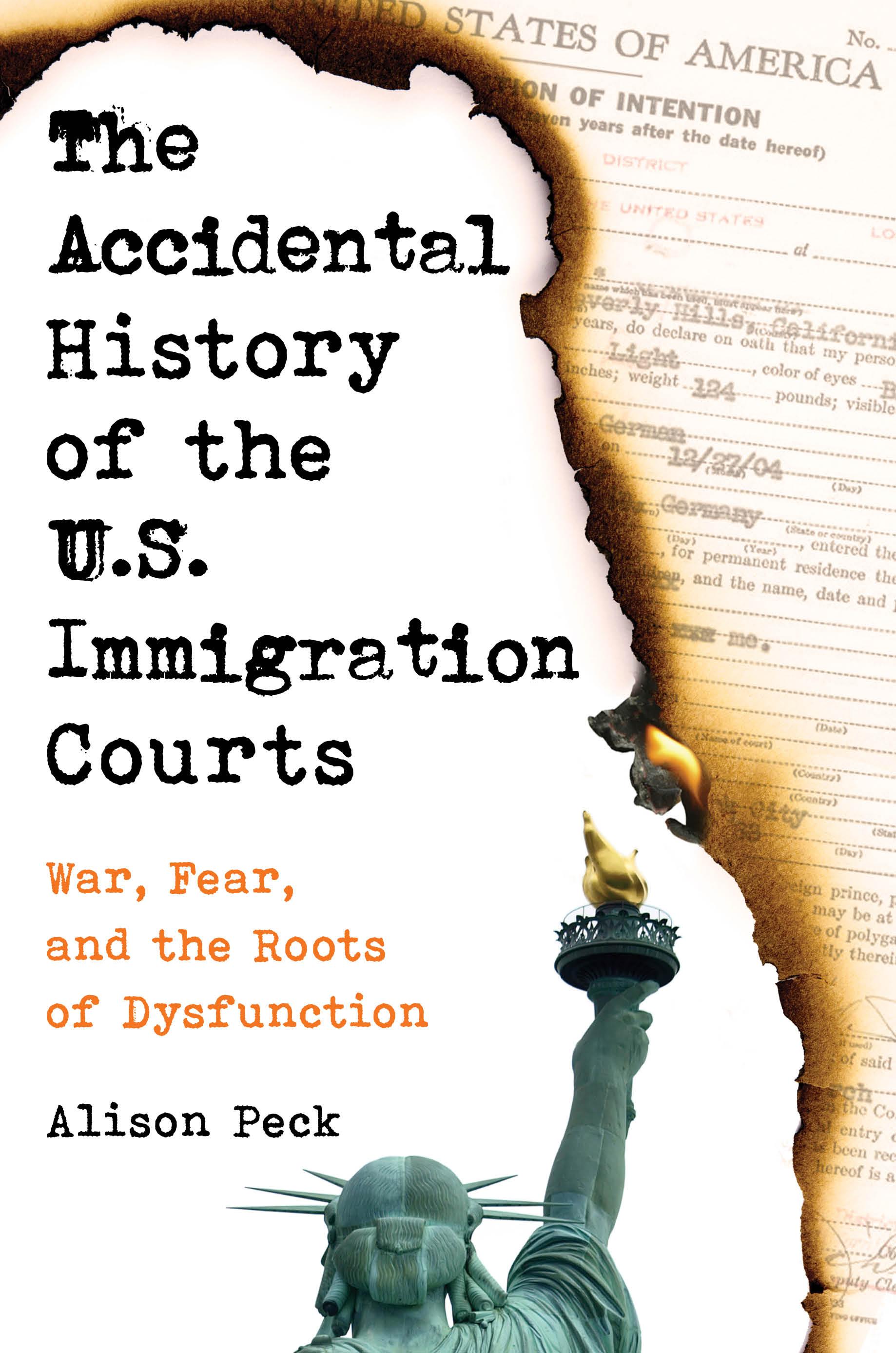
How the immigration courts became part of the nation’s law enforcement agency—and how to reshape them.
During the Trump administration, the immigration courts were decried as more politicized enforcement weapon than impartial tribunal. Yet few people are aware of a fundamental flaw in the system that has long pre-dated that administration: The immigration courts are not really “courts” at all but an office of the Department of Justice—the nation’s law enforcement agency.
This original and surprising diagnosis shows how paranoia sparked by World War II and the War on Terror drove the structure of the immigration courts. Focusing on previously unstudied decisions in the Roosevelt and Bush administrations, the narrative laid out in this book divulges both the human tragedy of our current immigration court system and the human crises that led to its creation. Moving the reader from understanding to action, Alison Peck offers a lens through which to evaluate contemporary bills and proposals to reform our immigration court system. Peck provides an accessible legal analysis of recent events to make the case for independent immigration courts, proposing that the courts be moved into an independent, Article I court system. As long as the immigration courts remain under the authority of the attorney general, the administration of immigration justice will remain a game of political football—with people’s very lives on the line.
During the Trump administration, the immigration courts were decried as more politicized enforcement weapon than impartial tribunal. Yet few people are aware of a fundamental flaw in the system that has long pre-dated that administration: The immigration courts are not really “courts” at all but an office of the Department of Justice—the nation’s law enforcement agency.
This original and surprising diagnosis shows how paranoia sparked by World War II and the War on Terror drove the structure of the immigration courts. Focusing on previously unstudied decisions in the Roosevelt and Bush administrations, the narrative laid out in this book divulges both the human tragedy of our current immigration court system and the human crises that led to its creation. Moving the reader from understanding to action, Alison Peck offers a lens through which to evaluate contemporary bills and proposals to reform our immigration court system. Peck provides an accessible legal analysis of recent events to make the case for independent immigration courts, proposing that the courts be moved into an independent, Article I court system. As long as the immigration courts remain under the authority of the attorney general, the administration of immigration justice will remain a game of political football—with people’s very lives on the line.
Betal nemt med kort, Klarna, Apple Pay eller Google Pay. Ikke tilfreds? Du har altid 14 dages fortrydelsesret. Læs mere i vores vilkår. Har du spørgsmål, så send os en mail på hello@memmo.org.
Memmo gør det nemmere at studere – uanset hvor du er i verden. Hos os samler du dine kursusbøger og smarte studieværktøjer ét sted: resuméer, quizzer, podcasts og flashcards. Og så er der Ted, din studieven, der svarer på alt, du undrer dig over. Over 50 000 studerende studerer allerede her – bygget til at hjælpe dig med at lære hurtigere og stresse mindre.
Du kan måske også lide
Køb bogen0