
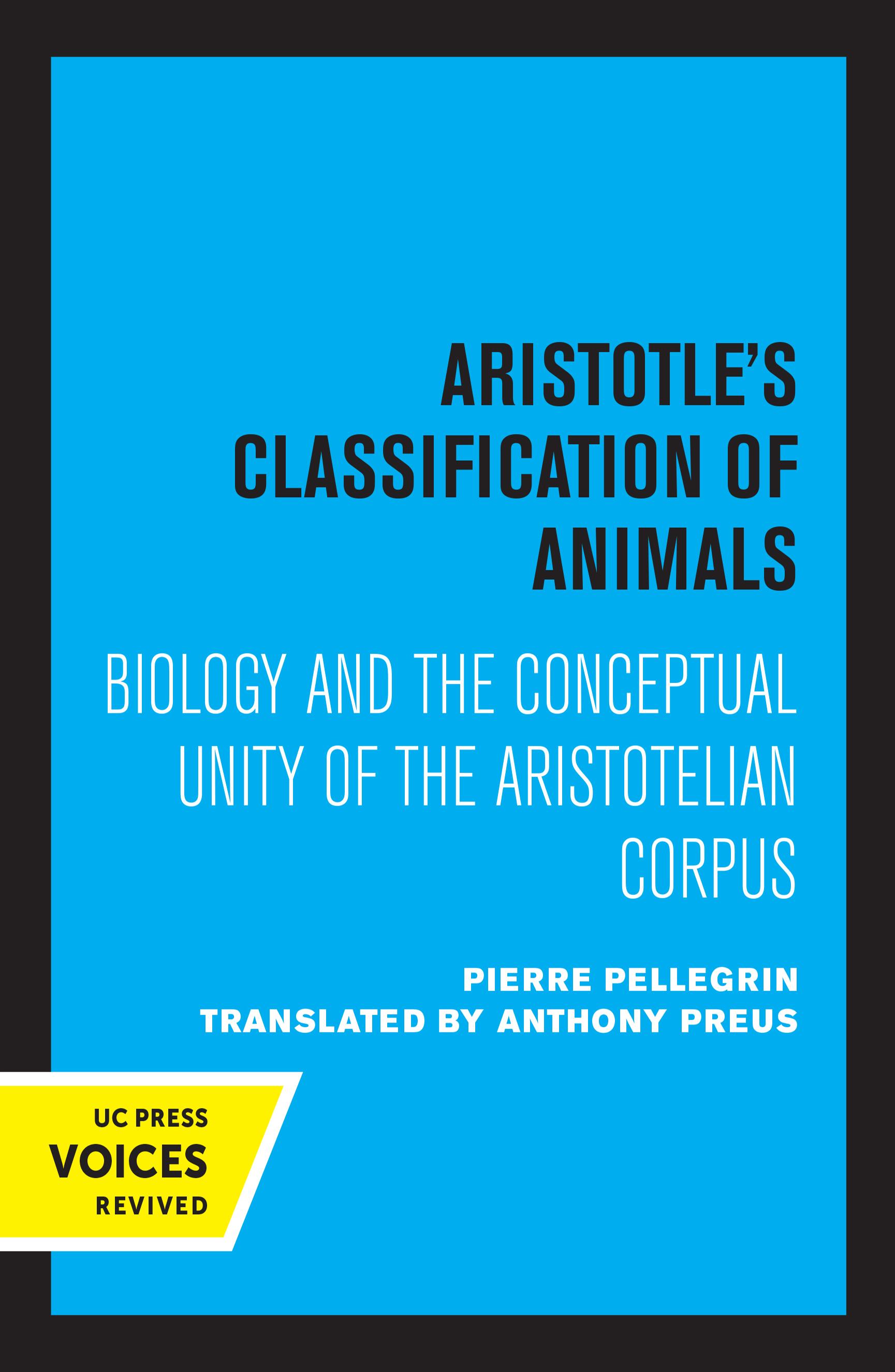
Aristotle's classification of animals, and indeed his approach to biology, challenges modern assumptions about scientific progress. Historians often view Aristotle's attempts at classification as incomplete precursors to the rigorous taxonomies of later scientists, such as Linnaeus, but this perspective may impose a retrospective, evolution-based understanding of science onto Aristotle's distinct worldview. While it's clear that Aristotle categorized animals based on their parts, characteristics, and behaviors, his classifications were not necessarily intended to function as comprehensive taxonomies. Instead, Aristotle's groupings reflect his philosophical quest to understand the essence of living things and the order of nature rather than a systematic effort to codify all species in a rigid structure. In his approach, classification served to illustrate larger principles and relationships rather than to build a finalized biological hierarchy. Moreover, Aristotle's classificatory efforts differ fundamentally from later biological taxonomies in their conceptual basis and purpose. Modern commentators, including Georges Cuvier, acknowledge Aristotle's influence on fields like comparative anatomy but note that Aristotle did not apply a structured taxonomic system as his successors did. Instead, Aristotle's categories were flexible, reflecting his ideas on the "essence" and "form" of living beings rather than any fixed biological grid. This distinction becomes crucial when interpreting Aristotle's work: rather than regarding it as an incomplete taxonomy, we might view it as a philosophical framework that integrates observations with conceptual exploration of life's diversity and order. This approach, which seeks to understand each organism within a broader natural order, is less about classifying individual species and more about investigating the fundamental nature of life. This title is part of UC Press's Voices Revived program, which commemorates University of California Press's mission to seek out and cultivate the brightest minds and give them voice, reach, and impact. Drawing on a backlist dating to 1893, Voices Revived makes high-quality, peer-reviewed scholarship accessible once again using print-on-demand technology. This title was originally published in 1986.
Many titles in the Voices Revived program are also newly available as books, offered at a discounted price to support wider access to scholarly work.
Many titles in the Voices Revived program are also newly available as books, offered at a discounted price to support wider access to scholarly work.
Betal nemt med kort, Klarna, Apple Pay eller Google Pay. Ikke tilfreds? Du har altid 14 dages fortrydelsesret. Læs mere i vores vilkår. Har du spørgsmål, så send os en mail på hello@memmo.org.
Memmo gør det nemmere at studere – uanset hvor du er i verden. Hos os samler du dine kursusbøger og smarte studieværktøjer ét sted: resuméer, quizzer, podcasts og flashcards. Og så er der Ted, din studieven, der svarer på alt, du undrer dig over. Over 50 000 studerende studerer allerede her – bygget til at hjælpe dig med at lære hurtigere og stresse mindre.
Du kan måske også lide
Køb bogen0