
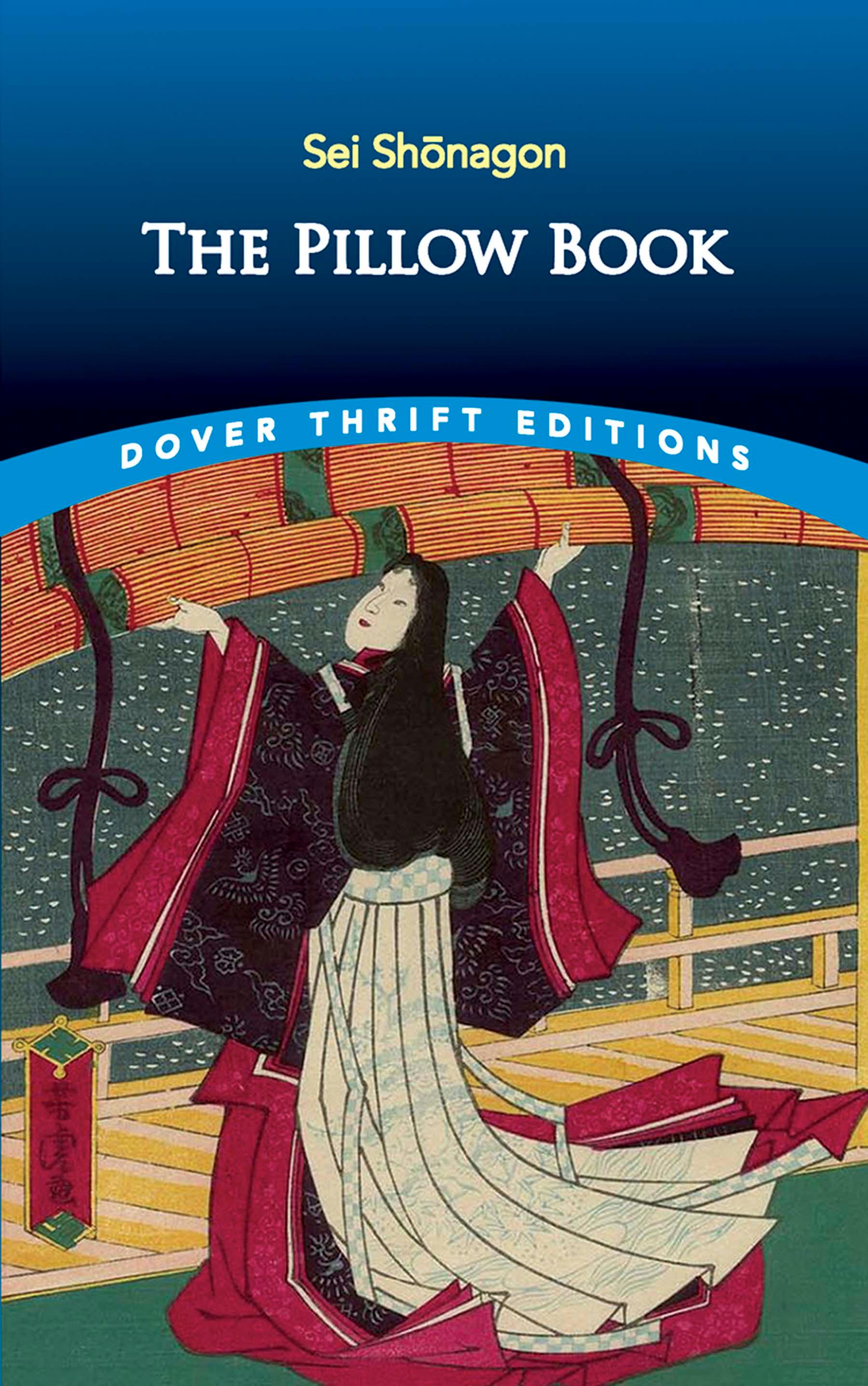
In the tenth century, Japan was both physically and culturally isolated from the rest of the world. The Pillow Book recaptures this lost world with the diary of a young court lady. Sei Shōnagon was a contemporary of Murasaki Shikibu, who wrote the well-known novel The Tale of Genji. Unlike the latter's fictionalized view of the Heian-era court, Shōnagon's journal provides a lively miscellany of anecdotes, observations, and gossip, intended to be read in juicy bits and pieces.
This unique volume was first rendered into English in 1889. In 1928, Arthur Waley, a seminal figure in the Western studies of Japanese culture, undertook a translation. The distinguished scholar devised this abridged version of the text, re-creating in English the stylistic beauty of its prose and the vitality of its narrative. Waley's interpretation offers a fascinating glimpse of the artistic pursuits of the royal court and its constant round of rituals, festivals, and ceremonies.
This unique volume was first rendered into English in 1889. In 1928, Arthur Waley, a seminal figure in the Western studies of Japanese culture, undertook a translation. The distinguished scholar devised this abridged version of the text, re-creating in English the stylistic beauty of its prose and the vitality of its narrative. Waley's interpretation offers a fascinating glimpse of the artistic pursuits of the royal court and its constant round of rituals, festivals, and ceremonies.
Betal nemt med kort, Klarna, Apple Pay eller Google Pay. Ikke tilfreds? Du har altid 14 dages fortrydelsesret. Læs mere i vores vilkår. Har du spørgsmål, så send os en mail på hello@memmo.org.
Memmo gør det nemmere at studere – uanset hvor du er i verden. Hos os samler du dine kursusbøger og smarte studieværktøjer ét sted: resuméer, quizzer, podcasts og flashcards. Og så er der Ted, din studieven, der svarer på alt, du undrer dig over. Over 50 000 studerende studerer allerede her – bygget til at hjælpe dig med at lære hurtigere og stresse mindre.
Du kan måske også lide
Køb bogen0