
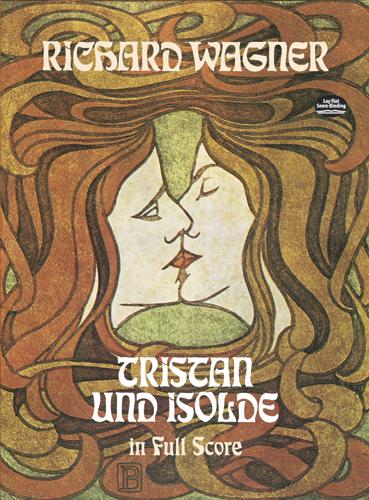
Among musicologists and serious lovers of music, Wagner's Tristan und Isolde is generally considered the high point of orchestration in the musical tradition of nineteenth-century Europe. It shows in most successful form Wagner's unsurpassed gift for using the instruments of the orchestra, and generations of students have worked with it to learn its technique.
Tristan und Isolde also has a remarkable historical position. It was the opera that most of the post-Wagnerians used to build upon, and it was also the opera that the anti-Wagnerians seized upon very frequently for their attacks and for their attempts to move musically away from Wagnerism. Accepted or rejected, it has been the work with which late nineteenth- and early twentieth-century musicians had to come to terms, and much musical history of this period can be understood through it.
This edition reproduces the full orchestral score in a clear, modern engraving for easy reading and piano study, with large legible notation. Do not confuse this with a piano rendering; it is a full orchestral score.
In addition to its obvious uses for study, this score is also an indispensable associate for anyone listening to recordings. In no other manner can the listener keep full awareness of the incredible orchestral richness of this opera.
Betal nemt med kort, Klarna, Apple Pay eller Google Pay. Ikke tilfreds? Du har altid 14 dages fortrydelsesret. Læs mere i vores vilkår. Har du spørgsmål, så send os en mail på hello@memmo.org.
Memmo gør det nemmere at studere – uanset hvor du er i verden. Hos os samler du dine kursusbøger og smarte studieværktøjer ét sted: resuméer, quizzer, podcasts og flashcards. Og så er der Ted, din studieven, der svarer på alt, du undrer dig over. Over 50 000 studerende studerer allerede her – bygget til at hjælpe dig med at lære hurtigere og stresse mindre.