
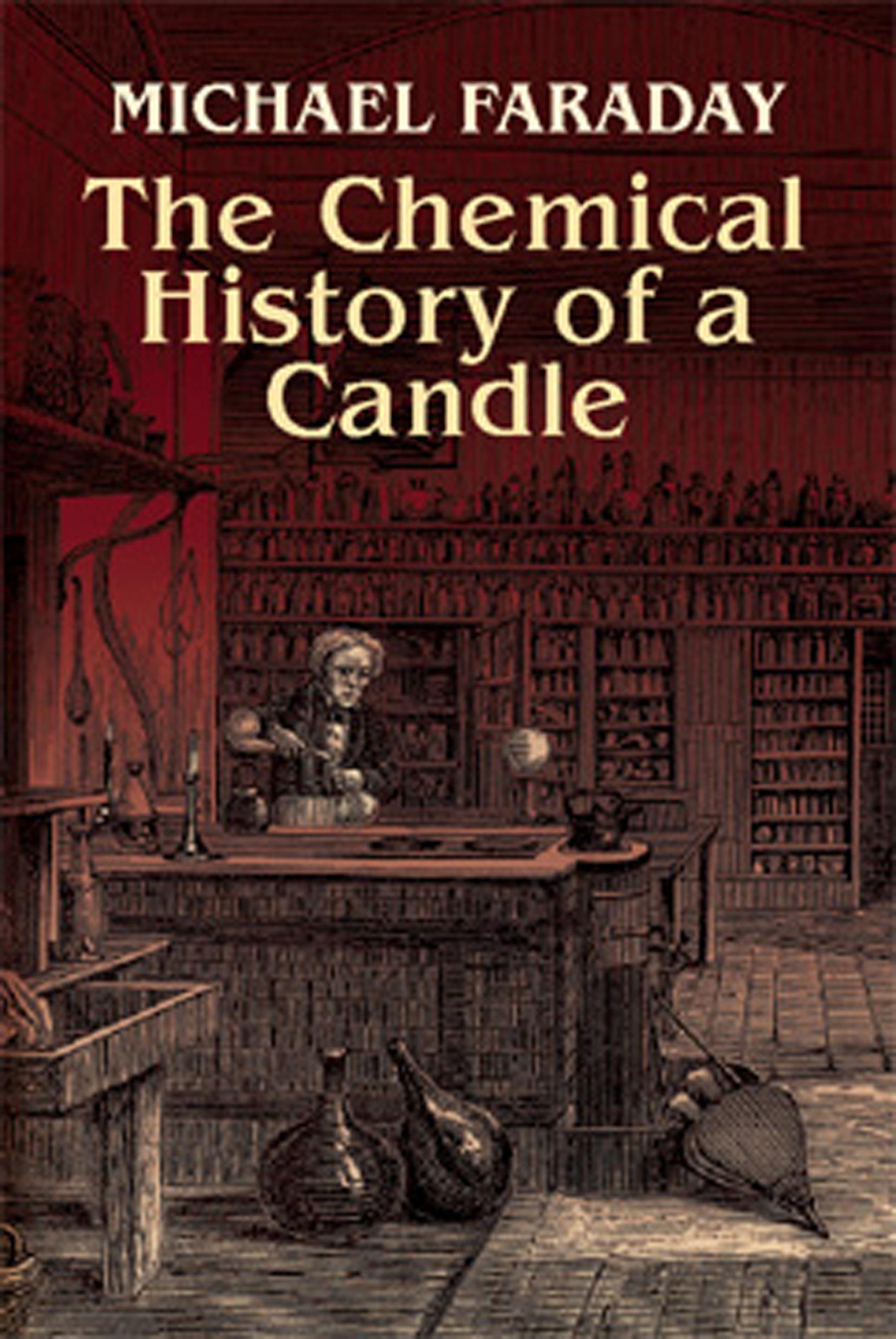
One of the greatest experimental scientists of all time, Michael Faraday (1791–1867) developed the first electric motor, electric generator, and dynamo — essentially creating the science of electrochemistry. This book, the result of six lectures he delivered to young students at London’s Royal Institution, concerns another form of energy — candlelight.
Faraday titled the lectures "The Chemical History of a Candle," choosing the subject because, as he explained, "There is not a law under which any part of this universe is governed which does not come into play and is not touched upon [during the time a candle burns]."
That statement is the foundation for a book that describes, with great clarity, the components, function and weight of the atmosphere; the function of a candle wick; capillary attraction; the carbon content in oxygen and living bodies; the production of carbon dioxide from coal gas and sugar; the properties of carbonic acid; respiration and its analogy to the burning of a candle; and much more. There is also a chapter comprising Faraday's "Lecture on Platinum."
A useful classroom teaching tool, this classic text will also appeal to a wide audience interested in scientific inquiry.
Betal nemt med kort, Klarna, Apple Pay eller Google Pay. Ikke tilfreds? Du har altid 14 dages fortrydelsesret. Læs mere i vores vilkår. Har du spørgsmål, så send os en mail på hello@memmo.org.
Memmo gør det nemmere at studere – uanset hvor du er i verden. Hos os samler du dine kursusbøger og smarte studieværktøjer ét sted: resuméer, quizzer, podcasts og flashcards. Og så er der Ted, din studieven, der svarer på alt, du undrer dig over. Over 50 000 studerende studerer allerede her – bygget til at hjælpe dig med at lære hurtigere og stresse mindre.