
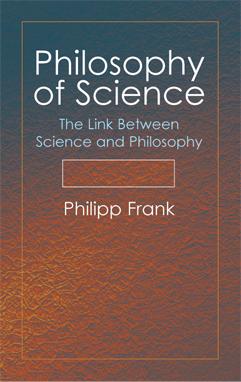
A great mathematician and teacher bridges the gap between science and the humanities in this exposition of the philosophy of science. Philipp Frank, a distinguished physicist and philosopher in his own right, traces the history of science from Aristotle to Einstein to illustrate philosophy’s ongoing role in the scientific process.
Suitable for undergraduate students and other readers, this volume explains modern technology’s role in the gradual erosion of the rapport between physical theories and philosophical systems, and offers suggestions for restoring the link between these related areas. Dr. Frank examines the ancient Greek concept of natural science to illustrate the development of modern science; then, using geometry as an example, he charts its progress from Euclidean principles through the interpretations of Descartes, Mill, Kant, and the rise of four-dimensional and non-Euclidean geometry. Additional topics include the laws of motion, before and after innovations of Galileo and Newton; perceptions of motion, light, and relativity through the ages; metaphysical interpretations of relativistic physics; the motion of atomic objects and the phenomena and formulations of atomic physics; and the principle of causality and the validation of theories.
Betal nemt med kort, Klarna, Apple Pay eller Google Pay. Ikke tilfreds? Du har altid 14 dages fortrydelsesret. Læs mere i vores vilkår. Har du spørgsmål, så send os en mail på hello@memmo.org.
Memmo gør det nemmere at studere – uanset hvor du er i verden. Hos os samler du dine kursusbøger og smarte studieværktøjer ét sted: resuméer, quizzer, podcasts og flashcards. Og så er der Ted, din studieven, der svarer på alt, du undrer dig over. Over 50 000 studerende studerer allerede her – bygget til at hjælpe dig med at lære hurtigere og stresse mindre.