
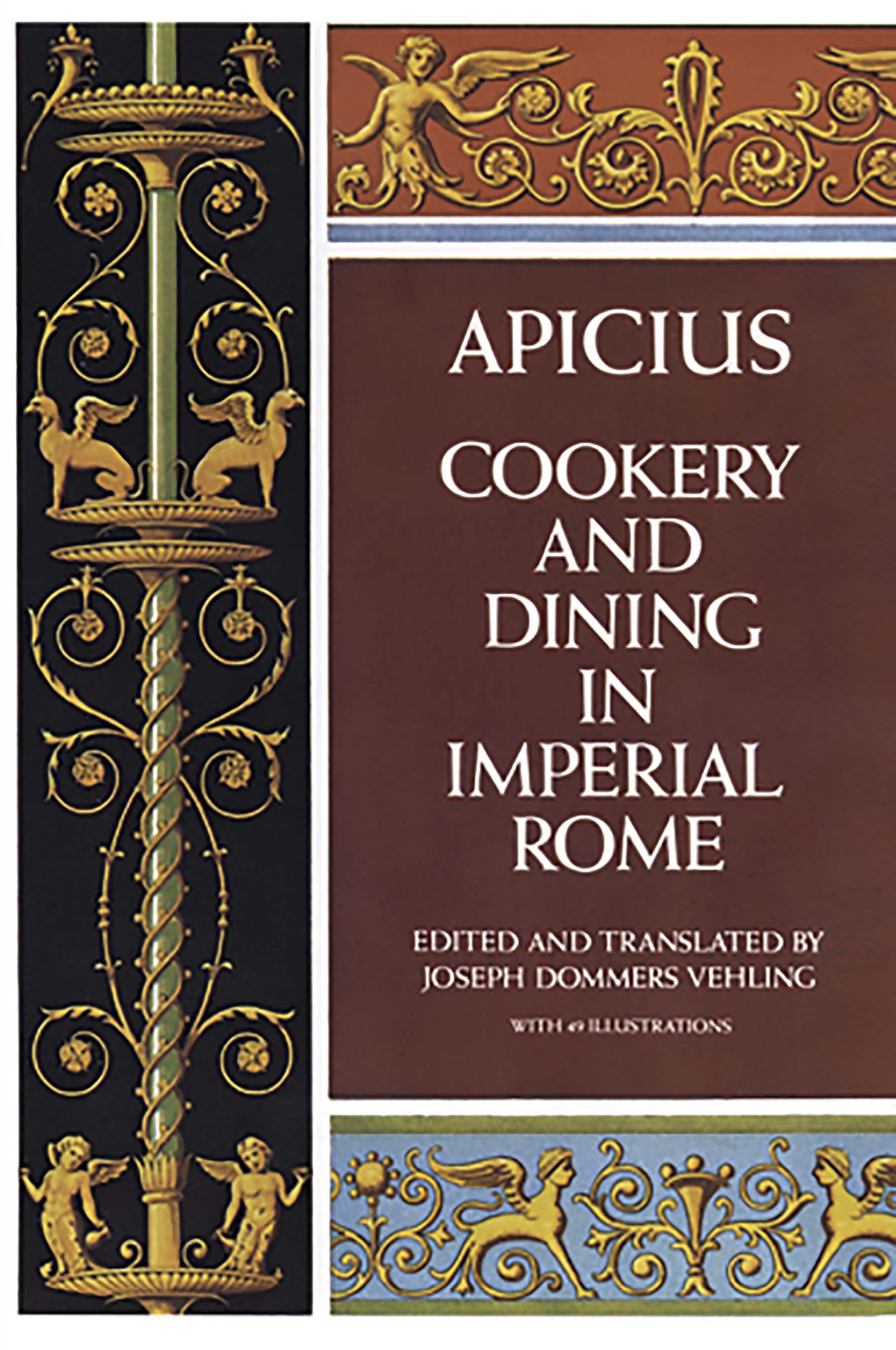
This is the first English translation of Apicius de re Coquinaria, the oldest known cookbook in existence. It is also one of the few translations of this original Roman cookbook prepared by a professional chef. Joseph Vehling's brilliant translation, extended introduction, and full and helpful commentary combine to bring you a clear picture of what foods the Romans ate, how they prepared them, and the highly developed state of culinary arts in Imperial Rome.
There are recipes for cooking fish and seafood, game, chicken, pork, veal, and other domesticated animals and birds, for vegetable dishes, grains, beverages, and sauces; virtually the full range of cookery is covered. There are also methods for preserving foods, revitalizing them, even adulterating them. Some of the recipes are strikingly modern; others use ingredients and methods that have long since disappeared.
As the book was originally written for professional cooks working in Rome (perhaps made even more obscure to prevent amateurs from gaining access to the recipes), Joseph Vehling's generous notes are essential for understanding the ingredients and methods used in the recipes and the relationship of Roman cooking to our own traditions.
Besides the translation and notes there is much other material, both scholarly and informative, covering cooking in the ancient world, the history and bibliography of Apicius manuscripts and editions, an index and vocabulary of Roman cookery terms, 49 illustrations including drawings by the author and facsimiles from earlier editions, and much more. Needless to say, you couldn't find this information anywhere else.
This rare book will appeal to gourmets, professional and amateur chefs, cultural historians, and others who want to see, first hand, the foods on which Imperial Rome dined. It will clear up many myths about Roman cooking and will provide a great deal of enjoyable reading as well.
There are recipes for cooking fish and seafood, game, chicken, pork, veal, and other domesticated animals and birds, for vegetable dishes, grains, beverages, and sauces; virtually the full range of cookery is covered. There are also methods for preserving foods, revitalizing them, even adulterating them. Some of the recipes are strikingly modern; others use ingredients and methods that have long since disappeared.
As the book was originally written for professional cooks working in Rome (perhaps made even more obscure to prevent amateurs from gaining access to the recipes), Joseph Vehling's generous notes are essential for understanding the ingredients and methods used in the recipes and the relationship of Roman cooking to our own traditions.
Besides the translation and notes there is much other material, both scholarly and informative, covering cooking in the ancient world, the history and bibliography of Apicius manuscripts and editions, an index and vocabulary of Roman cookery terms, 49 illustrations including drawings by the author and facsimiles from earlier editions, and much more. Needless to say, you couldn't find this information anywhere else.
This rare book will appeal to gourmets, professional and amateur chefs, cultural historians, and others who want to see, first hand, the foods on which Imperial Rome dined. It will clear up many myths about Roman cooking and will provide a great deal of enjoyable reading as well.
Betal nemt med kort, Klarna, Apple Pay eller Google Pay. Ikke tilfreds? Du har altid 14 dages fortrydelsesret. Læs mere i vores vilkår. Har du spørgsmål, så send os en mail på hello@memmo.org.
Memmo gør det nemmere at studere – uanset hvor du er i verden. Hos os samler du dine kursusbøger og smarte studieværktøjer ét sted: resuméer, quizzer, podcasts og flashcards. Og så er der Ted, din studieven, der svarer på alt, du undrer dig over. Over 50 000 studerende studerer allerede her – bygget til at hjælpe dig med at lære hurtigere og stresse mindre.
Du kan måske også lide
Køb bogen0