
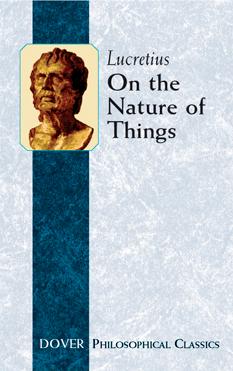
A Roman poet and philosopher of the first century, Lucretius sought to dispel what he considered the chief cause of unhappiness: fear of death and fear of the wrath of the gods. His great didactic poem in six parts, De Rerum Natura (On the Nature of Things), theorizes that natural causes are the forces behind earthly phenomena and dismisses the concept of divine intervention.
Lucretius’ discourse ranges from discussions of the motion of atoms, natural phenomena, and sensation, to assertions regarding free will and the soul’s relationship to the body. He maintains that the soul is a chance combination of atoms that perishes with the body, rather than a distinct, immaterial entity. The philosopher proposes completely natural causes for all earthly phenomena, suggesting that the world operates independently of divine agency and that fear of the supernatural is unfounded. Although he refrains from denying the existence of gods, Lucretius considers them unconcerned with human affairs and destiny.
Derived from the philosophical materialism of the Greeks, Lucretius’ writings remain the primary source for contemporary knowledge of Epicurean thought. A staple of introductory philosophy courses, this volume is also a masterpiece of Latin verse.
Lucretius’ discourse ranges from discussions of the motion of atoms, natural phenomena, and sensation, to assertions regarding free will and the soul’s relationship to the body. He maintains that the soul is a chance combination of atoms that perishes with the body, rather than a distinct, immaterial entity. The philosopher proposes completely natural causes for all earthly phenomena, suggesting that the world operates independently of divine agency and that fear of the supernatural is unfounded. Although he refrains from denying the existence of gods, Lucretius considers them unconcerned with human affairs and destiny.
Derived from the philosophical materialism of the Greeks, Lucretius’ writings remain the primary source for contemporary knowledge of Epicurean thought. A staple of introductory philosophy courses, this volume is also a masterpiece of Latin verse.
Betal nemt med kort, Klarna, Apple Pay eller Google Pay. Ikke tilfreds? Du har altid 14 dages fortrydelsesret. Læs mere i vores vilkår. Har du spørgsmål, så send os en mail på hello@memmo.org.
Memmo gør det nemmere at studere – uanset hvor du er i verden. Hos os samler du dine kursusbøger og smarte studieværktøjer ét sted: resuméer, quizzer, podcasts og flashcards. Og så er der Ted, din studieven, der svarer på alt, du undrer dig over. Over 50 000 studerende studerer allerede her – bygget til at hjælpe dig med at lære hurtigere og stresse mindre.
Du kan måske også lide
Køb bogen0