
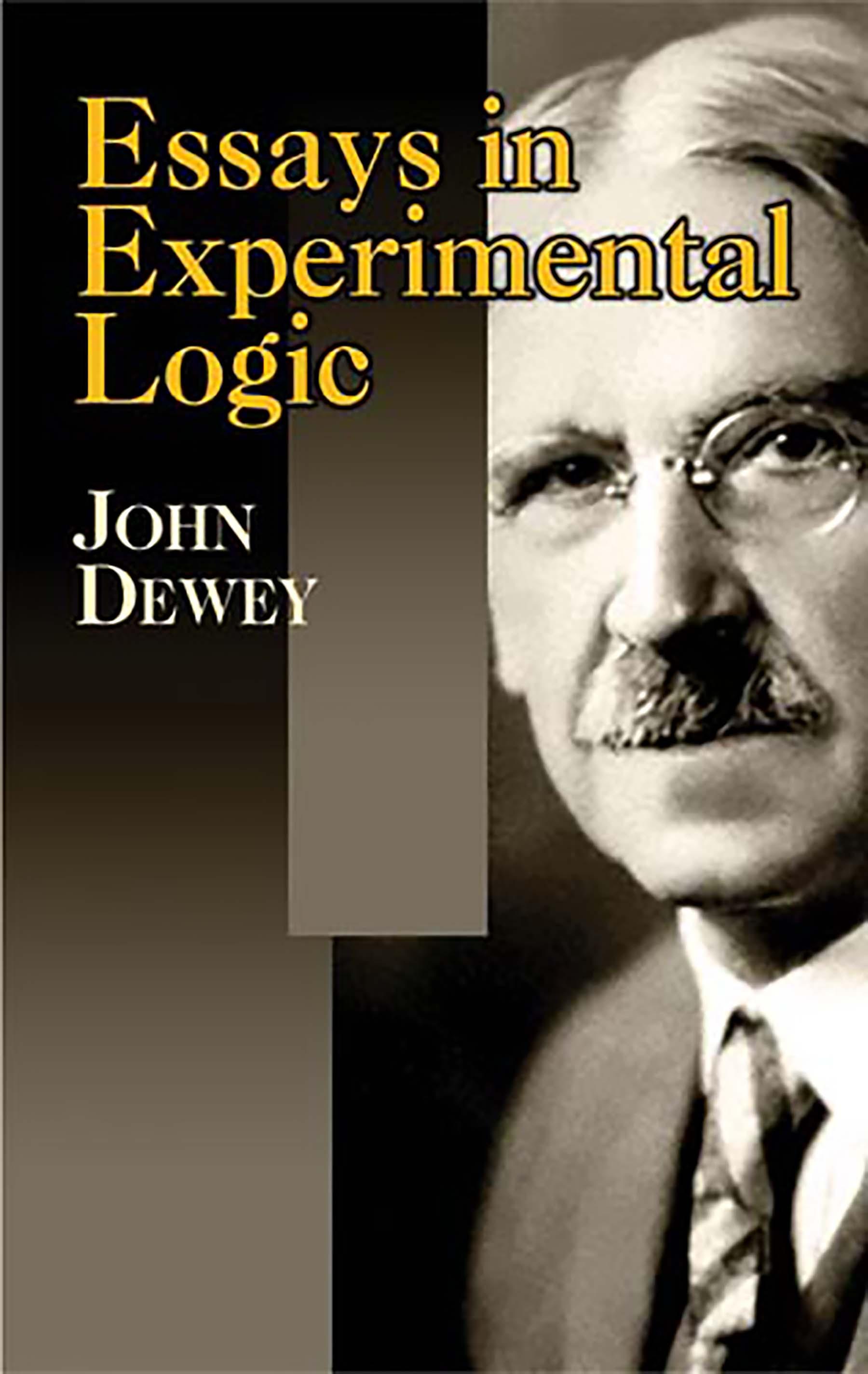
The scope of John Dewey's writings — ranging from aesthetics and education to legal and political theory — and his role in the development of twentieth-century philosophy have helped make him a continuing influence on contemporary thought. One of his most significant contributions to the theory of knowledge lay in his application of the principles of instrumentalism to traditional approaches to logical theory. Essays in Experimental Logic contains 14 of Dewey's most profound papers on many different aspects of knowledge, reality, and epistemology.
These papers on experimental logic are based on the theory that possession of knowledge implies a judgment, resulting from an inquiry or investigation. The presence of this "inquiry stage" suggests an intermediate and mediating phase between the external world and knowledge, an area conditioned by other factors. Expanding upon this foundation, these papers consider the relationship of thought and its subject matter; the antecedents and stimuli of thought, data, and meanings; the objects of thought; control of ideas by facts; and similar topics.
Three papers describe the various kinds of philosophical realism. The first closely examines Bertrand Russell's dictum concerning "our knowledge of the external world as a field for scientific method"; the other two discuss pragmatism, differentiating Dewey's position from those of James and Peirce. These essays present their author's most easily followed account of his own philosophy. The section entitled "Stage of Logical Thought" analyzes the role of scientific method in philosophy, and the final essay presents a striking theory of a logic of values.
These papers on experimental logic are based on the theory that possession of knowledge implies a judgment, resulting from an inquiry or investigation. The presence of this "inquiry stage" suggests an intermediate and mediating phase between the external world and knowledge, an area conditioned by other factors. Expanding upon this foundation, these papers consider the relationship of thought and its subject matter; the antecedents and stimuli of thought, data, and meanings; the objects of thought; control of ideas by facts; and similar topics.
Three papers describe the various kinds of philosophical realism. The first closely examines Bertrand Russell's dictum concerning "our knowledge of the external world as a field for scientific method"; the other two discuss pragmatism, differentiating Dewey's position from those of James and Peirce. These essays present their author's most easily followed account of his own philosophy. The section entitled "Stage of Logical Thought" analyzes the role of scientific method in philosophy, and the final essay presents a striking theory of a logic of values.
Betal nemt med kort, Klarna, Apple Pay eller Google Pay. Ikke tilfreds? Du har altid 14 dages fortrydelsesret. Læs mere i vores vilkår. Har du spørgsmål, så send os en mail på hello@memmo.org.
Memmo gør det nemmere at studere – uanset hvor du er i verden. Hos os samler du dine kursusbøger og smarte studieværktøjer ét sted: resuméer, quizzer, podcasts og flashcards. Og så er der Ted, din studieven, der svarer på alt, du undrer dig over. Over 50 000 studerende studerer allerede her – bygget til at hjælpe dig med at lære hurtigere og stresse mindre.
Du kan måske også lide
Køb bogen0