
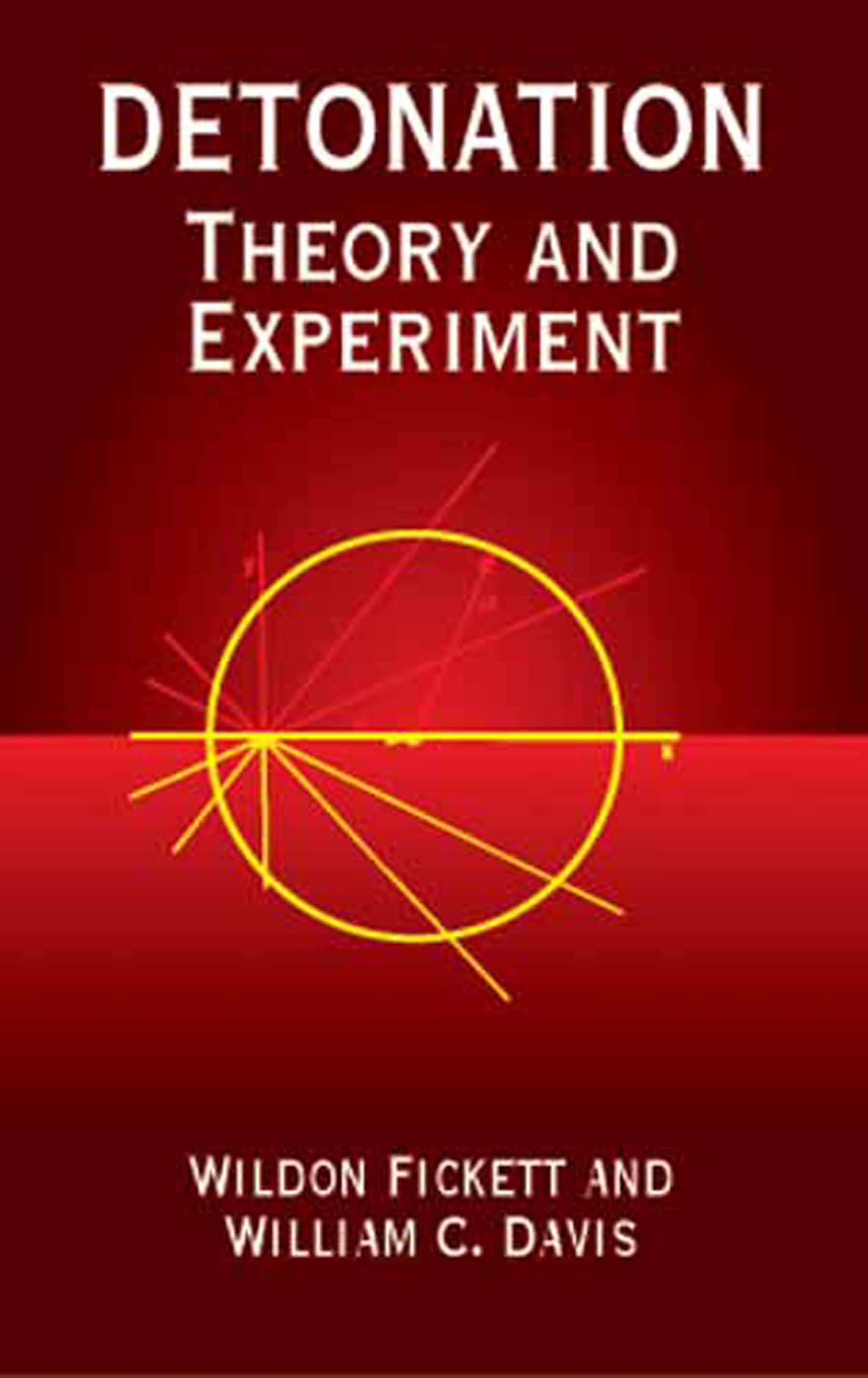
Detonation, as the authors point out, differs from other forms of combustion "in that all the important energy transfer is by mass flow in strong compression waves, with negligible contributions from other processes like heat conduction." Experiments have shown that these waves have a complex transverse structure, and have puzzled scientists by yielding some results that are at odds with the theoretical predictions.
This newly corrected edition of a classic in its field serves as a comprehensive review of both experiments and theories of detonation ― focusing on the steady (i.e. time-independent), fully developed detonation wave, rather than on the initiation or failure of detonation. After an introductory chapter the authors explore the "simple theory," including the Zeldovich–von Newmann–Doering model, and experimental tests of the simple theory. The chapters that follow cover flow in a reactive medium, steady detonation, the nonsteady solution, and the structure of the detonation front. The authors have succeeded in making the detailed, difficult theoretical work more accessible by working out a number of simple cases for illustration.
The original edition of this book influenced many other scientists to pursue theories and experiments in detonation physics. This new, corrected edition will be welcomed by physicists, chemists, engineers, and anyone interested in understanding the phenomenon of detonation. 1979 edition.
Betal nemt med kort, Klarna, Apple Pay eller Google Pay. Ikke tilfreds? Du har altid 14 dages fortrydelsesret. Læs mere i vores vilkår. Har du spørgsmål, så send os en mail på hello@memmo.org.
Memmo gør det nemmere at studere – uanset hvor du er i verden. Hos os samler du dine kursusbøger og smarte studieværktøjer ét sted: resuméer, quizzer, podcasts og flashcards. Og så er der Ted, din studieven, der svarer på alt, du undrer dig over. Over 50 000 studerende studerer allerede her – bygget til at hjælpe dig med at lære hurtigere og stresse mindre.