
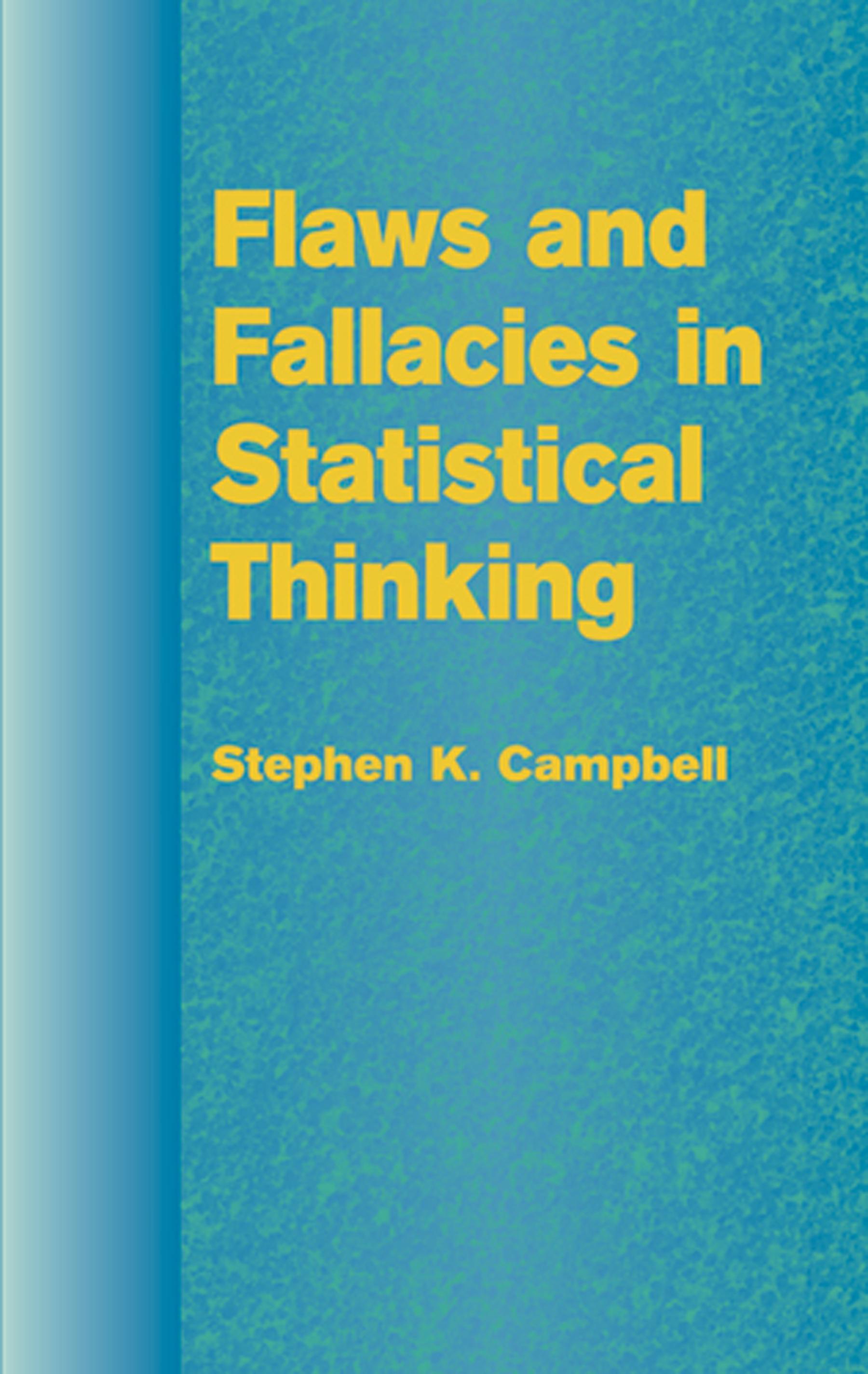
This book was written with a dual purpose: first, the author was motivated to relieve his distress over the faulty conclusions drawn from the frequent misuse of relatively simple statistical tools such as percents, graphs, and averages. Second, his objective was to create a nontechnical book that would help people make better-informed decisions by increasing their ability to judge the quality of statistical evidence. This volume achieves both, serving as a supplemental text for students taking their first course in statistics, and as a self-help guide for anyone wishing to evaluate statistical evidence more judiciously.
The sequence of topics corresponds with that of many beginning textbooks in statistics, and the terminology and treatment of subjects are based on the assumption that readers have had little or no prior exposure to statistics or formal mathematics. The author examines the perils of statistical ignorance, some problems in basic measurement and definition, and the prevalence of meaningless statistics, far-fetched estimates, cheating charts, and accommodating averages. He explains common pitfalls of statistical thinking such as ignoring dispersion, inflating percentages, drawing improper comparisons, jumping to conclusions, and making errors of probability and induction. Playful in tone but scrupulously accurate in nature, this text is equally valuable in and out of the classroom.
Betal nemt med kort, Klarna, Apple Pay eller Google Pay. Ikke tilfreds? Du har altid 14 dages fortrydelsesret. Læs mere i vores vilkår. Har du spørgsmål, så send os en mail på hello@memmo.org.
Memmo gør det nemmere at studere – uanset hvor du er i verden. Hos os samler du dine kursusbøger og smarte studieværktøjer ét sted: resuméer, quizzer, podcasts og flashcards. Og så er der Ted, din studieven, der svarer på alt, du undrer dig over. Over 50 000 studerende studerer allerede her – bygget til at hjælpe dig med at lære hurtigere og stresse mindre.