
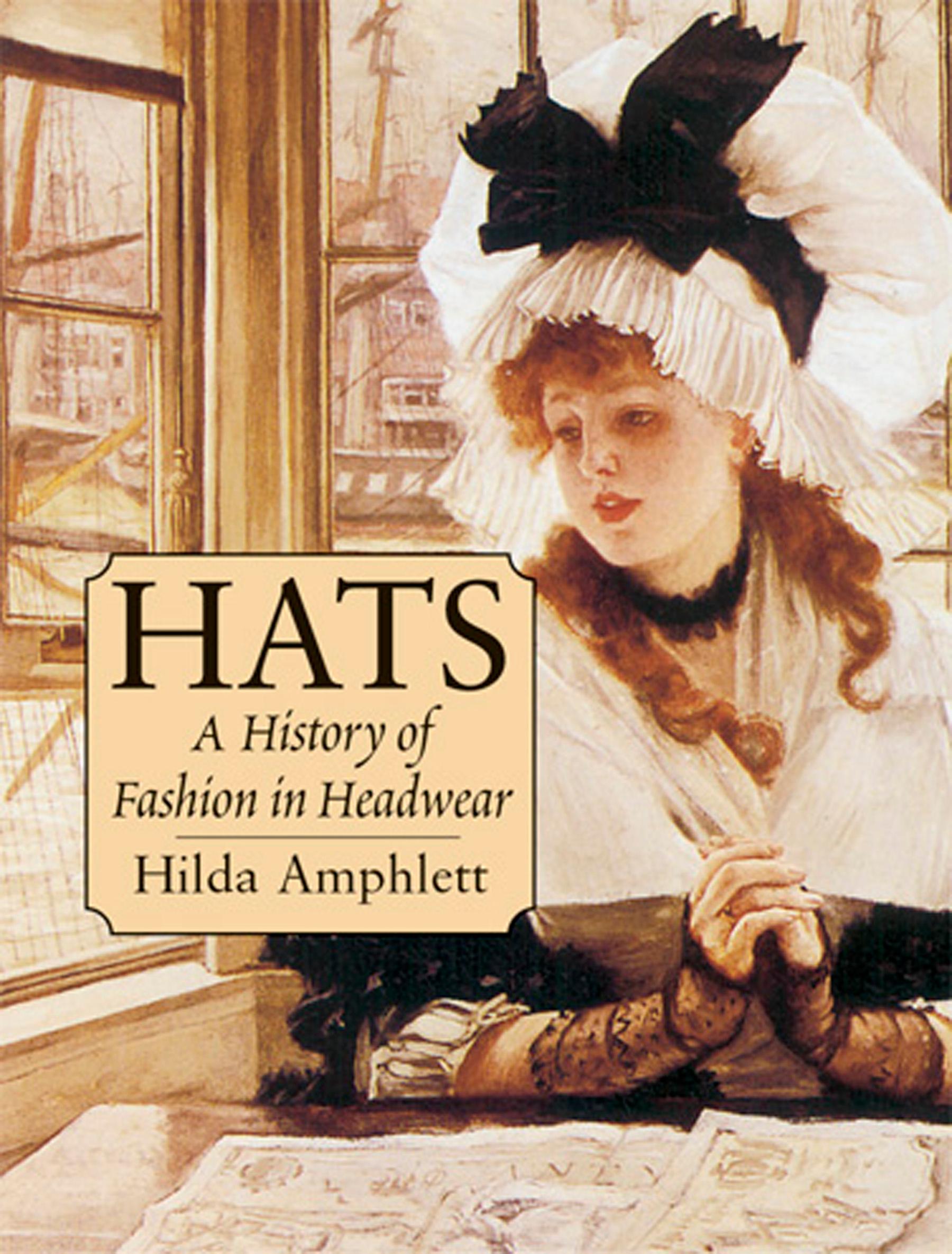
“One must always wear a hat when lunching with people whom one does not know well,” observed Coco Chanel, “because one appears to one's best advantage.” The couturier's regard for the power of hats to confer dignity and attractiveness upon the wearer stems from a long historical tradition. In addition to its practical uses — warding off the effects of harsh weather or an enemy’s assault, for example — a stylish hat has always made a statement of rank, elegance, or self-esteem.
This remarkable book presents an illustrated view of 2,000 years of head coverings. Over 800 drawings by the author — adapted from rare paintings, sculptures, and illustrations — accurately depict headgear in various aspects, including gender, class, and nationality. Crowns, wigs, tiaras, and helmets appear among the varied forms of headdresses, which include conical leather caps worn by the Danes in 70 B.C.; metal Viking helmets with horns; feathered Flemish berets (1410); petite straw hats, adorned with a rosette and ribbons (1870); handsome English top hats (1957); as well as ecclesiastical regalia, traditional and ethnic styles, and hats and head adornments from far beyond the European shores.
Organized chronologically by century, the fetching drawings appear alongside an interpretive text that documents the development of styles, their changes with the passage of time, and the influences that both created and altered them. Engaging and literate, this valuable reference for designers, art students, and costume historians will also captivate anyone who appreciates the age-old allure of a fine hat.
This remarkable book presents an illustrated view of 2,000 years of head coverings. Over 800 drawings by the author — adapted from rare paintings, sculptures, and illustrations — accurately depict headgear in various aspects, including gender, class, and nationality. Crowns, wigs, tiaras, and helmets appear among the varied forms of headdresses, which include conical leather caps worn by the Danes in 70 B.C.; metal Viking helmets with horns; feathered Flemish berets (1410); petite straw hats, adorned with a rosette and ribbons (1870); handsome English top hats (1957); as well as ecclesiastical regalia, traditional and ethnic styles, and hats and head adornments from far beyond the European shores.
Organized chronologically by century, the fetching drawings appear alongside an interpretive text that documents the development of styles, their changes with the passage of time, and the influences that both created and altered them. Engaging and literate, this valuable reference for designers, art students, and costume historians will also captivate anyone who appreciates the age-old allure of a fine hat.
Betal nemt med kort, Klarna, Apple Pay eller Google Pay. Ikke tilfreds? Du har altid 14 dages fortrydelsesret. Læs mere i vores vilkår. Har du spørgsmål, så send os en mail på hello@memmo.org.
Memmo gør det nemmere at studere – uanset hvor du er i verden. Hos os samler du dine kursusbøger og smarte studieværktøjer ét sted: resuméer, quizzer, podcasts og flashcards. Og så er der Ted, din studieven, der svarer på alt, du undrer dig over. Over 50 000 studerende studerer allerede her – bygget til at hjælpe dig med at lære hurtigere og stresse mindre.
Du kan måske også lide
Køb bogen0