
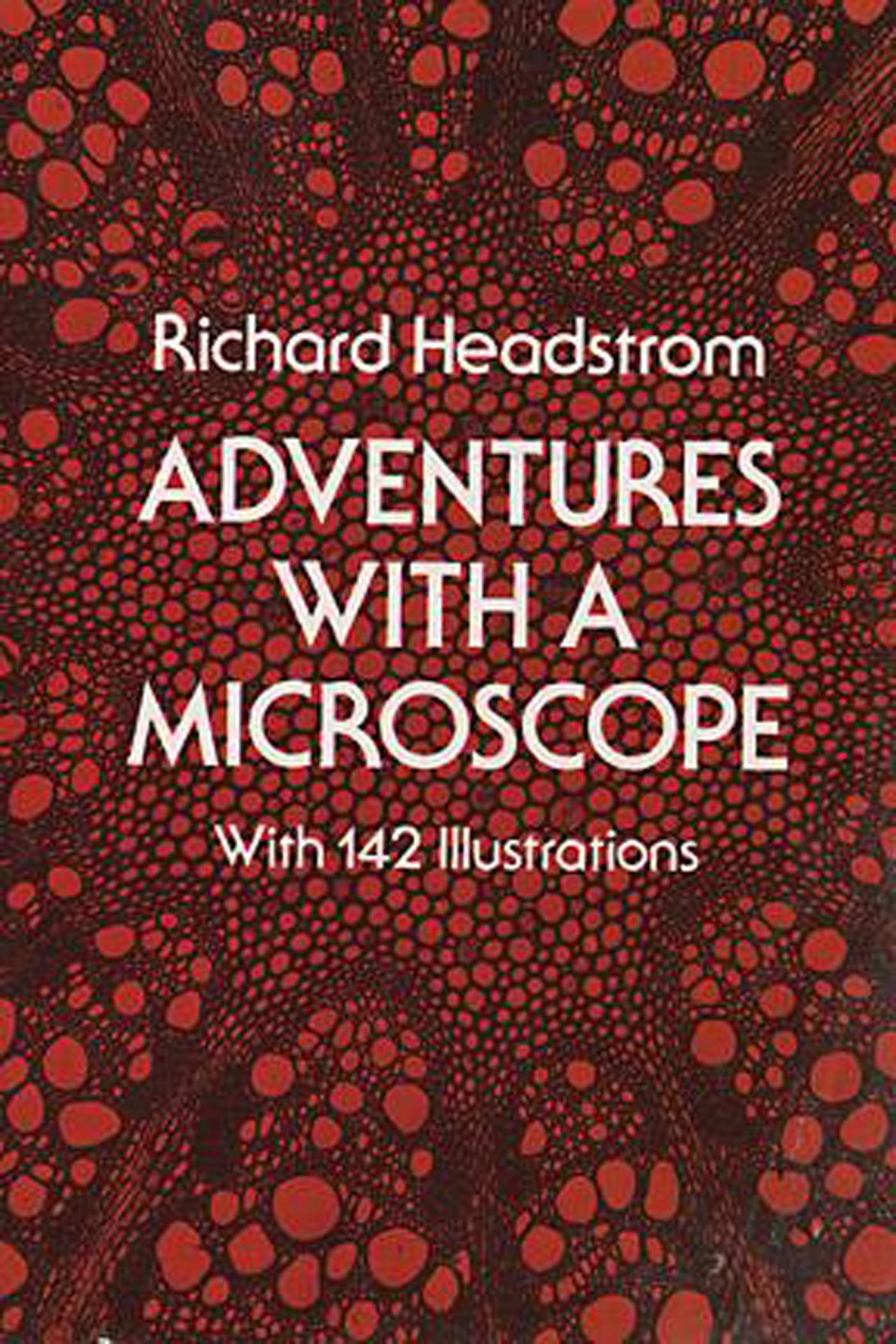
With a simple microscope and this book, you can embark on 59 wonderful adventures in the natural world — make discoveries about the structures of numerous microscopic animals; find out what everyday objects and foods really look like at the cellular level; gain an understanding of how to prepare specimens and slides; and learn about many scientific phenomena such as how a fly can walk upside down on the ceiling. It's all here in simple-to-understand language and 142 clear line drawings.
The author first examines under the microscope such everyday objects as a human hair, air bubble, scale of a herring, poppy seed and sugar crystal, and then offers through-the-microscope views of such creatures and objects as the water flea, hydra, house fly, amoeba, euglena, volvox, diatoms, desmids, algae, blood corpuscles, honey bee, rotifer, water-mites, potato starch, and other food substances, lichen, paramecium, coffee, sponge, chalk, yeast, bacteria, mustard, pepper, bryozoan, moss, mushroom, molds, cotton, and other textile fibers, ferns, dragon-flies, flea, spider, roots, and other plant structures, paper, aphid, fingerprints, nervous system of the grasshopper, and more.
Richard Headstrom, formerly associated with the New England Museum of Natural History and an experienced teacher and writer on natural science for young people, has made this book simple enough for any beginner at home as well as interesting for more experienced students and lay readers. Enjoyable and instructive, these adventures with a microscope will appeal to all who are curious about what there is to see beyond the range of the naked eye.
The author first examines under the microscope such everyday objects as a human hair, air bubble, scale of a herring, poppy seed and sugar crystal, and then offers through-the-microscope views of such creatures and objects as the water flea, hydra, house fly, amoeba, euglena, volvox, diatoms, desmids, algae, blood corpuscles, honey bee, rotifer, water-mites, potato starch, and other food substances, lichen, paramecium, coffee, sponge, chalk, yeast, bacteria, mustard, pepper, bryozoan, moss, mushroom, molds, cotton, and other textile fibers, ferns, dragon-flies, flea, spider, roots, and other plant structures, paper, aphid, fingerprints, nervous system of the grasshopper, and more.
Richard Headstrom, formerly associated with the New England Museum of Natural History and an experienced teacher and writer on natural science for young people, has made this book simple enough for any beginner at home as well as interesting for more experienced students and lay readers. Enjoyable and instructive, these adventures with a microscope will appeal to all who are curious about what there is to see beyond the range of the naked eye.
Betal nemt med kort, Klarna, Apple Pay eller Google Pay. Ikke tilfreds? Du har altid 14 dages fortrydelsesret. Læs mere i vores vilkår. Har du spørgsmål, så send os en mail på hello@memmo.org.
Memmo gør det nemmere at studere – uanset hvor du er i verden. Hos os samler du dine kursusbøger og smarte studieværktøjer ét sted: resuméer, quizzer, podcasts og flashcards. Og så er der Ted, din studieven, der svarer på alt, du undrer dig over. Over 50 000 studerende studerer allerede her – bygget til at hjælpe dig med at lære hurtigere og stresse mindre.
Du kan måske også lide
Køb bogen0