
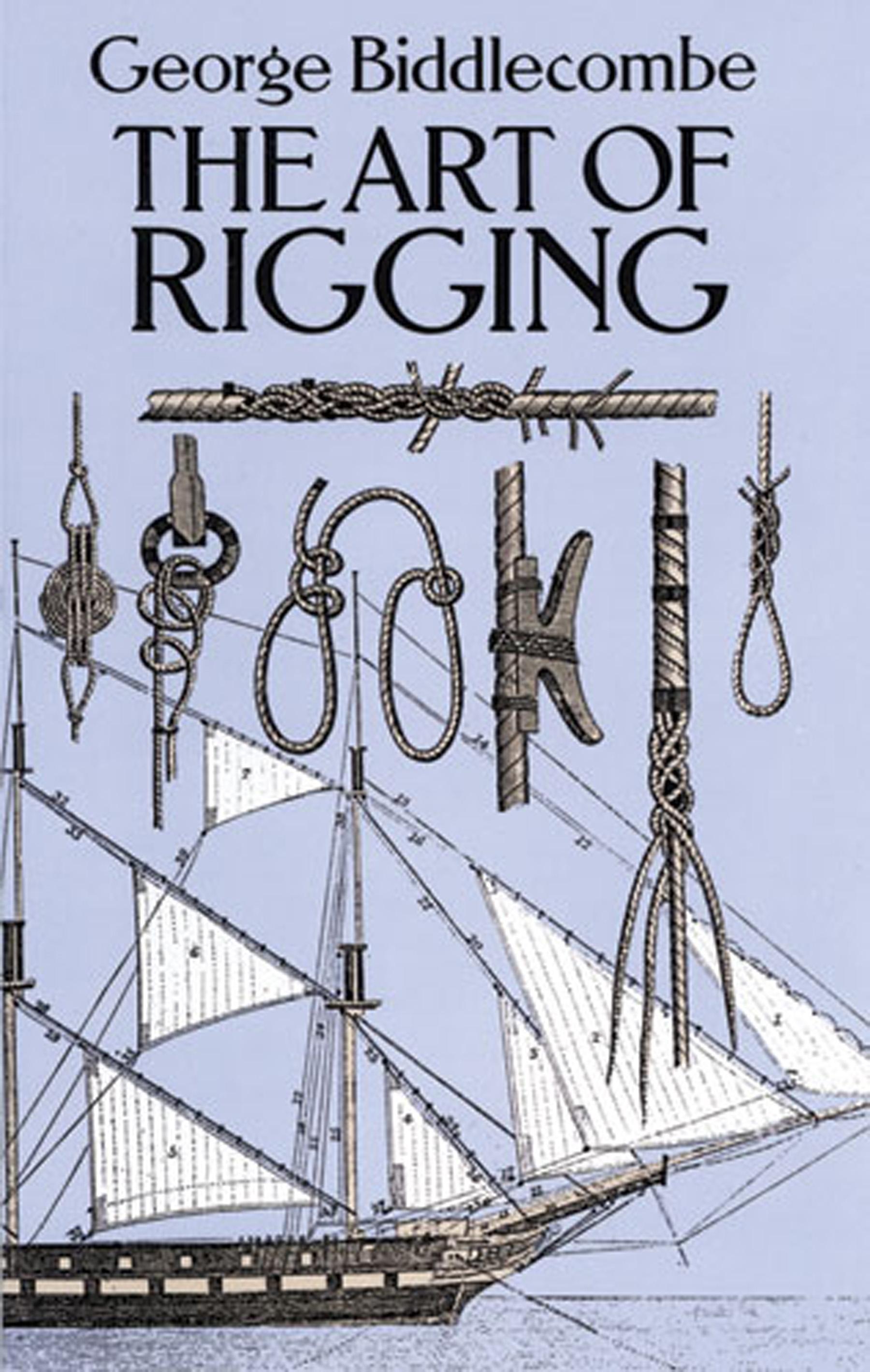
"Few, today, can realize how important was the art of rigging a ship and reeving her gear in the days just old when all aloft was wood and hemp; or how great the part it has played in the building of Empire." — Introduction.
Although mastery of the art of rigging is no longer required on board today's ships, legions of serious model ship builders who wish to rig their ships correctly need to learn the art in miniature. This book is widely considered the best manual ever produced on rigging the sailing ship. It is based on the extensively revised and updated 1848 edition prepared by Captain George Biddlecombe, a Master in the Royal Navy and former merchant seaman. The book is divided into five parts:
The First Part contains an alphabetical explanation of terms and phrases used in rigging. The Second Part consists of directions for the performance of operations incidental to rigging and preparing it on shore, with a table of the comparative strength of chain and rope. The Third Part contains the progressive method of rigging ships. The Fourth Part contains a description of reeving the running rigging and bending the sails in addition to the rigging of brigs, yachts, and small vessels. The Fifth Part comprises tables of the quantities and dimensions of the standing and running rigging of ships, brigs, fore-and-aft schooners, and cutters, with the species, size, and number of blocks, hearts, dead-eyes, etc.
Serious modelists, naval historians, armchair skippers — any sailing buff — will want to own a copy of The Art of Rigging. Complete and wonderfully clear, it is now available in its first inexpensive paperback edition. It belongs in every maritime library.
Although mastery of the art of rigging is no longer required on board today's ships, legions of serious model ship builders who wish to rig their ships correctly need to learn the art in miniature. This book is widely considered the best manual ever produced on rigging the sailing ship. It is based on the extensively revised and updated 1848 edition prepared by Captain George Biddlecombe, a Master in the Royal Navy and former merchant seaman. The book is divided into five parts:
The First Part contains an alphabetical explanation of terms and phrases used in rigging. The Second Part consists of directions for the performance of operations incidental to rigging and preparing it on shore, with a table of the comparative strength of chain and rope. The Third Part contains the progressive method of rigging ships. The Fourth Part contains a description of reeving the running rigging and bending the sails in addition to the rigging of brigs, yachts, and small vessels. The Fifth Part comprises tables of the quantities and dimensions of the standing and running rigging of ships, brigs, fore-and-aft schooners, and cutters, with the species, size, and number of blocks, hearts, dead-eyes, etc.
Serious modelists, naval historians, armchair skippers — any sailing buff — will want to own a copy of The Art of Rigging. Complete and wonderfully clear, it is now available in its first inexpensive paperback edition. It belongs in every maritime library.
Betal nemt med kort, Klarna, Apple Pay eller Google Pay. Ikke tilfreds? Du har altid 14 dages fortrydelsesret. Læs mere i vores vilkår. Har du spørgsmål, så send os en mail på hello@memmo.org.
Memmo gør det nemmere at studere – uanset hvor du er i verden. Hos os samler du dine kursusbøger og smarte studieværktøjer ét sted: resuméer, quizzer, podcasts og flashcards. Og så er der Ted, din studieven, der svarer på alt, du undrer dig over. Over 50 000 studerende studerer allerede her – bygget til at hjælpe dig med at lære hurtigere og stresse mindre.
Du kan måske også lide
Køb bogen0