
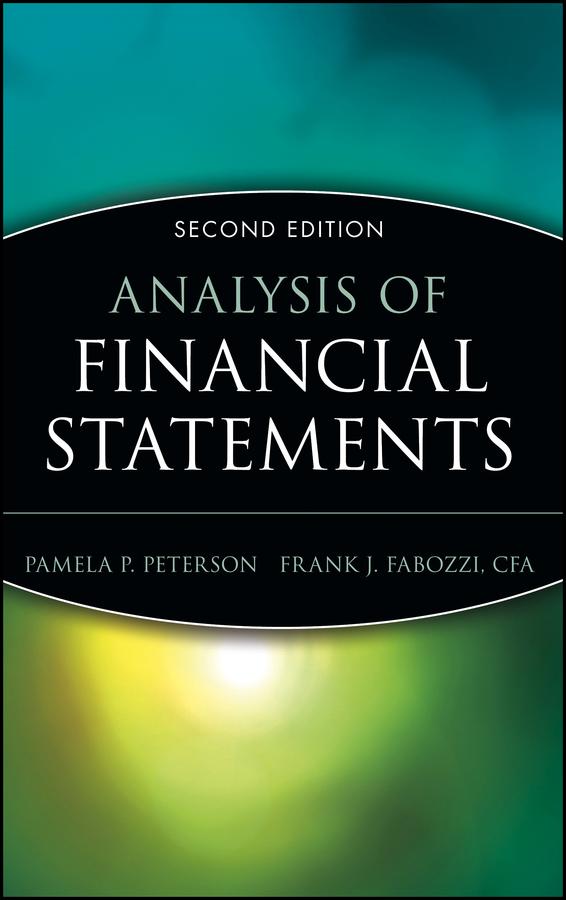
Revised and up to date, the Second Edition includes valuable information that addresses questions such as:
* What is transparency and why do we care?
* How can financial statements inform investors?
* How can financial statements mislead investors?
* How has the Sarbanes-Oxley Act changed companies' financial disclosures?
* What should you look for in financial disclosures when judging a company's financial health?
* How do financial statements relate to the value of a company's stock?
* Why is cash flow so important to a company's financial health?
Throughout Analysis of Financial Statements, Second Edition, the authors demonstrate the nuts and bolts of financial analysis by applying the techniques to actual companies. The authors set the stage for financial analysis in Part One with their discussions of financial statements and the quality of financial statements. In Part Two, they walk you through how to judge a company's financial health using financial disclosures in financial ratio analysis, earnings analysis, and cash flow analysis. In Part Three, the authors take analysis a step further by discussing how investors and creditors can use financial statements to more effectively assess a company's performance and risk. Peterson and Fabozzi wrap up this Second Edition with a set of lessons for investors and analysts:
Lesson 1: Understand what you are looking at
Lesson 2: Read the fine print
Lesson 3: If it's too good to be true, it may be
Lesson 4: Follow the money
Lesson 5: Understand the risks
* What is transparency and why do we care?
* How can financial statements inform investors?
* How can financial statements mislead investors?
* How has the Sarbanes-Oxley Act changed companies' financial disclosures?
* What should you look for in financial disclosures when judging a company's financial health?
* How do financial statements relate to the value of a company's stock?
* Why is cash flow so important to a company's financial health?
Throughout Analysis of Financial Statements, Second Edition, the authors demonstrate the nuts and bolts of financial analysis by applying the techniques to actual companies. The authors set the stage for financial analysis in Part One with their discussions of financial statements and the quality of financial statements. In Part Two, they walk you through how to judge a company's financial health using financial disclosures in financial ratio analysis, earnings analysis, and cash flow analysis. In Part Three, the authors take analysis a step further by discussing how investors and creditors can use financial statements to more effectively assess a company's performance and risk. Peterson and Fabozzi wrap up this Second Edition with a set of lessons for investors and analysts:
Lesson 1: Understand what you are looking at
Lesson 2: Read the fine print
Lesson 3: If it's too good to be true, it may be
Lesson 4: Follow the money
Lesson 5: Understand the risks
Betal nemt med kort, Klarna, Apple Pay eller Google Pay. Ikke tilfreds? Du har altid 14 dages fortrydelsesret. Læs mere i vores vilkår. Har du spørgsmål, så send os en mail på hello@memmo.org.
Memmo gør det nemmere at studere – uanset hvor du er i verden. Hos os samler du dine kursusbøger og smarte studieværktøjer ét sted: resuméer, quizzer, podcasts og flashcards. Og så er der Ted, din studieven, der svarer på alt, du undrer dig over. Over 50 000 studerende studerer allerede her – bygget til at hjælpe dig med at lære hurtigere og stresse mindre.