
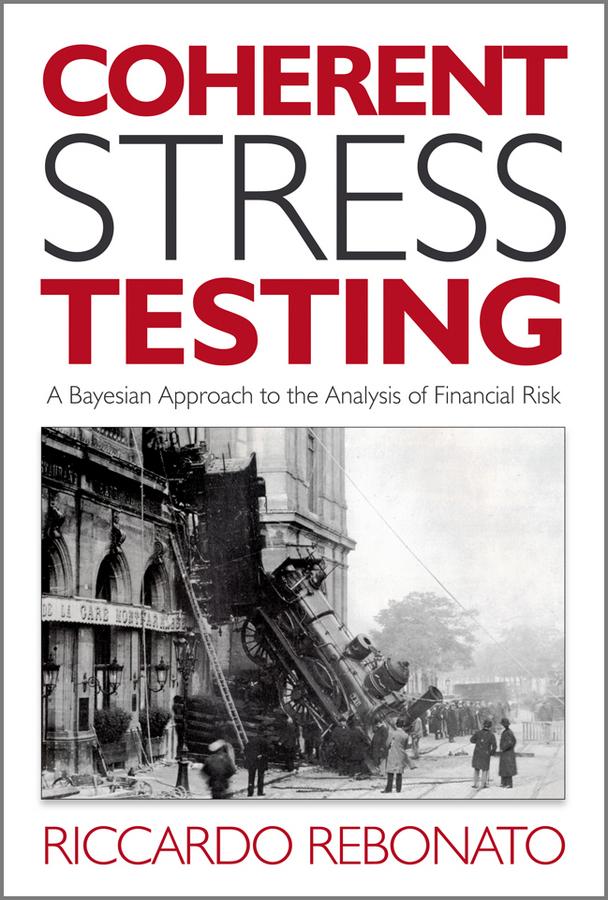
Based on the author's extensive work, research and presentations in the area, the book fills a gap in quantitative risk management by introducing a new and very intuitively appealing approach to stress testing based on expert judgement and Bayesian networks. It constitutes a radical departure from the traditional statistical methodologies based on Economic Capital or Extreme-Value-Theory approaches.
The book is split into four parts. Part I looks at stress testing and at its role in modern risk management. It discusses the distinctions between risk and uncertainty, the different types of probability that are used in risk management today and for which tasks they are best used. Stress testing is positioned as a bridge between the statistical areas where VaR can be effective and the domain of total Keynesian uncertainty. Part II lays down the quantitative foundations for the concepts described in the rest of the book. Part III takes readers through the application of the tools discussed in part II, and introduces two different systematic approaches to obtaining a coherent stress testing output that can satisfy the needs of industry users and regulators. In part IV the author addresses more practical questions such as embedding the suggestions of the book into a viable governance structure.
Betal nemt med kort, Klarna, Apple Pay eller Google Pay. Ikke tilfreds? Du har altid 14 dages fortrydelsesret. Læs mere i vores vilkår. Har du spørgsmål, så send os en mail på hello@memmo.org.
Memmo gør det nemmere at studere – uanset hvor du er i verden. Hos os samler du dine kursusbøger og smarte studieværktøjer ét sted: resuméer, quizzer, podcasts og flashcards. Og så er der Ted, din studieven, der svarer på alt, du undrer dig over. Over 50 000 studerende studerer allerede her – bygget til at hjælpe dig med at lære hurtigere og stresse mindre.