
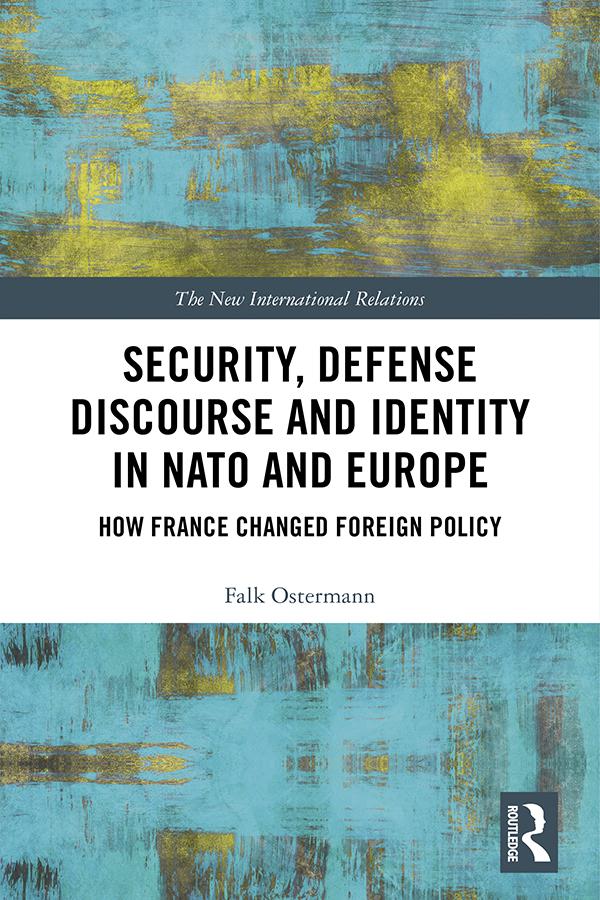
Analyzing changes in the role and place of NATO, European integration, and Franco-American relations in foreign policy discourse under Presidents Jacques Chirac and Nicolas Sarkozy, this book provides an original perspective on French foreign policy and its identity construction.
The book employs a novel research design for the analysis of foreign policies, which can be used beyond the case of France, by combining the discourse theory of the Essex School with Interpretive Policy Analysis to examine political ideas and how they are organized into a foreign policy identity. On these grounds, the volume undertakes a comparative analysis of parliamentary and executive discourse of President Chirac’s failed attempt at NATO reintegration in the 1990s, Sarkozy’s successful attempt in the 2000s, and the Libyan War. Ostermann depicts French foreign policy and identity as turning away from the European Union, atlanticizing, and losing its American nemesis. As a result, France uses a much more pragmatic, de-unionized, and pro-American strategy to implement foreign policy objectives than before.
Offering a new and innovative explanation for a major change in French foreign policy and grand strategy, this book will be of great interest to scholars of NATO, European defense cooperation, and foreign policy.
Betal nemt med kort, Klarna, Apple Pay eller Google Pay. Ikke tilfreds? Du har altid 14 dages fortrydelsesret. Læs mere i vores vilkår. Har du spørgsmål, så send os en mail på hello@memmo.org.
Memmo gør det nemmere at studere – uanset hvor du er i verden. Hos os samler du dine kursusbøger og smarte studieværktøjer ét sted: resuméer, quizzer, podcasts og flashcards. Og så er der Ted, din studieven, der svarer på alt, du undrer dig over. Over 50 000 studerende studerer allerede her – bygget til at hjælpe dig med at lære hurtigere og stresse mindre.