
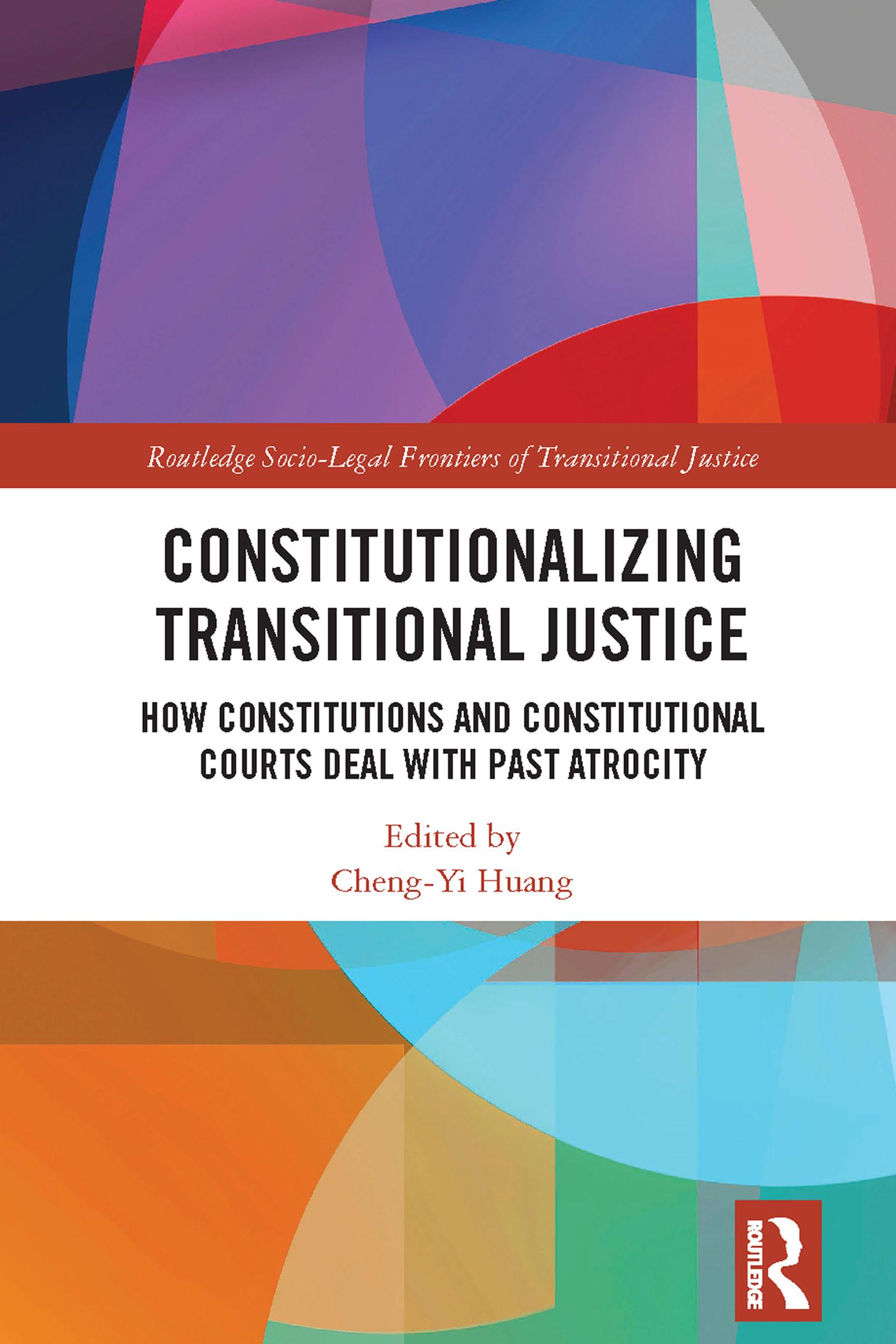
This book explores the complicated relationship between constitutions and transitional justice. It brings together scholars and practitioners from different countries to analyze the indispensable role of constitutions and constitutional courts in the process of overcoming political injustice of the past. Issues raised in the book include the role of a new constitution for the successful practice of transitional justice after democratization, revolution or civil war, and the difficulties faced by the court while dealing with mass human rights infringements with limited legal tools. The work also examines whether constitutionalizing transitional justice is a better strategy for new democracies in response to political injustice from the past. It further addresses the complex issue of backslides of democracy and consequences of constitutionalizing transitional justice. The group of international authors address the interplay of the constitution/court and transitional justice in their native countries, along with theoretical underpinnings of the success or unfulfilled promises of transitional justice from a comparative perspective.
The book will be a valuable resource for academics, researchers and policy-makers working in the areas of Transitional Justice, Comparative Constitutional Law, Human Rights Studies, International Criminal Law, Genocide Studies, Law and Politics, and Legal History.
Betal nemt med kort, Klarna, Apple Pay eller Google Pay. Ikke tilfreds? Du har altid 14 dages fortrydelsesret. Læs mere i vores vilkår. Har du spørgsmål, så send os en mail på hello@memmo.org.
Memmo gør det nemmere at studere – uanset hvor du er i verden. Hos os samler du dine kursusbøger og smarte studieværktøjer ét sted: resuméer, quizzer, podcasts og flashcards. Og så er der Ted, din studieven, der svarer på alt, du undrer dig over. Over 50 000 studerende studerer allerede her – bygget til at hjælpe dig med at lære hurtigere og stresse mindre.