
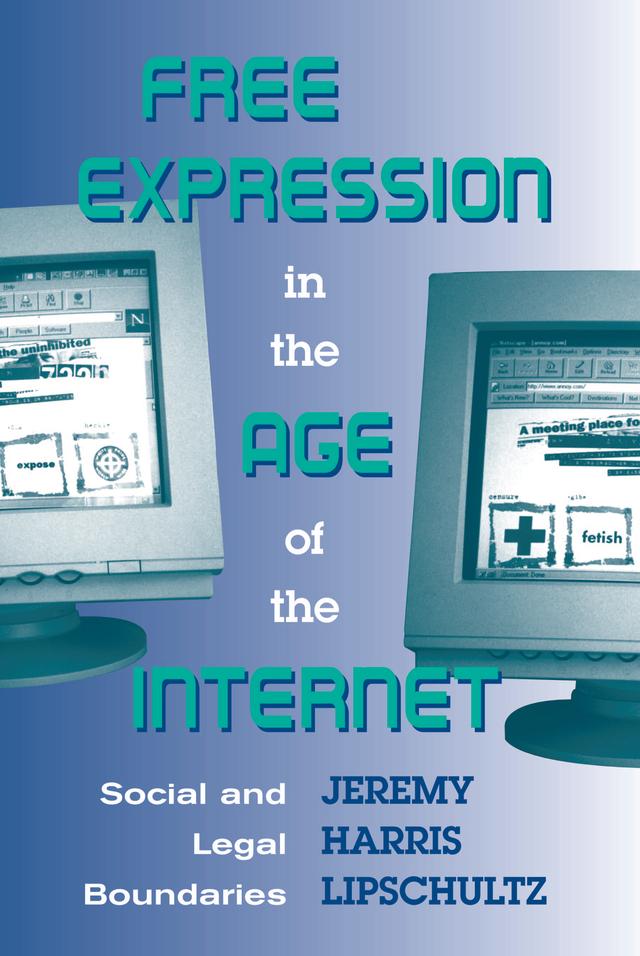
In Free Expression in the Age of the Internet, Jeremy Lipschultz investigates the Internet and its potential for profound change, analyzing the use of its technology from social, political, and economic perspectives. Lipschultz provides new insights on traditional legal concepts such as marketplace of ideas, social responsibility, and public interest, arguing that from a communication theory perspective, free expression is constrained by social norms and conformity. In Free Expression in the Age of the Internet , Jeremy Lipschultz investigates the Internet and its potential for profound change, analyzing the use of its technology from social, political, and economic perspectives. Lipschultz provides new insights on traditional legal concepts such as marketplace of ideas, social responsibility, and public interest, arguing that from a communication theory perspective, free expression is constrained by social norms and conformity. Lipschultz explores social limits on free expression by first examining history of print and electronic media law and regulation. He utilizes the gatekeeping metaphor, the spiral of silence, and diffusion theory to explore current data on the Internet. He uses Reno v. ACLU (1997) as a case study of current First Amendment thinking. This book includes recent evidence, including samples of content from Internet gossip columnist Matt Drudge, and the investigation of President Clinton as it unfolded on the World Wide Web.The analysis is related to broader issues about Internet content, including commercial and other communication. The new technologies raise new questions about legal and social definitions of concepts such as privacy. Free expression is explored in this book under the umbrella of a global, commercial economy that places importance on legal rights such as copyright, even where those rights limit free flow of ideas. The Internet places free expression on two tracks. On the one hand, corporate players are developing cyberspace as a new mass media. On the other hand, the Internet is virtual space where individuals have the power to connect and communicate with others in ways never before seen. This groundbreaking text advancing new media scholarship uses the most current case studies from the Internet to show free expression in practice today. Lipshultz presents a relevant and efficacious social communication theory of free expression which critically examines the necessary factors involved in comprehensive policy analysis and enactment.
Betal nemt med kort, Klarna, Apple Pay eller Google Pay. Ikke tilfreds? Du har altid 14 dages fortrydelsesret. Læs mere i vores vilkår. Har du spørgsmål, så send os en mail på hello@memmo.org.
Memmo gør det nemmere at studere – uanset hvor du er i verden. Hos os samler du dine kursusbøger og smarte studieværktøjer ét sted: resuméer, quizzer, podcasts og flashcards. Og så er der Ted, din studieven, der svarer på alt, du undrer dig over. Over 50 000 studerende studerer allerede her – bygget til at hjælpe dig med at lære hurtigere og stresse mindre.
Du kan måske også lide
Køb bogen0