
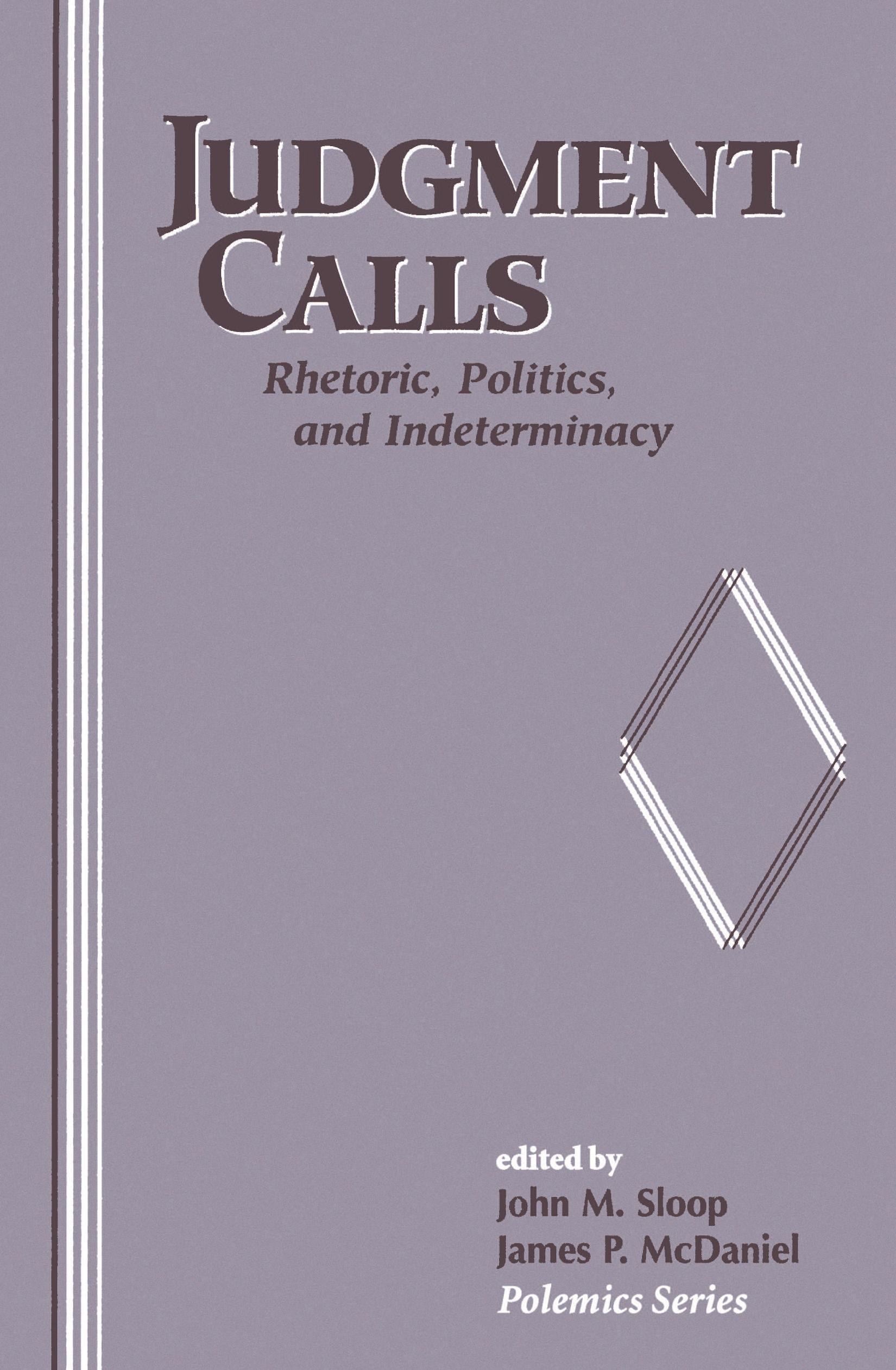
The concept of judgment has occupied a place of special importance in the tradition of Western thought. In antiquity and especially in the Enlightenment, judgment served as the rubric under which Western thinkers struggled to come to terms with how the world of human concerns is constituted in thought and, perhaps more important, how humans call for timely and appropriate actions. Recently, judgment has again emerged as a highly contestatory site for philosophical, rhetorical, and cultural reflection and inquiry.This book puts into contact a variety of responses to the question of judgment in a postmodern age, seeking out the question of how, once solid ground is pulled out from underneath the position of the judge, one continues to ?tread? judgment, to meet obligations while remaining afloat.The essays in this edited volume investigate judgment as a rhetorical problem to be discussed philosophically and examines the standards by which judgments are made and can be made in contemporary culture. The essays clarify the links between rhetoric and judgment as they are played out on public and meta-critical levels.
Betal nemt med kort, Klarna, Apple Pay eller Google Pay. Ikke tilfreds? Du har altid 14 dages fortrydelsesret. Læs mere i vores vilkår. Har du spørgsmål, så send os en mail på hello@memmo.org.
Memmo gør det nemmere at studere – uanset hvor du er i verden. Hos os samler du dine kursusbøger og smarte studieværktøjer ét sted: resuméer, quizzer, podcasts og flashcards. Og så er der Ted, din studieven, der svarer på alt, du undrer dig over. Over 50 000 studerende studerer allerede her – bygget til at hjælpe dig med at lære hurtigere og stresse mindre.
Du kan måske også lide
Køb bogen0