
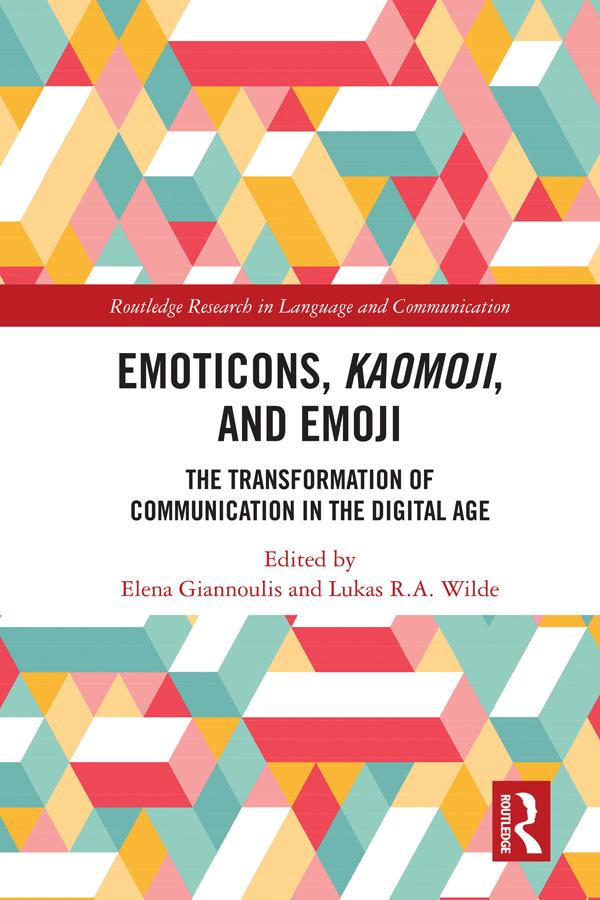
This collection offers a comprehensive treatment of emoticons, kaomoji, and emoji, examining these digital pictograms and ideograms from a range of perspectives to comprehend their increasing role in the transformation of communication in the digital age. Featuring a detailed introduction and eleven contributions from an interdisciplinary group of scholars, the volume begins by outlining the history and development of the field, situating emoticons, kaomoji, and emoji – expressing a variety of moods and emotional states, facial expressions, as well as all kinds of everyday objects– as both a topic of global relevance but also within multimodal, semiotic, picture theoretical, cultural and linguistic research. The book shows how the interplay of these systems with text can alter and shape the meaning and content of messaging and examines how this manifests itself through different lenses, including the communicative, socio-political, aesthetic, and cross-cultural. Making the case for further study on emoticons, kaomoji, and emoji and their impact on digital communication, this book is key reading for students and scholars in sociolinguistics, media studies, Japanese studies, and language and communication.
Betal nemt med kort, Klarna, Apple Pay eller Google Pay. Ikke tilfreds? Du har altid 14 dages fortrydelsesret. Læs mere i vores vilkår. Har du spørgsmål, så send os en mail på hello@memmo.org.
Memmo gør det nemmere at studere – uanset hvor du er i verden. Hos os samler du dine kursusbøger og smarte studieværktøjer ét sted: resuméer, quizzer, podcasts og flashcards. Og så er der Ted, din studieven, der svarer på alt, du undrer dig over. Over 50 000 studerende studerer allerede her – bygget til at hjælpe dig med at lære hurtigere og stresse mindre.