
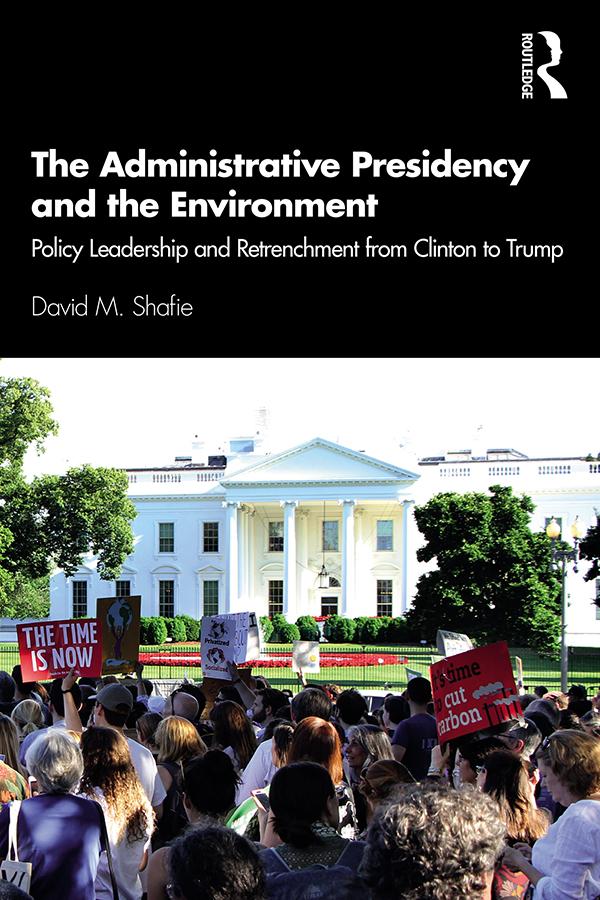
The growth of the administrative state and legislative gridlock has placed the White House at the center of environmental policymaking. Every recent president has continued the trend of relying upon administrative tools and unilateral actions to either advance or roll back environmental protection policies. From natural resources to climate change and pollution control, presidents have more been willing to test the limits of their authority, and the role of Congress has been one of reacting to presidential initiatives.
In The Administrative Presidency and the Environment: Policy Leadership and Retrenchment from Clinton to Trump, David M. Shafie draws upon staff communications, speeches and other primary sources. Key features include detailed case studies in public land management, water quality, toxics, and climate policy, with particular attention to the role of science in decisionmaking. Finally, he identifies the techniques from previous administrations that made Trump’s administrative presidency possible.
Shafie’s combination of qualitative analysis and topical case studies offers advanced undergraduate students and researchers alike important insights for understanding the interactions between environmental groups and the executive branch as well as implications for future policymaking.
Betal nemt med kort, Klarna, Apple Pay eller Google Pay. Ikke tilfreds? Du har altid 14 dages fortrydelsesret. Læs mere i vores vilkår. Har du spørgsmål, så send os en mail på hello@memmo.org.
Memmo gør det nemmere at studere – uanset hvor du er i verden. Hos os samler du dine kursusbøger og smarte studieværktøjer ét sted: resuméer, quizzer, podcasts og flashcards. Og så er der Ted, din studieven, der svarer på alt, du undrer dig over. Over 50 000 studerende studerer allerede her – bygget til at hjælpe dig med at lære hurtigere og stresse mindre.