
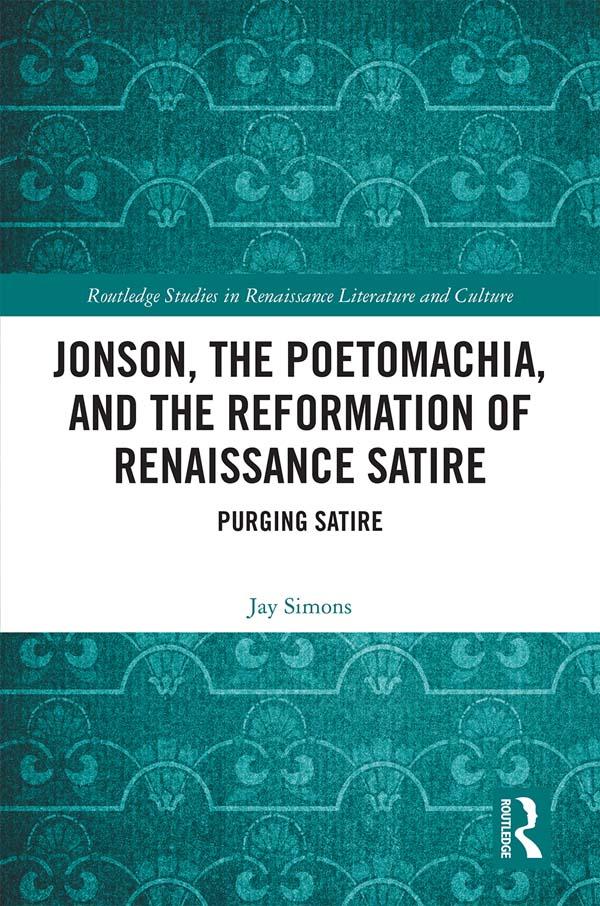
Does satire have the ability to effect social reform? If so, what satiric style is most effective in bringing about reform? This book explores how Renaissance poet and playwright Ben Jonson negotiated contemporary pressures to forge a satiric persona and style uniquely his own. These pressures were especially intense while Jonson was engaged in the Poetomachia, or Poets’ War (1598-1601), which pitted him against rival writers John Marston and Thomas Dekker. As a struggle between satiric styles, this conflict poses compelling questions about the nature and potential of satire during the Renaissance. In particular, this book explores how Jonson forged a moderate Horatian satiric style he championed as capable of effective social reform. As part of his distinctive model, Jonson turned to the metaphor of purging, in opposition to the metaphors of stinging, barking, biting, and whipping employed by his Juvenalian rivals. By integrating this conception of satire into his Horatian poetics, Jonson sought to avoid the pitfalls of the aggressive, violent style of his rivals while still effectively critiquing vice, upholding his model as a means for the reformation not only of society, but of satire itself.
Betal nemt med kort, Klarna, Apple Pay eller Google Pay. Ikke tilfreds? Du har altid 14 dages fortrydelsesret. Læs mere i vores vilkår. Har du spørgsmål, så send os en mail på hello@memmo.org.
Memmo gør det nemmere at studere – uanset hvor du er i verden. Hos os samler du dine kursusbøger og smarte studieværktøjer ét sted: resuméer, quizzer, podcasts og flashcards. Og så er der Ted, din studieven, der svarer på alt, du undrer dig over. Over 50 000 studerende studerer allerede her – bygget til at hjælpe dig med at lære hurtigere og stresse mindre.