
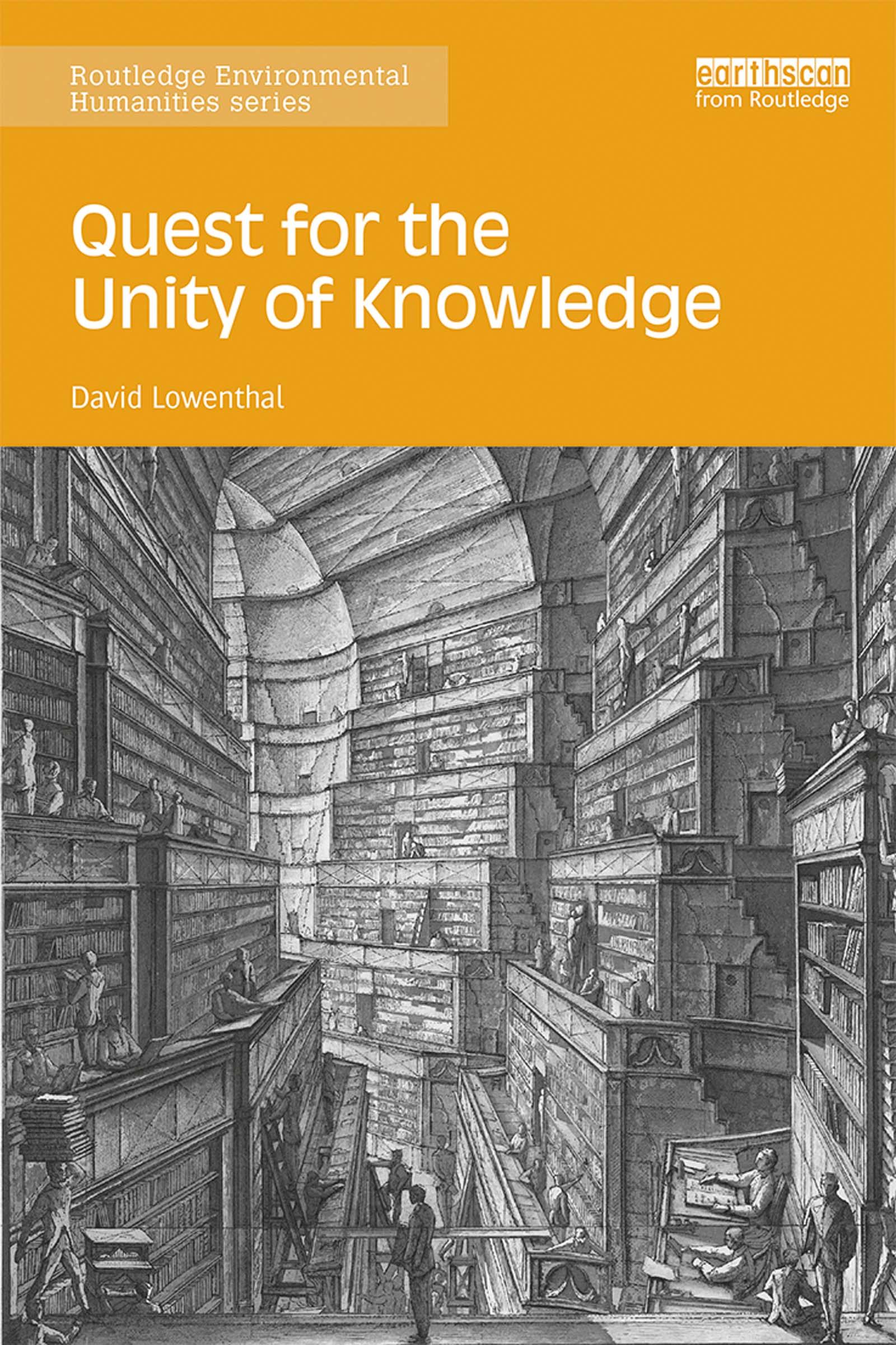
Is unity of knowledge possible? Is it desirable? Two rival visions clash. One seeks a single way of explaining everything known and knowable about ourselves and the universe. The other champions diverse modes of understanding served by disparate kinds of evidence. Contrary views pit science against the arts and humanities. Scientists generally laud and seek convergence. Artists and humanists deplore amalgamation as a threat to humane values.
These opposing perspectives flamed into hostility in the 1950s "Two Cultures" clash. They culminate today in new efforts to conjoin insights into physical nature and human culture, and new fears lest such syntheses submerge what the arts and humanities most value.
This book, stemming from David Lowenthal’s inaugural Stockholm Archipelago Lectures, explores the Two Cultures quarrel’s underlying ideologies. Lowenthal shows how ingrained bias toward unity or diversity shapes major issues in education, religion, genetics, race relations, heritage governance, and environmental policy.
Aimed at a general academic audience, Quest for the Unity of Knowledge especially targets those in conservation, ecology, history of ideas, museology, and heritage studies.
Betal nemt med kort, Klarna, Apple Pay eller Google Pay. Ikke tilfreds? Du har altid 14 dages fortrydelsesret. Læs mere i vores vilkår. Har du spørgsmål, så send os en mail på hello@memmo.org.
Memmo gør det nemmere at studere – uanset hvor du er i verden. Hos os samler du dine kursusbøger og smarte studieværktøjer ét sted: resuméer, quizzer, podcasts og flashcards. Og så er der Ted, din studieven, der svarer på alt, du undrer dig over. Over 50 000 studerende studerer allerede her – bygget til at hjælpe dig med at lære hurtigere og stresse mindre.