
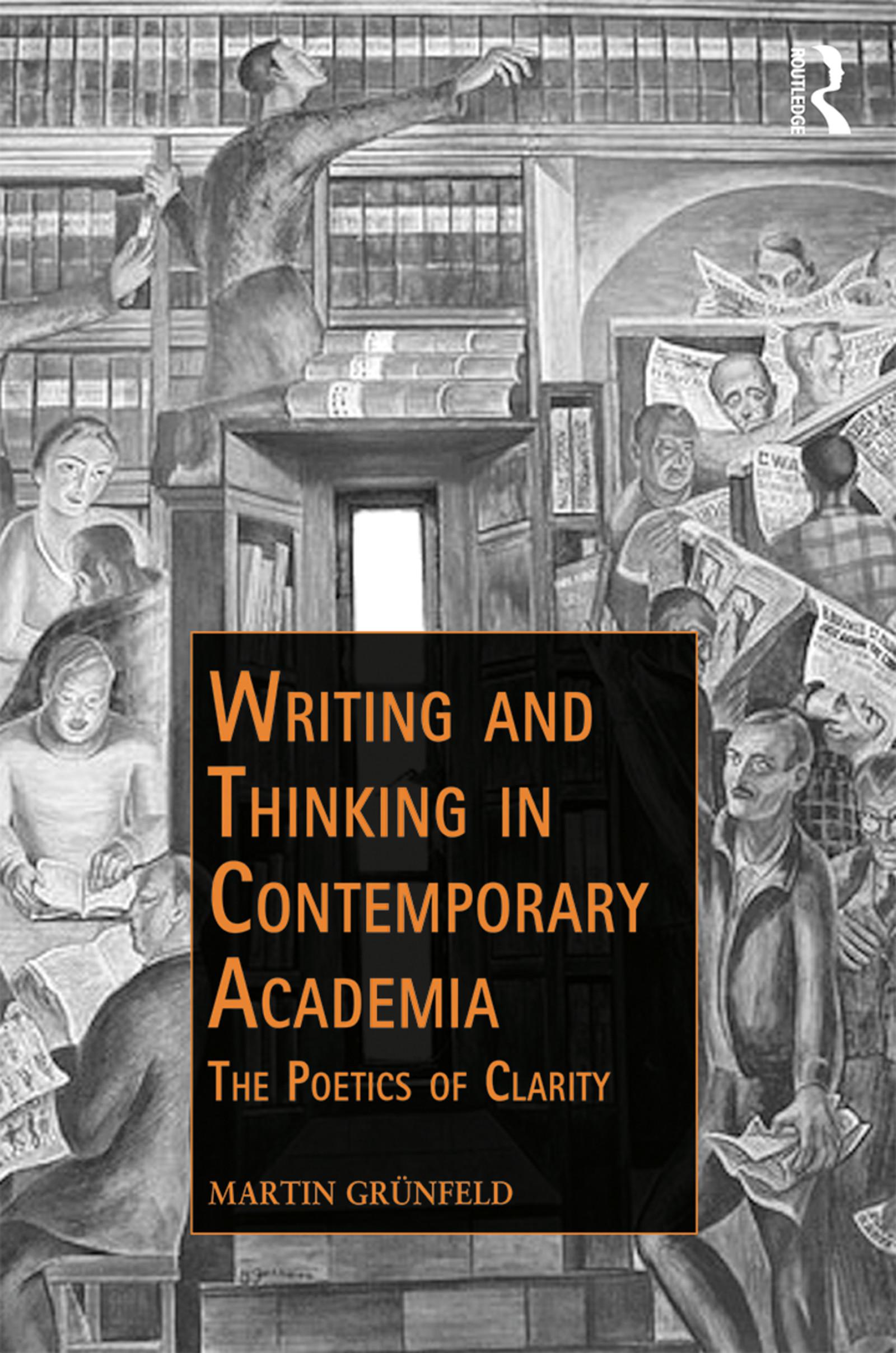
Across disciplinary borders, clarity is taken for granted as a cardinal virtue of communication in contemporary academia. But what is clarity, how is it practised in writing across disciplinary borders and how does it affect our ways of researching and thinking? This book explores such questions by scrutinising the ideal of clarity beyond its apparently self-evident value. Through a multi-methodological empirical analysis of the ideal of clarity, the author offers a sketch of what is termed ‘the poetics of clarity’, which is unfolded as a field of tension with important implications for sentence formation, authorial positioning and textual organisation. By way of a series of reflections on the possible consequences of this for thinking, this volume also explores the parts of knowledge production that may be marginalised, especially poetic language use, biases, interests and contexts, multi-dimensional arguments and errors. Revealing a positivist bias and a regime of high-speed consumption that characterise what, in certain regards, might be considered a productive space for knowledge production, Writing and Thinking in Contemporary Academia will appeal to scholars with interests in the sociology of knowledge, continental philosophy, the philosophy of science and academic writing.
Betal nemt med kort, Klarna, Apple Pay eller Google Pay. Ikke tilfreds? Du har altid 14 dages fortrydelsesret. Læs mere i vores vilkår. Har du spørgsmål, så send os en mail på hello@memmo.org.
Memmo gør det nemmere at studere – uanset hvor du er i verden. Hos os samler du dine kursusbøger og smarte studieværktøjer ét sted: resuméer, quizzer, podcasts og flashcards. Og så er der Ted, din studieven, der svarer på alt, du undrer dig over. Over 50 000 studerende studerer allerede her – bygget til at hjælpe dig med at lære hurtigere og stresse mindre.