
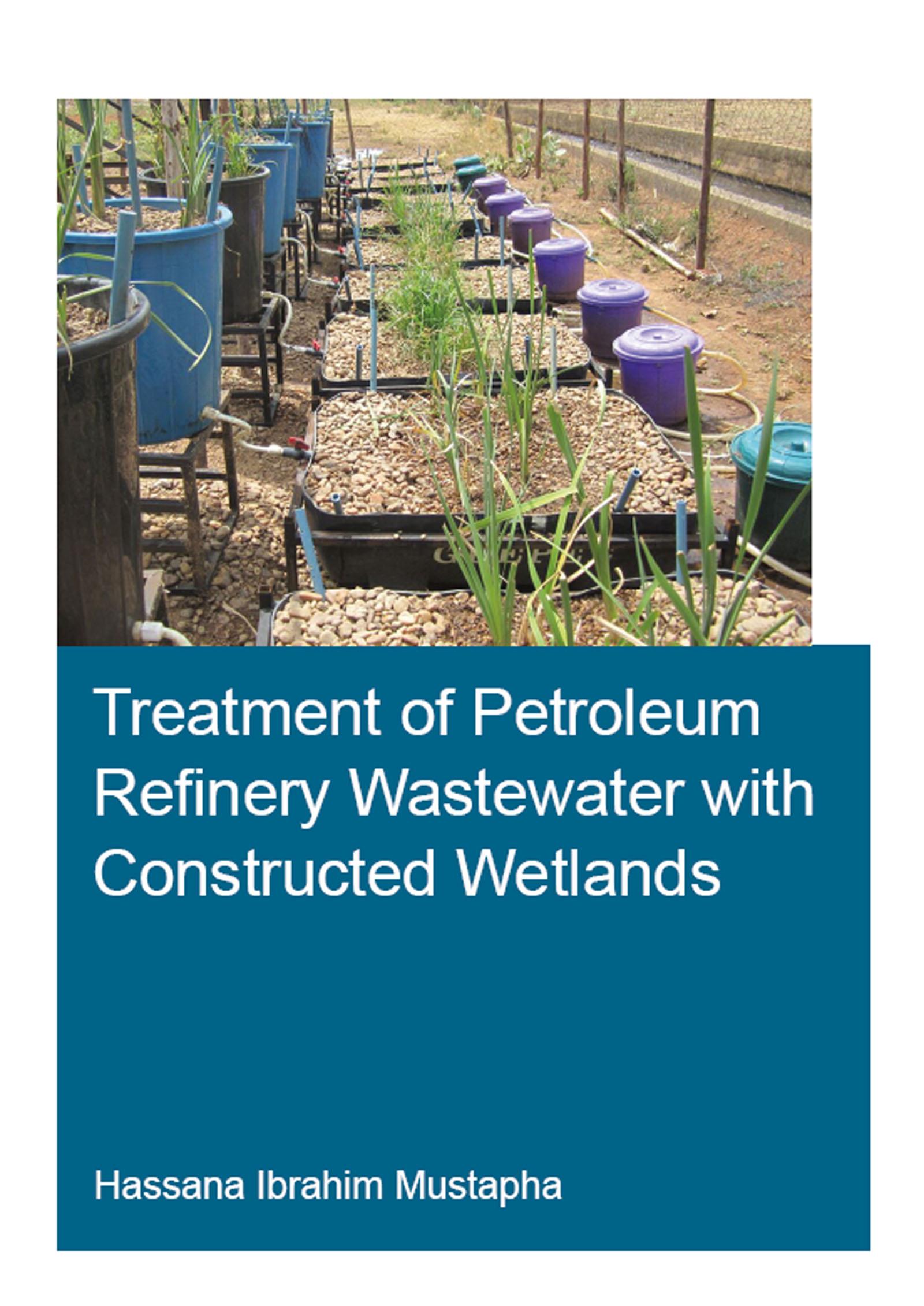
Pollution of waterbodies and the environment by petroleum industry is of particular concern in Nigeria. This problem can be addressed by the application of constructed wetlands (CWs) which is a nature-based system that is simple to construct, have low operational and maintenance costs in terms of supply of energy and its periodic maintenance.
The application of CWs in Nigeria for polishing of petroleum refinery wastewater is an unprecedented research. This PhD thesis focused on some specific objectives which were characterization of treated secondary refinery wastewater, design, construction, operation and monitoring of planted (T. latifolia, C. alternifolius and C. dactylon) and unplanted vertical subsurface flow, horizontal subsurface flow and hybrid CWs for the removal of suspended solids, nutrients, heavy metals, organic matter and organic pollutants. The CWs effectively treated the petroleum contaminated wastewater to effluent compliance limits.
In this study, T. latifolia planted CWs had consistently higher removal efficiencies for all the measured parameters than C. alternifolius and C. dactylon planted CW systems. Therefore, in order to improve the wastewater quality discharged by Kaduna Refining and Petrochemical Company (KRPC) Nigeria, meet stringent guidelines and protect the recipient streams, installation of CWs at the effluent discharge point of KRPC is strongly recommended.
Betal nemt med kort, Klarna, Apple Pay eller Google Pay. Ikke tilfreds? Du har altid 14 dages fortrydelsesret. Læs mere i vores vilkår. Har du spørgsmål, så send os en mail på hello@memmo.org.
Memmo gør det nemmere at studere – uanset hvor du er i verden. Hos os samler du dine kursusbøger og smarte studieværktøjer ét sted: resuméer, quizzer, podcasts og flashcards. Og så er der Ted, din studieven, der svarer på alt, du undrer dig over. Over 50 000 studerende studerer allerede her – bygget til at hjælpe dig med at lære hurtigere og stresse mindre.