
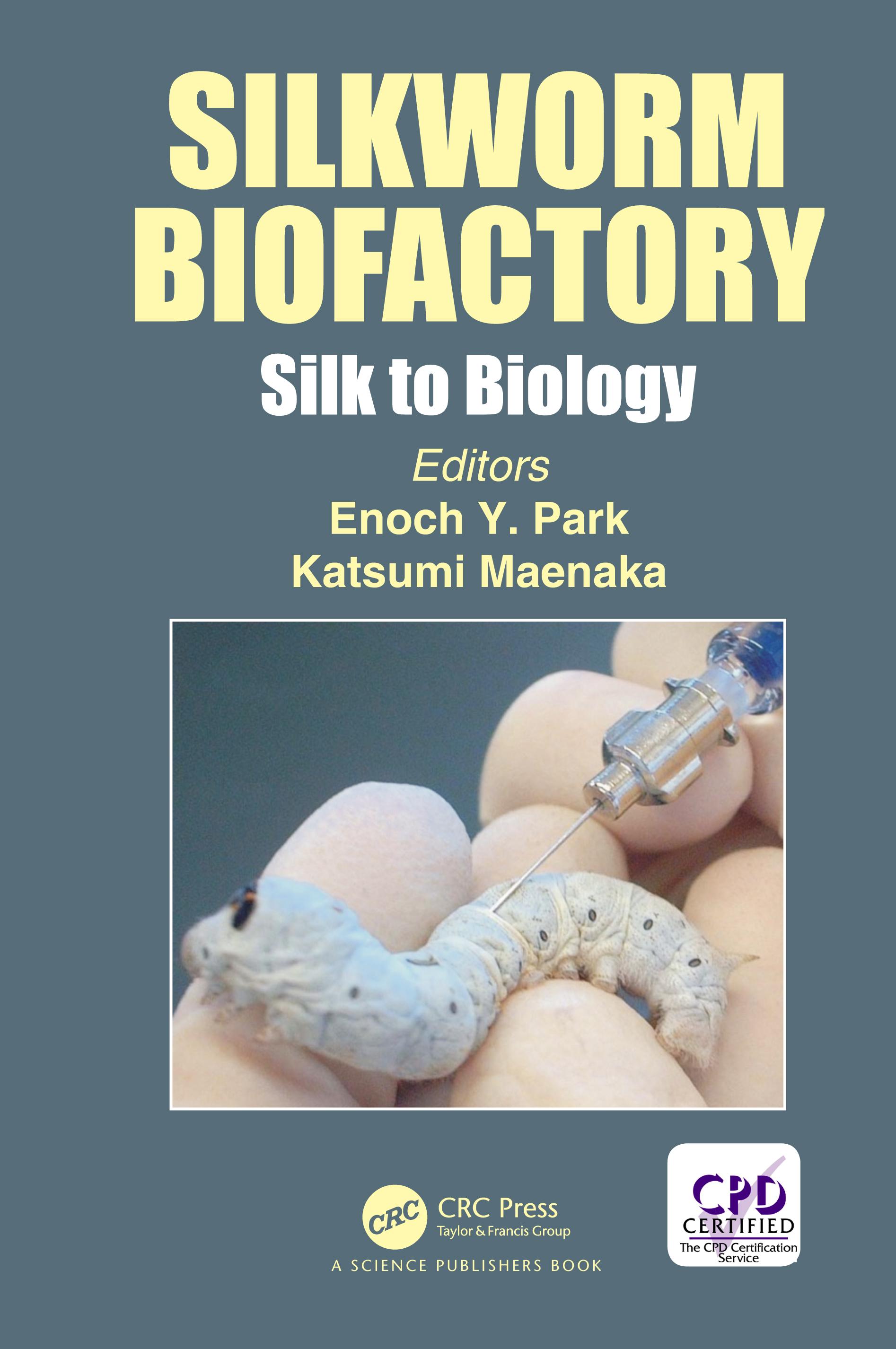
While silk derived from silkworm has been of economic importance for centuries, more recently silkworm has been found to have utility in biomedicine. This has attracted attention for expressing eukaryotic recombinant proteins, which require post-translational modifications. In 1985 Dr. Susumu Maeda demonstrated that silkworm larvae could produce a functional human-interferon. Since then various techniques have been developed to express recombinant proteins in silkworm. With the development of the Bombyx mori nucleopolyhedrovirus (BmNPV) bacmid system, which is capable of replicating in both Escherichia coli and Bombyx mori derived cell lines or silkworm, silkworm larvae or pupae have been used for the expression system for recombinant protein production. This method has the advantage of a bacmid, in that it can be easily prepared for sufficient bacmid DNA for subsequent expression in silkworm. It is potentially a big breakthrough in production of recombinant eukaryotic proteins and viruses, which will be a powerful tool in a new proteome era.
This volume contributes to the advancement of our knowledge in the subject, for example gene expression systems and silkworm research, and focuses on silkworm biofactories for the recombinant protein production and commercial applications of proteins.
Betal nemt med kort, Klarna, Apple Pay eller Google Pay. Ikke tilfreds? Du har altid 14 dages fortrydelsesret. Læs mere i vores vilkår. Har du spørgsmål, så send os en mail på hello@memmo.org.
Memmo gør det nemmere at studere – uanset hvor du er i verden. Hos os samler du dine kursusbøger og smarte studieværktøjer ét sted: resuméer, quizzer, podcasts og flashcards. Og så er der Ted, din studieven, der svarer på alt, du undrer dig over. Over 50 000 studerende studerer allerede her – bygget til at hjælpe dig med at lære hurtigere og stresse mindre.