
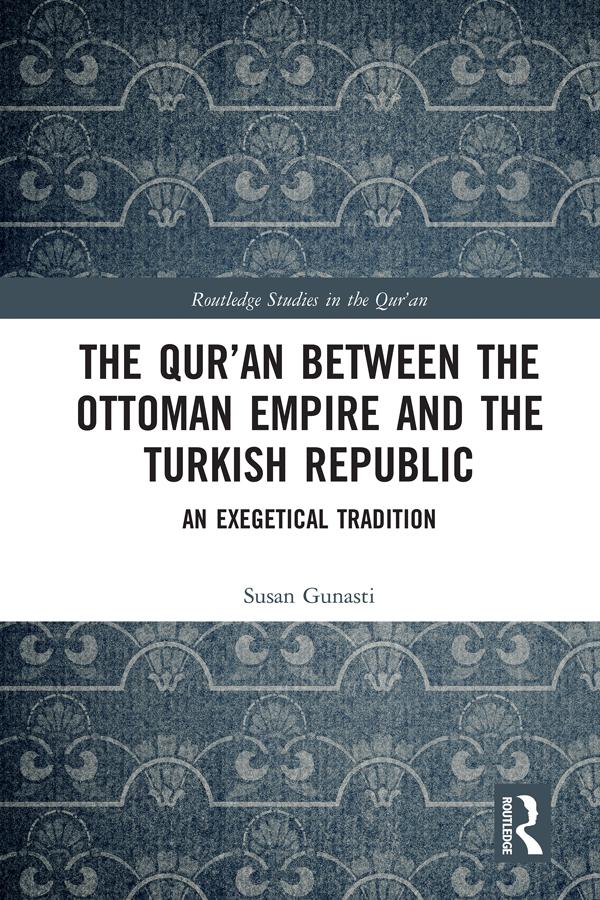
The Qur’an between the Ottoman Empire and the Turkish Republic is one of the few book-length studies on an Ottoman Qur’an commentary. Its premise is that "the Ottoman Empire" did not come to an end until 1950 so far as Islam was concerned in Turkey.
The work explores the relationship between Elmalılı’s Qur’an commentary and the intellectual trends of the period, including the impact of materialism, the sciences, notions of civilizational progress, and philosophy. In doing so, this study emphasizes the "local" aspect of the Qur’an commentary, through a sustained focus on the Istanbul context in which it was written. This work demonstrates that Elmalılı’s Qur’an commentary is a product of and reaction to the religious, intellectual, political, and social trends of the period. This work, in considering all the factors that led to the commissioning of Elmalılı’s Qur’an commentary, also contributes to our understanding of the history of Islam in early to mid-twentieth-century Turkey.
This intellectual history of modern Islamic thought contributes to our understanding of the genre of Qur’an commentary in the early twentieth century. It is a key text for students and scholars interested in Islam in the Ottoman Empire and Turkey, modern Islamic thought, and the Middle East.
Betal nemt med kort, Klarna, Apple Pay eller Google Pay. Ikke tilfreds? Du har altid 14 dages fortrydelsesret. Læs mere i vores vilkår. Har du spørgsmål, så send os en mail på hello@memmo.org.
Memmo gør det nemmere at studere – uanset hvor du er i verden. Hos os samler du dine kursusbøger og smarte studieværktøjer ét sted: resuméer, quizzer, podcasts og flashcards. Og så er der Ted, din studieven, der svarer på alt, du undrer dig over. Over 50 000 studerende studerer allerede her – bygget til at hjælpe dig med at lære hurtigere og stresse mindre.