
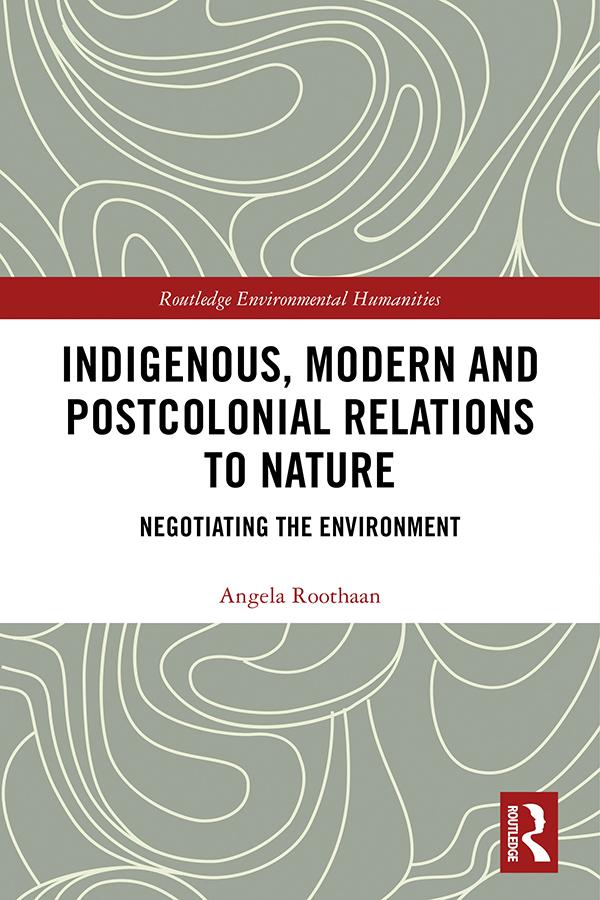
Indigenous, Modern and Postcolonial Relations to Nature contributes to the young field of intercultural philosophy by introducing the perspective of critical and postcolonial thinkers who have focused on systematic racism, power relations and the intersection of cultural identity and political struggle.
Angela Roothaan discusses how initiatives to tackle environmental problems cross-nationally are often challenged by economic growth processes in postcolonial nations and further complicated by fights for land rights and self-determination of indigenous peoples. For these peoples, survival requires countering the scramble for resources and clashing with environmental organizations that aim to bring their lands under their own control. The author explores the epistemological and ontological clashes behind these problems. This volume brings more awareness of what structurally obstructs open exchange in philosophy world-wide, and shows that with respect to nature, we should first negotiate what the environment is to us humans, beyond cultural differences. It demonstrates how a globalizing philosophical discourse can fully include epistemological claims of spirit ontologies, while critically investigating the exclusive claim to knowledge of modern science and philosophy.
This book will be of great interest to students and scholars of environmental philosophy, cultural anthropology, intercultural philosophy and postcolonial and critical theory.
Betal nemt med kort, Klarna, Apple Pay eller Google Pay. Ikke tilfreds? Du har altid 14 dages fortrydelsesret. Læs mere i vores vilkår. Har du spørgsmål, så send os en mail på hello@memmo.org.
Memmo gør det nemmere at studere – uanset hvor du er i verden. Hos os samler du dine kursusbøger og smarte studieværktøjer ét sted: resuméer, quizzer, podcasts og flashcards. Og så er der Ted, din studieven, der svarer på alt, du undrer dig over. Over 50 000 studerende studerer allerede her – bygget til at hjælpe dig med at lære hurtigere og stresse mindre.