
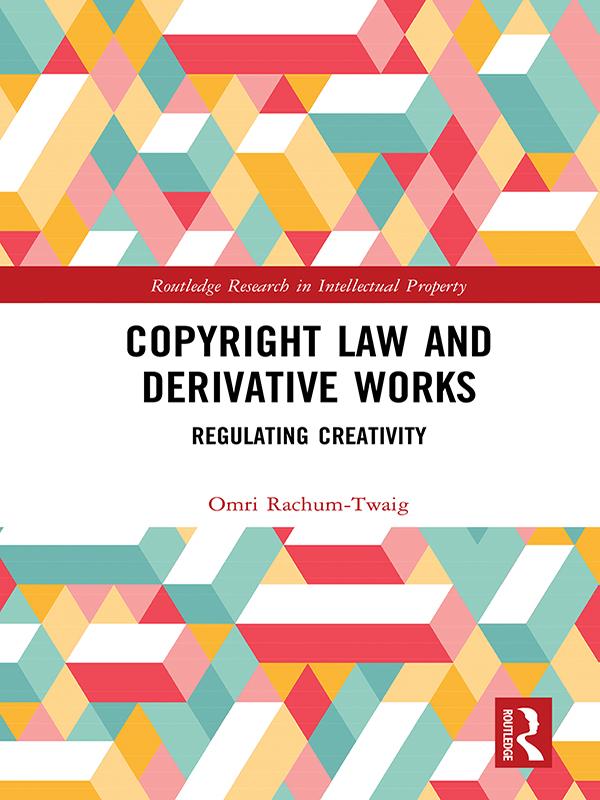
Copyright law regulates creativity. It affects the way people create works of authorship ex-ante and affects the status of works of authorship significantly ex-post. But does copyright law really understand creativity? Should legal theories alone inform our regulation of the creative process?
This book views copyright law as a law of creativity. It asks whether copyright law understands authorship as other creativity studies fields do. It considers whether copyright law should incorporate non-legal theories, and if so, how it should be adjusted in their light. For this purpose, the book focuses on one of the many rights that copyright law regulates – the right to make a derivative work. A work is considered derivative when it is based on one or more preexisting works. Today, the owner of a work of authorship has the exclusive right to make derivative works based on her original work or to allow others to do so. The book suggests a new way to think about both the right, the tension, and copyright law at large. It proposes relying on non-legal fields like cognitive psychology and genre theories, and offers new legal-theoretical justifications for the right to make derivative works.
As the first book to consider the intersection between copyright law, creativity and derivative works, this will be a valuable resource for students, scholars, and practitioners interested in intellectual property and copyright law.
Betal nemt med kort, Klarna, Apple Pay eller Google Pay. Ikke tilfreds? Du har altid 14 dages fortrydelsesret. Læs mere i vores vilkår. Har du spørgsmål, så send os en mail på hello@memmo.org.
Memmo gør det nemmere at studere – uanset hvor du er i verden. Hos os samler du dine kursusbøger og smarte studieværktøjer ét sted: resuméer, quizzer, podcasts og flashcards. Og så er der Ted, din studieven, der svarer på alt, du undrer dig over. Over 50 000 studerende studerer allerede her – bygget til at hjælpe dig med at lære hurtigere og stresse mindre.