
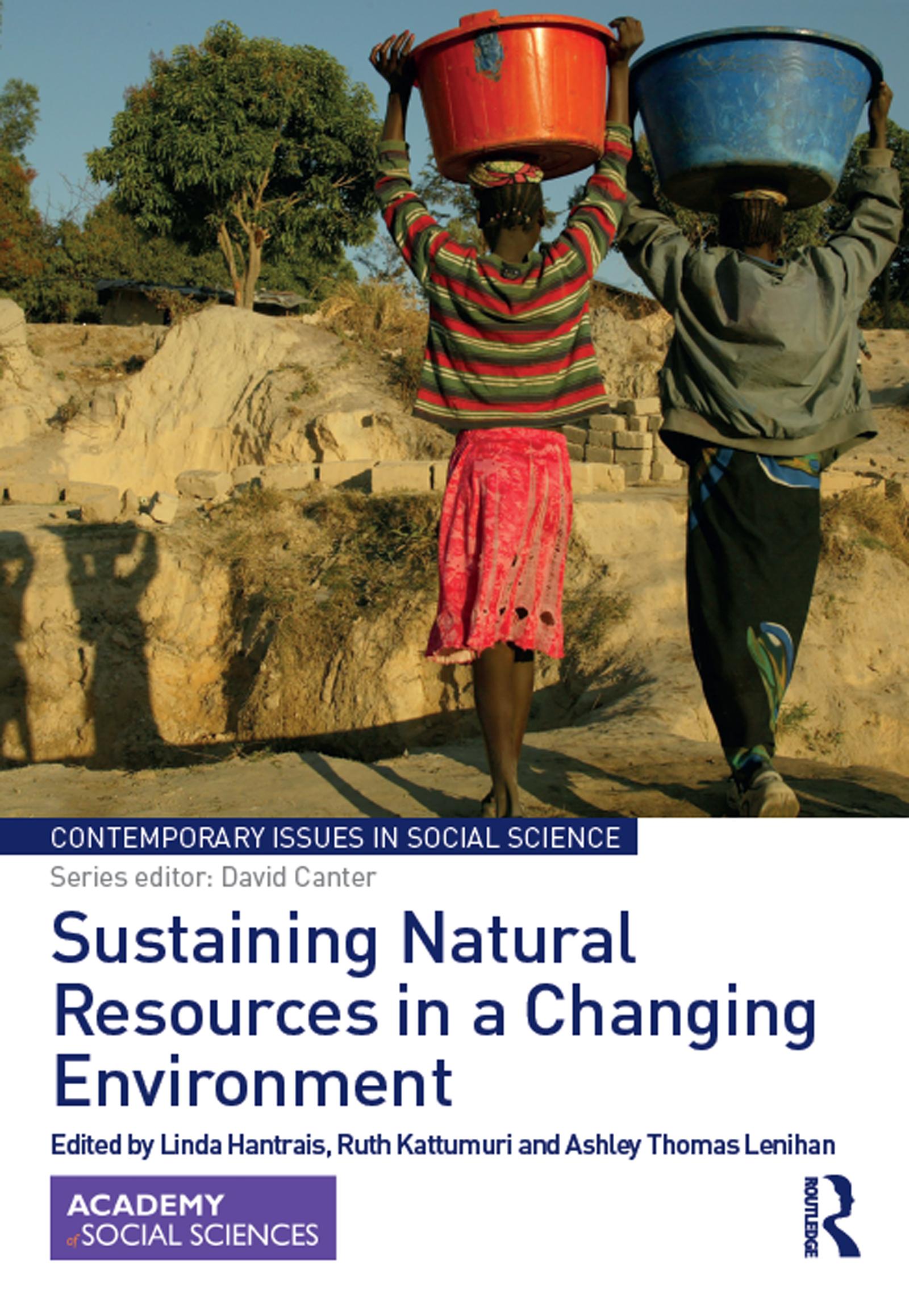
Climate change and environmental degradation have intensified the pressures on crucial resources such as food and water security and air quality. In this collection, academic researchers and practitioners who have lived and worked in countries as geographically and culturally diverse as Brazil, China, India, Ghana, Palestine, Uganda and Venezuela draw on their wide-ranging international and inter-sectoral experience to offer valuable comparative insights into the relationship between research and evidence-based policy for sustaining natural resources. Their contributions provide a novel mix of disciplinary perspectives ranging across geography, ecology, social policy, the political economy, philosophy, international development, engineering technology, architecture and urban planning. They examine the institutions involved in generating and mediating evidence about the sustainability of natural resources in a changing environment, and the different methodologies employed in collecting and assessing evidence, informing policy and contributing to governance. The authors demonstrate not only that social science evidence on governance and policy implementation to sustain natural resources must complement natural science inputs, but also that local communities must be an integral part of any programme development.
This book was originally published as a special issue of Contemporary Social Science.
Betal nemt med kort, Klarna, Apple Pay eller Google Pay. Ikke tilfreds? Du har altid 14 dages fortrydelsesret. Læs mere i vores vilkår. Har du spørgsmål, så send os en mail på hello@memmo.org.
Memmo gør det nemmere at studere – uanset hvor du er i verden. Hos os samler du dine kursusbøger og smarte studieværktøjer ét sted: resuméer, quizzer, podcasts og flashcards. Og så er der Ted, din studieven, der svarer på alt, du undrer dig over. Over 50 000 studerende studerer allerede her – bygget til at hjælpe dig med at lære hurtigere og stresse mindre.