
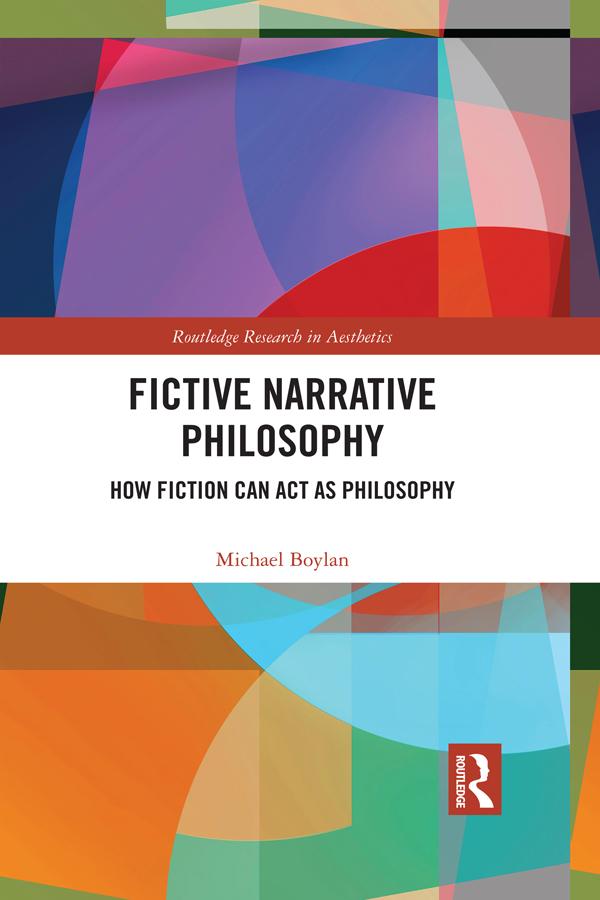
What is the philosophical voice within literature? Does literature have a voice of its own? Can this voice really be philosophical in its own right? In this book, Michael Boylan argues that some literary works indeed can make their own unique claims in different areas of philosophy. He calls this method fictive narrative philosophy.
The first part of the book presents an overview of traditional thinking about philosophy and literature across classical, modern, and contemporary periods. It does not seek to denigrate these methods of studying literature, but rather to ask more of them. The second part then sets out a rigorous definition of what constitutes fictive narrative philosophy. This definition outlines detailed conceptions of the methods of presentation, audience engagement, logical mechanics, and constructional devices of fictive narrative philosophy. The author brings this definition to bear on individual authors and works that can be considered prime examples of fictive narrative philosophy. Finally, the book sets out why and when fictive narratives might be more favorable than traditional philosophical discourse, and how the concept of fictive narrative philosophy can move teaching and scholarship forward in a positive direction.
Fictive Narrative Philosophy presents an entirely new and unique approach in which literature can be a form of philosophy. It will appeal to scholars and upper-level students interested in philosophy and literature.
Betal nemt med kort, Klarna, Apple Pay eller Google Pay. Ikke tilfreds? Du har altid 14 dages fortrydelsesret. Læs mere i vores vilkår. Har du spørgsmål, så send os en mail på hello@memmo.org.
Memmo gør det nemmere at studere – uanset hvor du er i verden. Hos os samler du dine kursusbøger og smarte studieværktøjer ét sted: resuméer, quizzer, podcasts og flashcards. Og så er der Ted, din studieven, der svarer på alt, du undrer dig over. Over 50 000 studerende studerer allerede her – bygget til at hjælpe dig med at lære hurtigere og stresse mindre.