
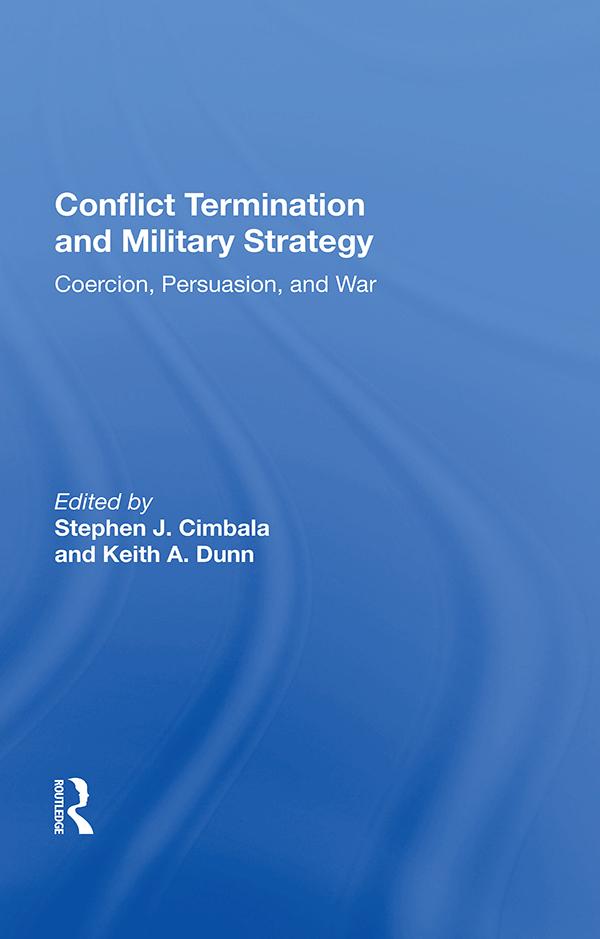
Although considerable attention has been paid to deterrence theory and crisis management, the equally important topic of ending wars has been virtually ignored. Conflict termination is the stepchild of U.S. strategy for a number of reasons. Thinking about how wars should end presupposes acceptance of the fact that war—especially nuclear war— is possible. Further, analyzing options for ending conflicts implies less-than-total victory, a concept that not only runs counter to the U.S. approach to warfare but also raises the specter of “limited war,†an approach that fell into disfavor following Korea and Vietnam. Finally, defining conflict termination objectives assumes that we think more about ends than means, that we know what is important to us and why, and thus understand the risks we will accept to defend specific interests and objectives. The contributors examine a wide variety of topics, ranging from Soviet and U.S. views on conflict termination to past, present, and future U.S. military service contributions. Their aim is to demonstrate the importance of careful evaluation of conflict termination goals during peacetime because when war begins passions and emotions will cloud decisionmaking.
Betal nemt med kort, Klarna, Apple Pay eller Google Pay. Ikke tilfreds? Du har altid 14 dages fortrydelsesret. Læs mere i vores vilkår. Har du spørgsmål, så send os en mail på hello@memmo.org.
Memmo gør det nemmere at studere – uanset hvor du er i verden. Hos os samler du dine kursusbøger og smarte studieværktøjer ét sted: resuméer, quizzer, podcasts og flashcards. Og så er der Ted, din studieven, der svarer på alt, du undrer dig over. Over 50 000 studerende studerer allerede her – bygget til at hjælpe dig med at lære hurtigere og stresse mindre.
Du kan måske også lide
Køb bogen0