
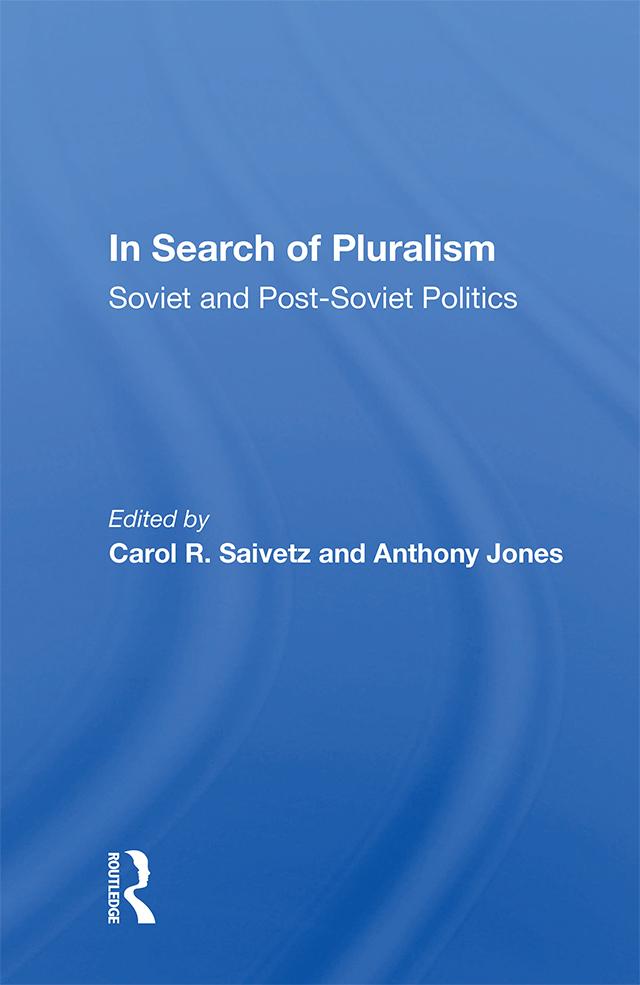
Building innovatively on Western social-science theory and on older models of Soviet politics, the authors review recent changes in the former USSR in order to assess the prospects there for democratic pluralism. Chapters focus on the first competitive elections, the new legislative bodies at state and local levels, and the newly freed press, exploring the extent to which these institutions can be described as democratic or pluralistic. Other chapters trace the complex linkages between a plurality of political-economic interests—explaining why Russian labor, government, and business may be moving toward a corporatist coalition and how political activists' sharply divergent attitudes toward the state and property keep them from forming a broad-based party. Although it is difficult in this period of dramatic flux to predict the future, these thought-provoking analyses will provide a deeper understanding of the transformations under way and will stimulate further exploration.
Betal nemt med kort, Klarna, Apple Pay eller Google Pay. Ikke tilfreds? Du har altid 14 dages fortrydelsesret. Læs mere i vores vilkår. Har du spørgsmål, så send os en mail på hello@memmo.org.
Memmo gør det nemmere at studere – uanset hvor du er i verden. Hos os samler du dine kursusbøger og smarte studieværktøjer ét sted: resuméer, quizzer, podcasts og flashcards. Og så er der Ted, din studieven, der svarer på alt, du undrer dig over. Over 50 000 studerende studerer allerede her – bygget til at hjælpe dig med at lære hurtigere og stresse mindre.
Du kan måske også lide
Køb bogen0