
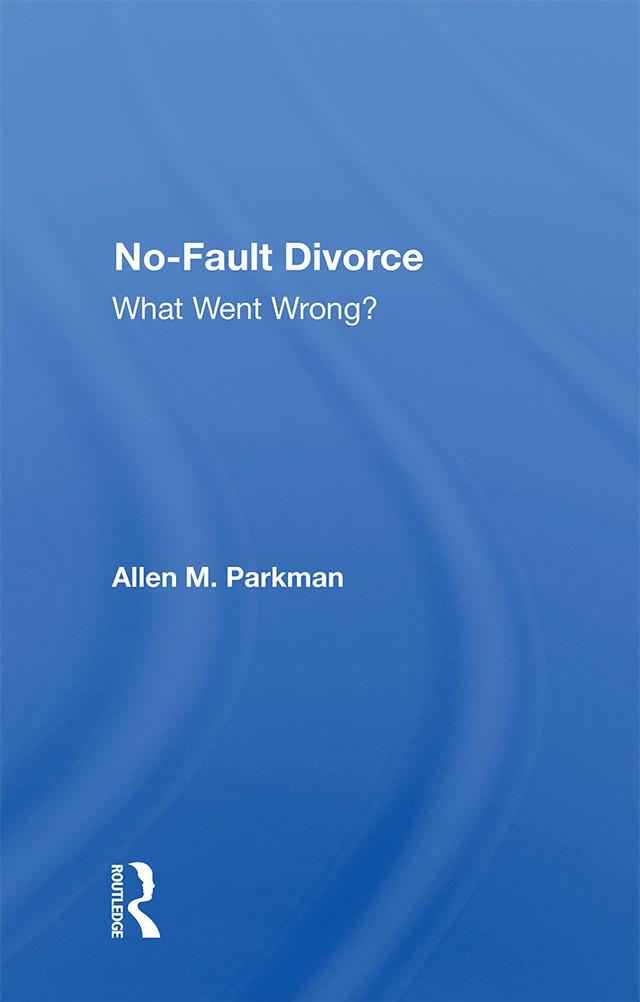
Since 1970, all the states adopted no-fault divorce statutes, which have had the unexpected effect of producing dire financial conditions for many divorced women and their children. In this important study, economist and lawyer Allen Parkman shows how no-fault divorce has systematically operated against the interests of these women and children. With rare economic and legal insight, Parkman argues that by changing the grounds for divorce without changing the laws that define and allocate property at divorce, the legal system created substantial injustices. The key mistake, he suggests, was in accepting a definition of property that did not include the income-earning capacity--human capital--of the individuals involved. Using human capital theory, Parkman criticizes current divorce law and presents a framework for reform that would reduce the injustices introduced by no-fault divorce. He concludes that a thorough reform, however, may require the changing of the grounds for divorce to mutual consent. This book is essential reading for scholars, professionals, and, indeed, for anyone interested in the health and future of the family and the well-being of women in contemporary U.S. society.
Betal nemt med kort, Klarna, Apple Pay eller Google Pay. Ikke tilfreds? Du har altid 14 dages fortrydelsesret. Læs mere i vores vilkår. Har du spørgsmål, så send os en mail på hello@memmo.org.
Memmo gør det nemmere at studere – uanset hvor du er i verden. Hos os samler du dine kursusbøger og smarte studieværktøjer ét sted: resuméer, quizzer, podcasts og flashcards. Og så er der Ted, din studieven, der svarer på alt, du undrer dig over. Over 50 000 studerende studerer allerede her – bygget til at hjælpe dig med at lære hurtigere og stresse mindre.
Du kan måske også lide
Køb bogen0