
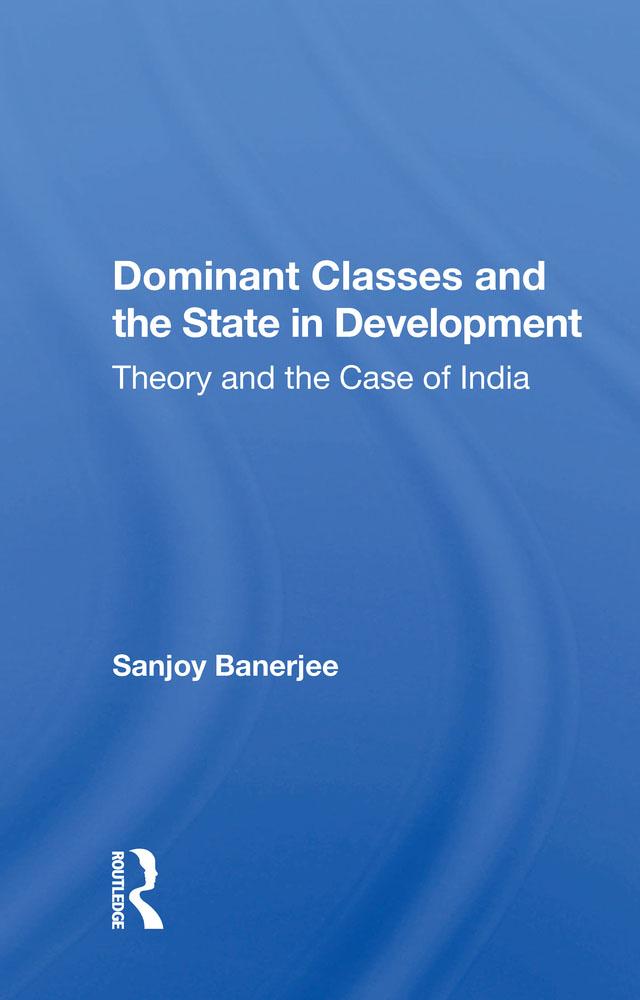
Why does capitalist development give rise to political alliances between the state and certain economically dominant classes? Addressing this question, Professor Banerjee uses an evolutionary approach to social structure to develop a theory of the interaction within and among business and manufacturing firms--a theory that highlights those aspects of market processes that promote the formation of dominant economic classes. Structural-evolutionary conceptions of property relations and of state planning and regulation are developed and combined with the market model. According to Professor Banerjee, the market, property relations, and state administration form a self-sustaining structure that simultaneously develops the economy in an uneven and clustered fashion and gives rise to a "dominant alliance" between a segment of the state and the fastest-accumulating classes in the economy. He applies his model to India during the 1956-1975 period, examining the industrialization process of the Second and Third plans, the crisis of the mid-1960s, and the Green Revolution.
Betal nemt med kort, Klarna, Apple Pay eller Google Pay. Ikke tilfreds? Du har altid 14 dages fortrydelsesret. Læs mere i vores vilkår. Har du spørgsmål, så send os en mail på hello@memmo.org.
Memmo gør det nemmere at studere – uanset hvor du er i verden. Hos os samler du dine kursusbøger og smarte studieværktøjer ét sted: resuméer, quizzer, podcasts og flashcards. Og så er der Ted, din studieven, der svarer på alt, du undrer dig over. Over 50 000 studerende studerer allerede her – bygget til at hjælpe dig med at lære hurtigere og stresse mindre.
Du kan måske også lide
Køb bogen0