
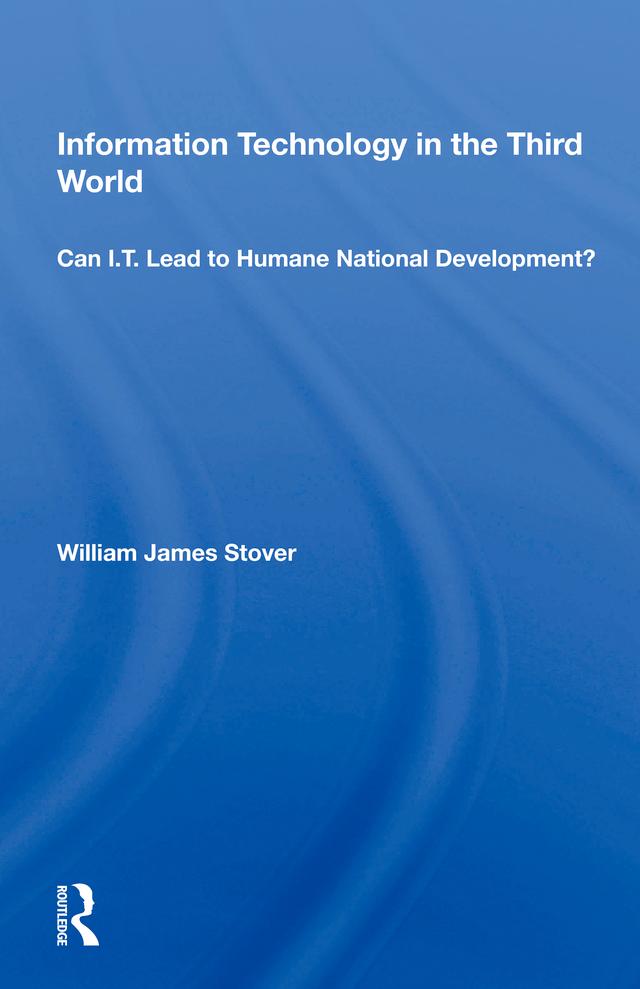
Mass media, telecommunications, and computer technology can effect change in poor countries, but Third World leaders are often disappointed in the results. Professor Stover looks closely at information technology and communication as agents of economic, social, and political development in Third World countries, stressing that definitions of "communication" and "development" must include participation in the exchange of information and the attainment of humane values. He examines reasons why the current world information order does not meet the needs of the Third World and argues that the major difficulty in achieving the potential of information technology for humane development is a cyclical pattern involving technology and values. When countries acquire the physical means of communication, their leaders are tempted to control them, resulting in censorship that prevents genuine communication. Breaking this cycle is a major requirement in using information technology for development, and Dr. Stover discusses how this may be accomplished practically in developmental, Western, and Soviet contexts.
Betal nemt med kort, Klarna, Apple Pay eller Google Pay. Ikke tilfreds? Du har altid 14 dages fortrydelsesret. Læs mere i vores vilkår. Har du spørgsmål, så send os en mail på hello@memmo.org.
Memmo gør det nemmere at studere – uanset hvor du er i verden. Hos os samler du dine kursusbøger og smarte studieværktøjer ét sted: resuméer, quizzer, podcasts og flashcards. Og så er der Ted, din studieven, der svarer på alt, du undrer dig over. Over 50 000 studerende studerer allerede her – bygget til at hjælpe dig med at lære hurtigere og stresse mindre.
Du kan måske også lide
Køb bogen0