
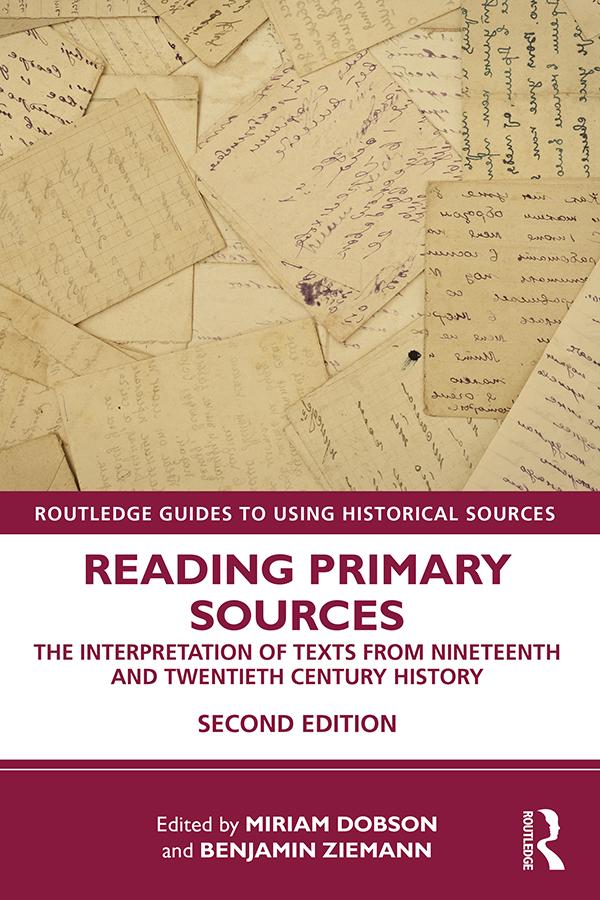
Now in its second edition, Reading Primary Sources explores the varied traditions in source criticism and, through specific examples, illustrates how primary sources can be read and used in historical research.
Part I of this two-part volume begins by establishing the reader’s understanding of source criticism with an overview of both traditional and new methodological approaches to the use of primary documents. Taking into account the huge expansion in the range of primary sources used by historians, Part II includes chapters on surveillance reports, testimony and court files, in addition to more traditional genres such as letters, memoranda, diaries, novels, newspapers, political speeches and autobiography. For the new edition, each chapter now includes a checklist that suggests an easy-to-follow sequence of steps for interpreting a specific source genre, enabling students to understand how the sources should be read, what they have to offer, and the pitfalls of their interpretation. In addition to new discussions about the availability of digitised source materials, a new chapter on social surveys unlocks the potential of these widely used primary sources.
Taking examples of sources from many European countries and the United States, and providing up-to-date information on the most widely used textual sources, this book is the perfect companion for every student of history who wants to engage with primary sources.
Betal nemt med kort, Klarna, Apple Pay eller Google Pay. Ikke tilfreds? Du har altid 14 dages fortrydelsesret. Læs mere i vores vilkår. Har du spørgsmål, så send os en mail på hello@memmo.org.
Memmo gør det nemmere at studere – uanset hvor du er i verden. Hos os samler du dine kursusbøger og smarte studieværktøjer ét sted: resuméer, quizzer, podcasts og flashcards. Og så er der Ted, din studieven, der svarer på alt, du undrer dig over. Over 50 000 studerende studerer allerede her – bygget til at hjælpe dig med at lære hurtigere og stresse mindre.