
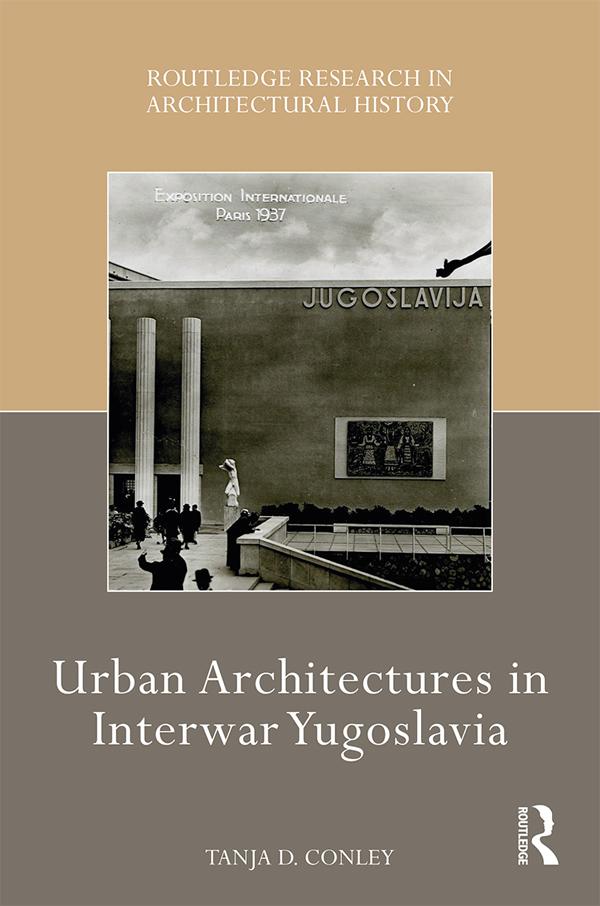
Resulting from a twenty-year period of research, this book seeks to challenge contradictions between the concepts of national and modern architectures promoted among the most pronounced national groups of Yugoslavia: Serbs, Croats and Slovenes. It spans from the beginning of their nation-building programs in the mid-nineteenth century until the collapse of unified South Slavic ideology and the outbreak of the Second World War.
Organized into two parts, it sheds new light onto the question of how two conflicting political agendas – on one side the quest for integral Yugoslavism and, on the other, the fight for strictly separate national identities – were acknowledged through the architecture and urbanism of Belgrade, Zagreb and Ljubljana. Drawing wider conclusions, author Tanja D. Conley investigates boundaries between two opposing yet interrelated tendencies characterizing the architectural professional in the age of modernity: the search for authenticity versus the strive towards globalization.
Urban Architectures in Interwar Yugoslavia will appeal to researchers, academics and students interested in Central and Eastern European architectural history.
Betal nemt med kort, Klarna, Apple Pay eller Google Pay. Ikke tilfreds? Du har altid 14 dages fortrydelsesret. Læs mere i vores vilkår. Har du spørgsmål, så send os en mail på hello@memmo.org.
Memmo gør det nemmere at studere – uanset hvor du er i verden. Hos os samler du dine kursusbøger og smarte studieværktøjer ét sted: resuméer, quizzer, podcasts og flashcards. Og så er der Ted, din studieven, der svarer på alt, du undrer dig over. Over 50 000 studerende studerer allerede her – bygget til at hjælpe dig med at lære hurtigere og stresse mindre.