
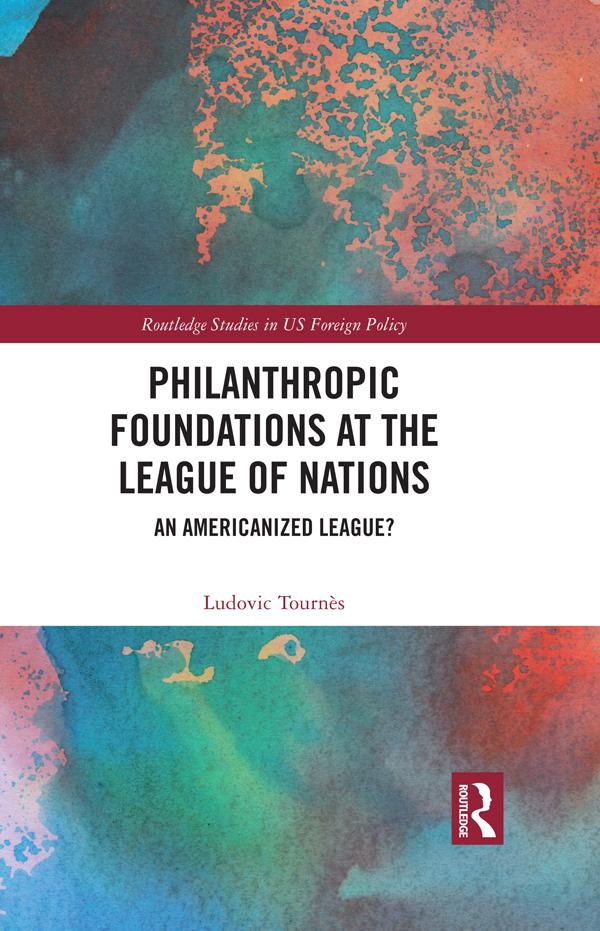
This book presents a comprehensive analysis of the relations between US philanthropic foundations (in particular the Rockefeller Foundation and the Carnegie Endowment for International Peace) and the League of Nations.
Generations of students and scholars have learned that the US, having played a key role in the creation of the League of Nations in 1919, did not join the organization and stood aloof from its activities during the whole interwar period. This book questions this idea and argues that, even though the US was not a de jure member of the League of Nations, the financial, human, and intellectual investment of foundations brought about the de facto integration of the US within the League system and also modified the latter’s architecture. The book describes the Americanization of the League and shows how it resulted from three strategies pursued throughout the interwar period: that of US foundations, that of the Secretariat, and that of the US federal government. The book also shows the limits of this Americanization and analyzes the role of the European experts in the coproduction of the postwar international order together with the US government.
This book will be of interest to historians and political scientists, as well as undergraduate and graduate students in interdisciplinary programs of international relations.
Betal nemt med kort, Klarna, Apple Pay eller Google Pay. Ikke tilfreds? Du har altid 14 dages fortrydelsesret. Læs mere i vores vilkår. Har du spørgsmål, så send os en mail på hello@memmo.org.
Memmo gør det nemmere at studere – uanset hvor du er i verden. Hos os samler du dine kursusbøger og smarte studieværktøjer ét sted: resuméer, quizzer, podcasts og flashcards. Og så er der Ted, din studieven, der svarer på alt, du undrer dig over. Over 50 000 studerende studerer allerede her – bygget til at hjælpe dig med at lære hurtigere og stresse mindre.