
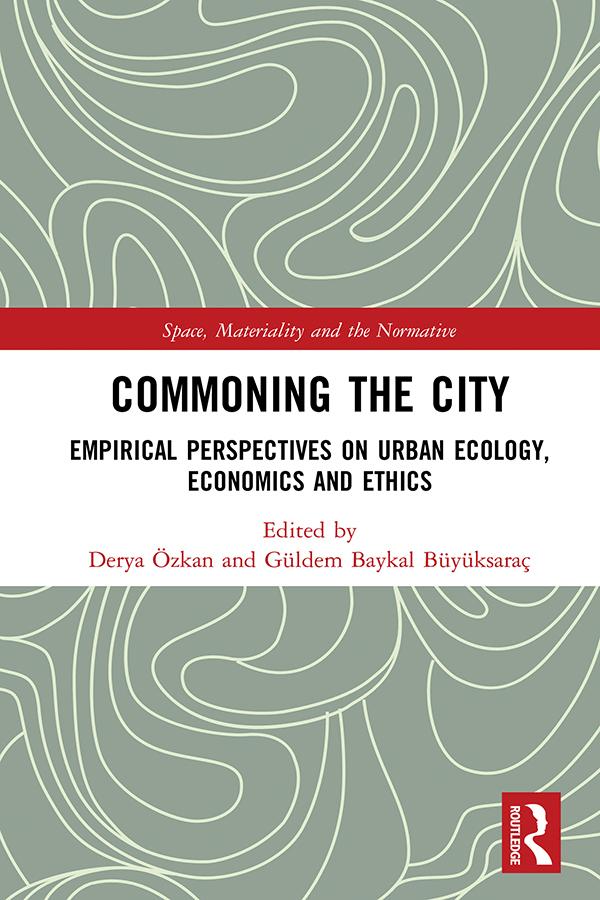
This collection seeks to expand the limits of current debates about urban commoning practices that imply a radical will to establish collaborative and solidarity networks based on anti-capitalist principles of economics, ecology and ethics.
The chapters in this volume draw on case studies in a diversity of urban contexts, ranging from Detroit, USA to Kyrenia, Cyprus – on urban gardening and land stewardship, collaborative housing experiments, alternative food networks, claims to urban leisure space, migrants’ appropriation of urban space and workers’ cooperatives/collectives. The analysis pursued by the eleven chapters opens new fields of research in front of us: the entanglements of racial capitalism with enclosures and of black geographies with the commons, the critical history of settler colonialism and indigenous commons, law as a force of enclosure and as a strategy of commoning, housing commons from the urban scale perspective, solidarity economies as labour commons, territoriality in the urban commons, the non-territoriality of mobile commons, the new materialist and post-humanist critique of the commons debate and feminist ethics of care.
Betal nemt med kort, Klarna, Apple Pay eller Google Pay. Ikke tilfreds? Du har altid 14 dages fortrydelsesret. Læs mere i vores vilkår. Har du spørgsmål, så send os en mail på hello@memmo.org.
Memmo gør det nemmere at studere – uanset hvor du er i verden. Hos os samler du dine kursusbøger og smarte studieværktøjer ét sted: resuméer, quizzer, podcasts og flashcards. Og så er der Ted, din studieven, der svarer på alt, du undrer dig over. Over 50 000 studerende studerer allerede her – bygget til at hjælpe dig med at lære hurtigere og stresse mindre.