
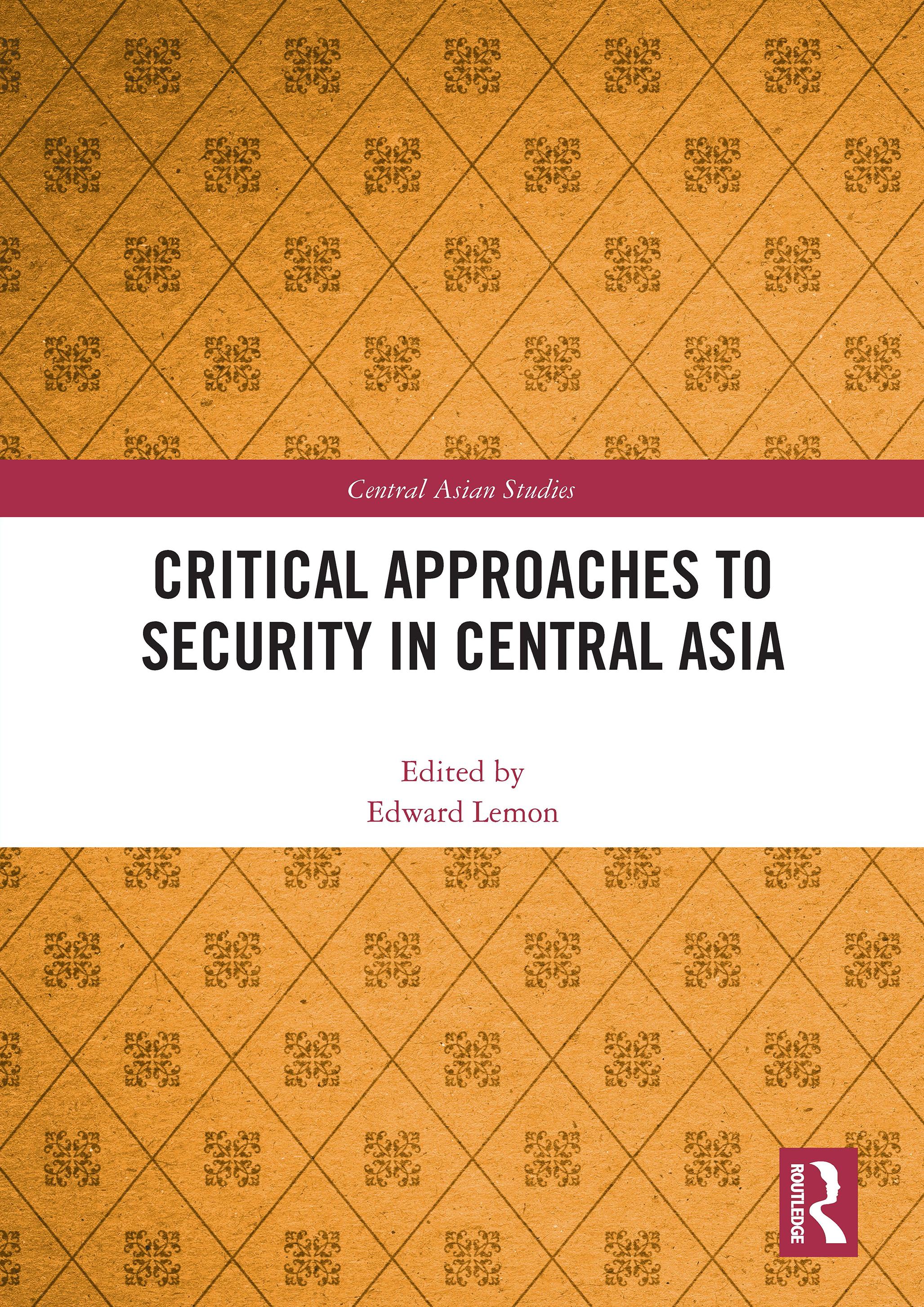
Central Asia remains on the periphery, both spatially and in people’s imaginations. When the region does attract international attention, it is often related to security issues, including terrorism, ethnic conflict and drug trafficking. This book brings together leading specialists from a range of disciplines including geography, anthropology, sociology and political science to discuss how citizens and governments within Central Asia think about and practise security.
The authors explore how governments use fears of instability to bolster their rule, and how securitized populations cope with (and resist) being labelled threats through strategies that are rarely associated with security, including marriage and changing their appearance. This collection examines a wide range of security issues including Islamic extremism, small arms, interethnic relations and border regions. While coverage of the region often departs from preconceived notions of the region as dangerous, obscure and volatile, the chapters in this book all place emphasis on the way local people understand security and harmony in their daily lives.
This book will be of interest to students and researchers of Central Asian Studies as well as Security Studies and Political Science. The chapters were originally published in the journal Central Asian Survey.
Betal nemt med kort, Klarna, Apple Pay eller Google Pay. Ikke tilfreds? Du har altid 14 dages fortrydelsesret. Læs mere i vores vilkår. Har du spørgsmål, så send os en mail på hello@memmo.org.
Memmo gør det nemmere at studere – uanset hvor du er i verden. Hos os samler du dine kursusbøger og smarte studieværktøjer ét sted: resuméer, quizzer, podcasts og flashcards. Og så er der Ted, din studieven, der svarer på alt, du undrer dig over. Over 50 000 studerende studerer allerede her – bygget til at hjælpe dig med at lære hurtigere og stresse mindre.