
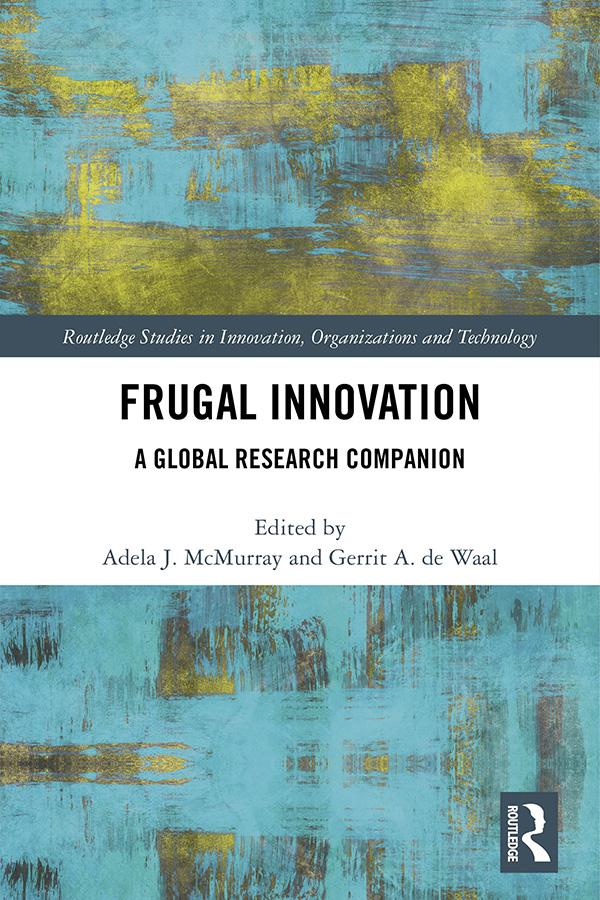
Customers are increasingly seeking "low-cost, high-quality" or what is known as frugal products that meet the buyer’s needs while reducing the associated cost of ownership. This book examines the developing principles and theories of frugal innovations across the globe. The authors identify frugal innovation (FI) using a multi-method approach to data analysis. They argue that the concept of frugality as a societal/ethical value has undergone several changes and propose a differentiated model of frugal innovations. They address frugal innovations that have never been accessible to the public.
Hands-on case studies across various industry sectors and countries, supported by theory, provide multiple learning opportunities. The authors explore the relationship between FI and digitalisation and technology, and discuss how FI can be applied in the context of contemporary issues such as food security. Further, they articulate the mechanisms by which FI beliefs and values can be incorporated into organisational culture. The final chapters address both ethical and controversial views of frugal innovation.
The book is a valuable resource for students in business courses, for industry professionals wanting to improve their triple bottom line, and for educators wanting to influence and change the mindsets of the younger generations to effectively deal with today’s and tomorrow’s challenges.
Betal nemt med kort, Klarna, Apple Pay eller Google Pay. Ikke tilfreds? Du har altid 14 dages fortrydelsesret. Læs mere i vores vilkår. Har du spørgsmål, så send os en mail på hello@memmo.org.
Memmo gør det nemmere at studere – uanset hvor du er i verden. Hos os samler du dine kursusbøger og smarte studieværktøjer ét sted: resuméer, quizzer, podcasts og flashcards. Og så er der Ted, din studieven, der svarer på alt, du undrer dig over. Over 50 000 studerende studerer allerede her – bygget til at hjælpe dig med at lære hurtigere og stresse mindre.