
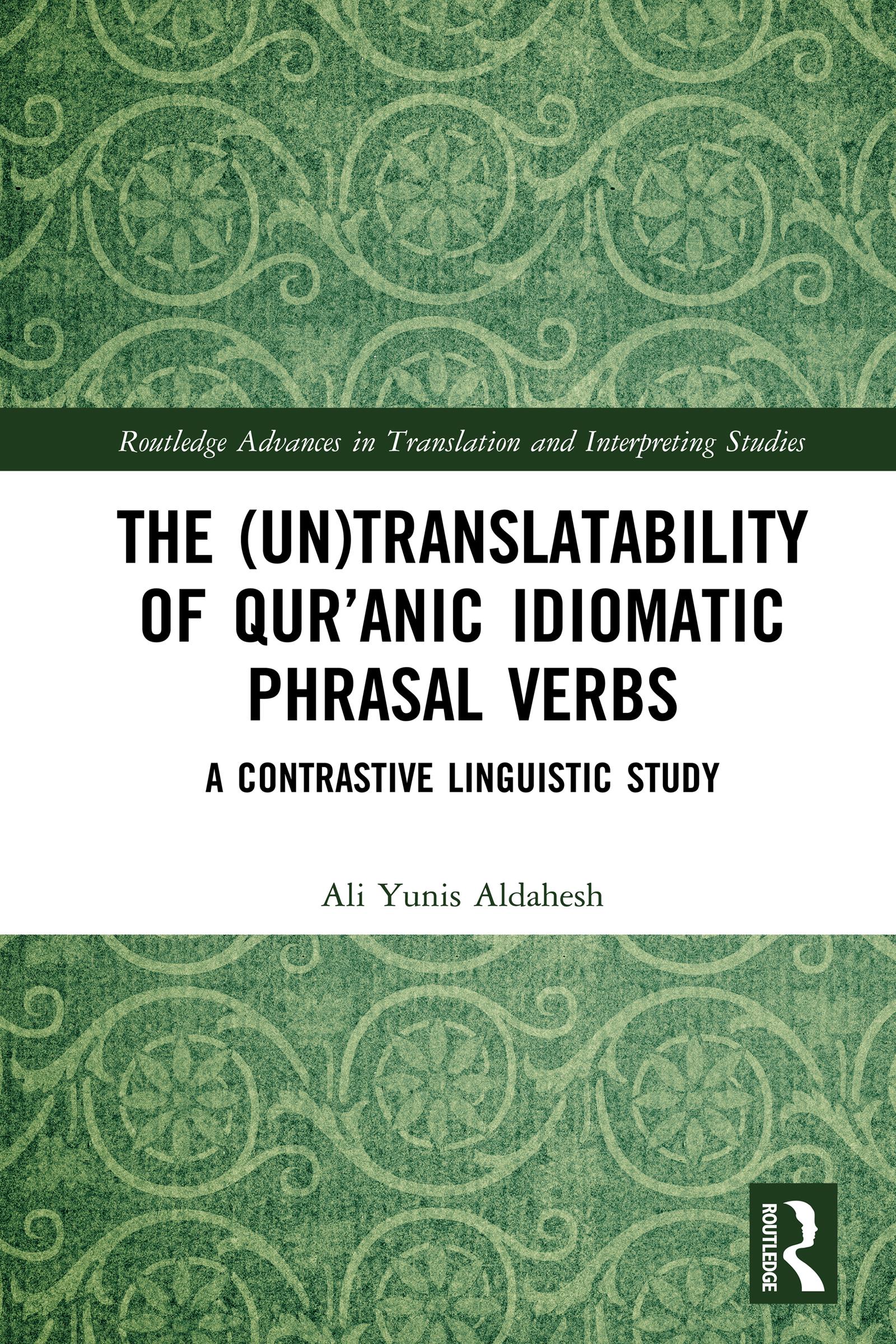
Qur’anic idiomaticity, in its all aspects, poses a great deal of challenge to Qur’an readers, learners, commentators, and translators. One of the most challenging aspects of Qur’anic idiomaticity is Qur’anic idiomatic phrasal verbs, where significances of proper Arabic verbs are entirely fused with significances of prepositions following them to produce new significances that have nothing to do with the basic significances of those verbs and prepositions.
By examining a corpus of ten of the most influential English translations of the Qur’an, this study scrutinizes how some translators of the Qur’an have dealt with the phenomenon of Qur’anic idiomatic phrasal verbs, the difficulties that they have encountered when translating them into English, and the strategies that they have employed in their attempts to overcome the inherent ambiguity of such expressions and provide their functional-pragmatic equivalents for English readership.
The study proposes a working model for analysing and assessing the translation of the Qur’anic idiomatic phrasal verbs and provides a number of theory-based recommendations for translators in general and Qur’an translators in particular.
Betal nemt med kort, Klarna, Apple Pay eller Google Pay. Ikke tilfreds? Du har altid 14 dages fortrydelsesret. Læs mere i vores vilkår. Har du spørgsmål, så send os en mail på hello@memmo.org.
Memmo gør det nemmere at studere – uanset hvor du er i verden. Hos os samler du dine kursusbøger og smarte studieværktøjer ét sted: resuméer, quizzer, podcasts og flashcards. Og så er der Ted, din studieven, der svarer på alt, du undrer dig over. Over 50 000 studerende studerer allerede her – bygget til at hjælpe dig med at lære hurtigere og stresse mindre.