
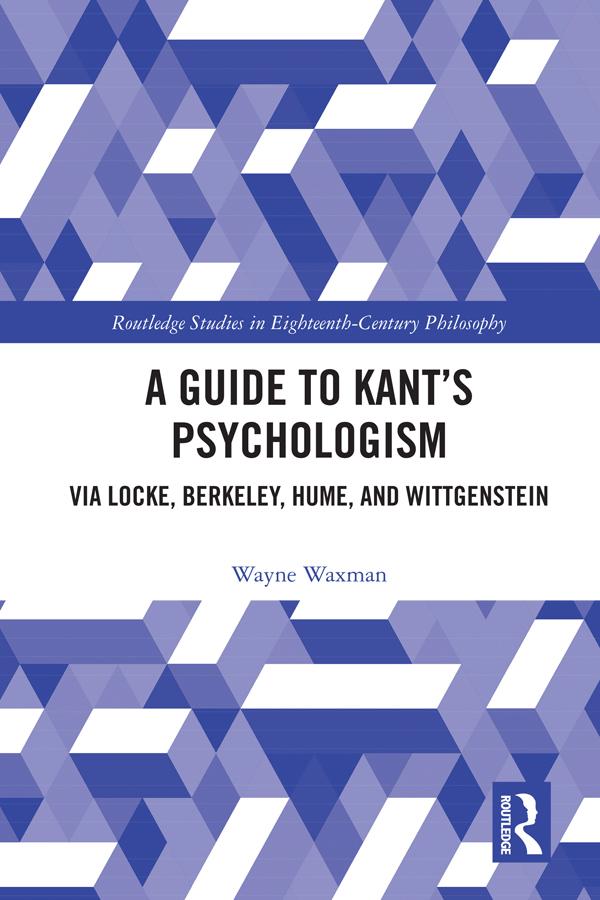
This book presents an interpretation of Kant’s Critique of Pure Reason as a priori psychologism. It groups Kant’s philosophy together with those of the British empiricists—Locke, Berkeley, and Hume—in a single line of psychologistic succession and offers a clear explanation of how Kant’s psychologism differs from psychology and idealism. The book reconciles Kant’s philosophy with subsequent developments in science and mathematics, including post-Fregean mathematical logic, non-Euclidean geometry, and both relativity and quantum theory. It also relates Kant’s psychologism to Wittgenstein’s later conception of language. Finally, the author reveals the ways in which Kant’s philosophy dovetails with contemporary scientific theorizing about the natural phenomenon of consciousness and its place in nature. This book will be of interest to Kant scholars and historians of philosophy working on the British empiricists.
Betal nemt med kort, Klarna, Apple Pay eller Google Pay. Ikke tilfreds? Du har altid 14 dages fortrydelsesret. Læs mere i vores vilkår. Har du spørgsmål, så send os en mail på hello@memmo.org.
Memmo gør det nemmere at studere – uanset hvor du er i verden. Hos os samler du dine kursusbøger og smarte studieværktøjer ét sted: resuméer, quizzer, podcasts og flashcards. Og så er der Ted, din studieven, der svarer på alt, du undrer dig over. Over 50 000 studerende studerer allerede her – bygget til at hjælpe dig med at lære hurtigere og stresse mindre.