
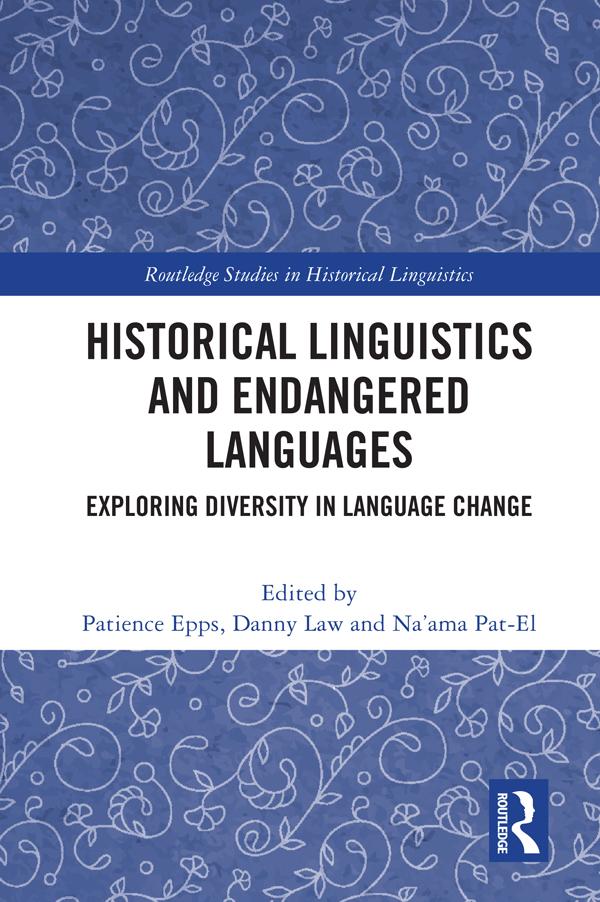
This collection showcases the contributions of the study of endangered and understudied languages to historical linguistic analysis, and the broader relevance of diachronic approaches toward developing better informed approaches to language documentation and description.
The volume brings together perspectives from both established and up-and-coming scholars and represents a globally and linguistically diverse range of languages.The collected papers demonstrate the ways in which endangered languages can challenge existing models of language change based on more commonly studied languages, and can generate innovative insights into linguistic phenomena such as pathways of grammaticalization, forms and dynamics of contact-driven change, and the diachronic relationship between lexical and grammatical categories. In so doing, the book highlights the idea that processes and outcomes of language change long held to be universally relevant may be more sensitive to cultural and typological variability than previously assumed.
Taken as a whole, this collection brings together perspectives from language documentation and historical linguistics to point the way forward for richer understandings of both language change and documentary-descriptive approaches, making this key reading for scholars in these fields.
Betal nemt med kort, Klarna, Apple Pay eller Google Pay. Ikke tilfreds? Du har altid 14 dages fortrydelsesret. Læs mere i vores vilkår. Har du spørgsmål, så send os en mail på hello@memmo.org.
Memmo gør det nemmere at studere – uanset hvor du er i verden. Hos os samler du dine kursusbøger og smarte studieværktøjer ét sted: resuméer, quizzer, podcasts og flashcards. Og så er der Ted, din studieven, der svarer på alt, du undrer dig over. Over 50 000 studerende studerer allerede her – bygget til at hjælpe dig med at lære hurtigere og stresse mindre.