
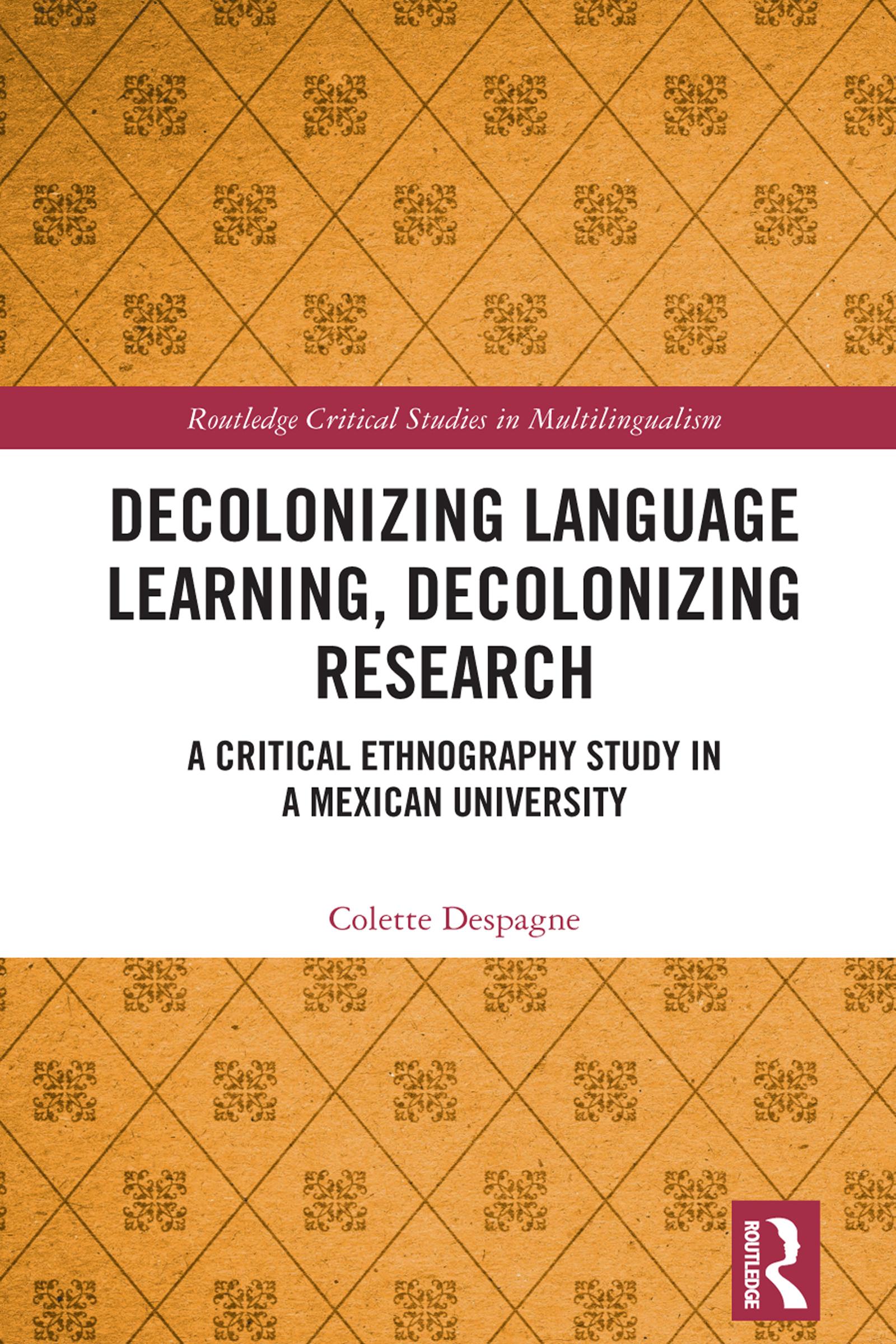
This volume explores the socio-political dynamics, historical forces, and unequal power relationships which mediate language ideologies in Mexican higher education settings, shedding light on the processes by which minority students learn new languages in postcolonial contexts. Drawing on data from a critical ethnographic case study of a Mexican university over several years, the book turns a critical lens on language learning autonomy and the use of the Common European Framework of Reference for Languages (CEFR) in postcolonial higher education settings, and advocates for an approach to the language learning and teaching process which takes into account minority language learners’ cultural heritage and localized knowledge. Despagne also showcases this approach in the unique research methodology which underpins the data, integrating participatory methods such as Interpretative Focus Groups in an attempt to decolonize research by engaging and involving participants in the analysis of data. Highlighting the importance of critical approaches in encouraging the equitable treatment of diverse cultures and languages and the development of agency in minority language learners, this book will be key reading for researchers in sociolinguistics, educational linguistics, applied linguistics, ethnography of communication, and linguistic anthropology.
Betal nemt med kort, Klarna, Apple Pay eller Google Pay. Ikke tilfreds? Du har altid 14 dages fortrydelsesret. Læs mere i vores vilkår. Har du spørgsmål, så send os en mail på hello@memmo.org.
Memmo gør det nemmere at studere – uanset hvor du er i verden. Hos os samler du dine kursusbøger og smarte studieværktøjer ét sted: resuméer, quizzer, podcasts og flashcards. Og så er der Ted, din studieven, der svarer på alt, du undrer dig over. Over 50 000 studerende studerer allerede her – bygget til at hjælpe dig med at lære hurtigere og stresse mindre.